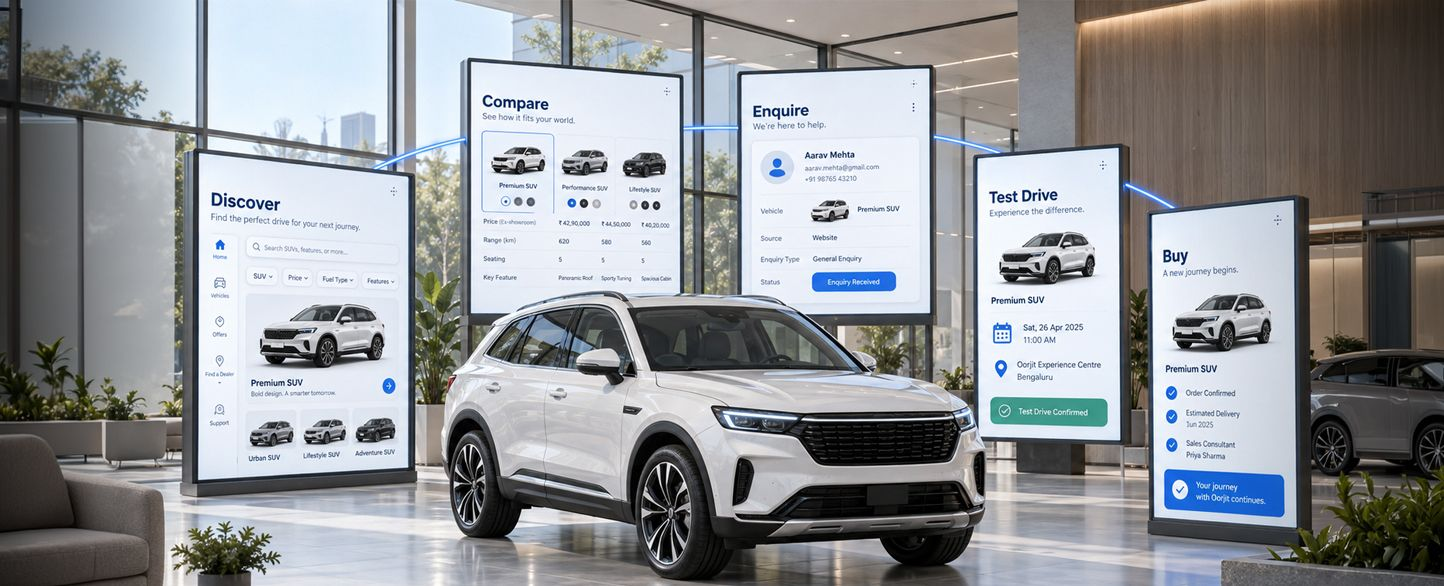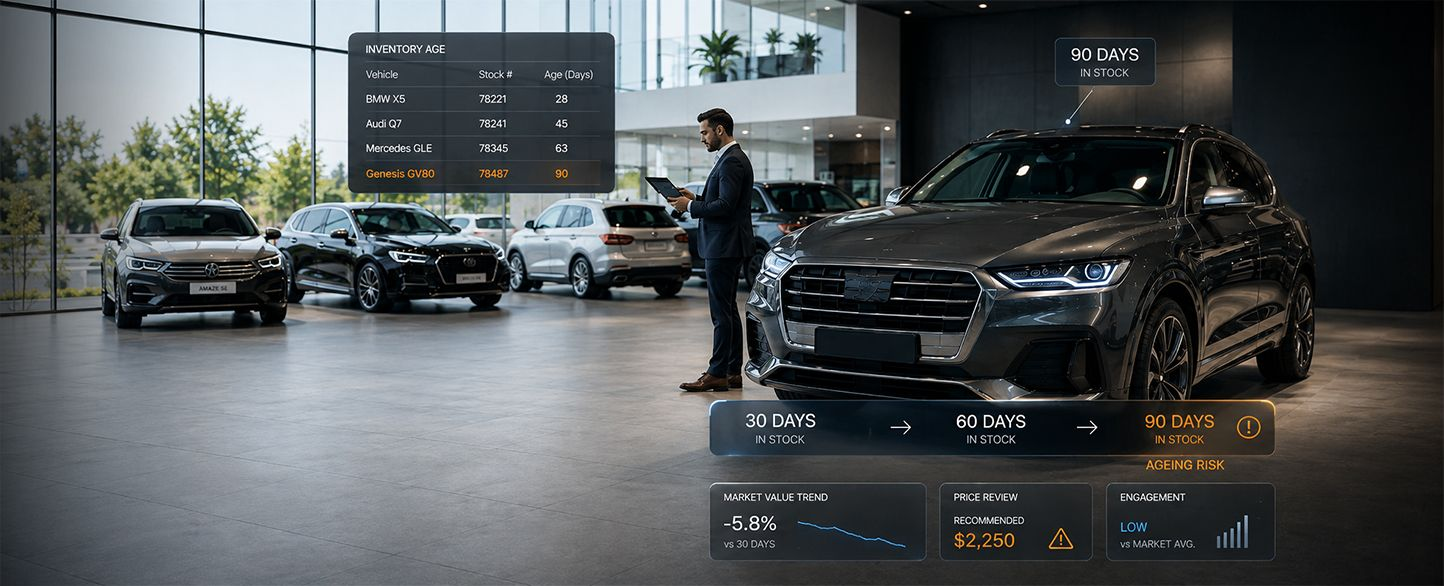
A customer spots a vehicle on your website at 9 pm on a Tuesday. They send a WhatsApp message asking about finance options. No reply comes that night. The next morning, they email through your contact form. By the time a sales advisor sees it, it is Wednesday afternoon. They call the number provided. No answer. By Thursday, that customer has booked a test drive at the dealership down the road.
This is not a story about a bad sales team. It is a story about disconnected infrastructure. The lead existed. The intent was real. The dealership simply had no system that could see all of it in one place and respond before the window closed.
This is how most automotive dealerships lose leads today, and it is happening at scale.
Why Automotive Leads Fall Through the Cracks
The root cause of lead leakage in automotive retail is not slow salespeople. It is the gap between the channels customers use to reach dealerships and the tools dealerships use to manage those conversations.
A typical dealership in 2025 receives enquiries across a website contact form, WhatsApp, phone, email, Facebook DMs, Instagram messages, and sometimes live chat. Each of these sits in a different place. The contact form feeds into an inbox nobody checks after 6 pm. The WhatsApp messages land on a sales advisor's personal phone. The Facebook DMs go to a marketing team that may not pass them to sales until the next morning. Phone calls go to voicemail if the line is busy.
None of these tools talk to each other. None of them updates a CRM automatically. The result is that a customer who sends three messages across two days looks, from the dealership's side, like three separate and unconnected interactions, or like nothing at all.
What causes lead leakage in automotive retail?
Lead leakage happens when enquiries arrive through channels that are not monitored, not connected to the CRM, or not assigned to a specific sales advisor in real time. The three most common failure points are: leads arriving outside business hours with no automated acknowledgement, leads arriving through messaging apps that are managed on personal devices rather than shared systems, and leads that are seen but never logged, so follow-up falls through when that advisor is unavailable.
How Many Leads Do Dealerships Actually Lose?
Industry research consistently shows that a significant share of automotive leads receive no meaningful follow-up within the first 24 hours. Some studies put the figure above 40%. The leads most likely to go unanswered are those that arrive in the evening or on weekends, through messaging apps rather than forms, and at dealerships with smaller sales teams managing multiple channels manually.
What percentage of dealership leads go unanswered?
Estimates vary by market and dealership size, but the pattern is consistent: leads arriving outside staffed hours and through channels not integrated with a CRM are the most likely to receive no response. In markets where WhatsApp dominates enquiry behaviour, any dealership managing those messages on individual sales phones rather than a shared inbox is structurally unable to track, assign, or follow up on every lead that comes in.
What is the cost of a missed lead for an automotive dealership?
At an average deal value of $30,000 to $50,000, depending on market and segment, a single missed lead represents a significant direct revenue loss. Across a month of untracked enquiries, the aggregate figure becomes substantial. Beyond the transaction itself, a missed lead also means lost marketing spend already invested to generate that enquiry, a lost service relationship worth years of after-sales revenue, and a customer who will tell others about the non-response. The cost of lead leakage is almost always higher than dealerships estimate when they calculate it properly.
Where Leads Are Lost: A Channel-By-Channel View
Understanding where the gaps are makes it easier to close them. The failure modes differ by channel.
Website enquiry forms
A customer submits a form at 8 pm. The notification goes to a shared inbox that the sales team checks during business hours. By the time someone responds at 9 am the following morning, thirteen hours have passed. Research on automotive lead response consistently shows that conversion probability drops sharply after the first hour. A form submission without an automated acknowledgement and rapid follow-up is a lead that is already cooling.
WhatsApp and messaging apps
WhatsApp is the dominant first-contact channel in most APAC markets and across the UAE and GCC. In Southeast Asia, LINE carries equivalent weight in Thailand and Malaysia. The problem is that most dealerships manage these through individual sales advisor accounts. When that advisor is with a customer, off shift, or on leave, the message sits unread. Even when it is read, it is rarely logged in the CRM, which means follow-up relies entirely on that one person's memory.
Phone and inbound calls
A missed call without a callback system is a complete lead loss. Most dealership phone systems log call volume but not outcomes. A customer who calls twice and reaches voicemail both times will typically not call a third time.
Social media DMs
Facebook and Instagram DMs are increasingly used as first-contact channels, particularly by younger buyers. They typically sit with a marketing team or a social media manager rather than a sales advisor, and the handoff between the two is informal at best. By the time a DM reaches someone who can actually answer the question and book a visit, the customer has often moved on.
How do dealerships lose customers between enquiry and showroom visit?
The gap between enquiry and showroom visit is where most leads are lost. A customer who sends an initial message and receives no response within a reasonable window does not usually send a follow-up; they move to the next option. Even when a first response does arrive, a lack of connected context means the conversation restarts rather than continues, which erodes the customer's confidence that the dealership knows who they are or what they want.
What omnichannel communication actually means for a dealership
Omnichannel is an overused word. In a dealership context, it has a specific meaning worth stating plainly.
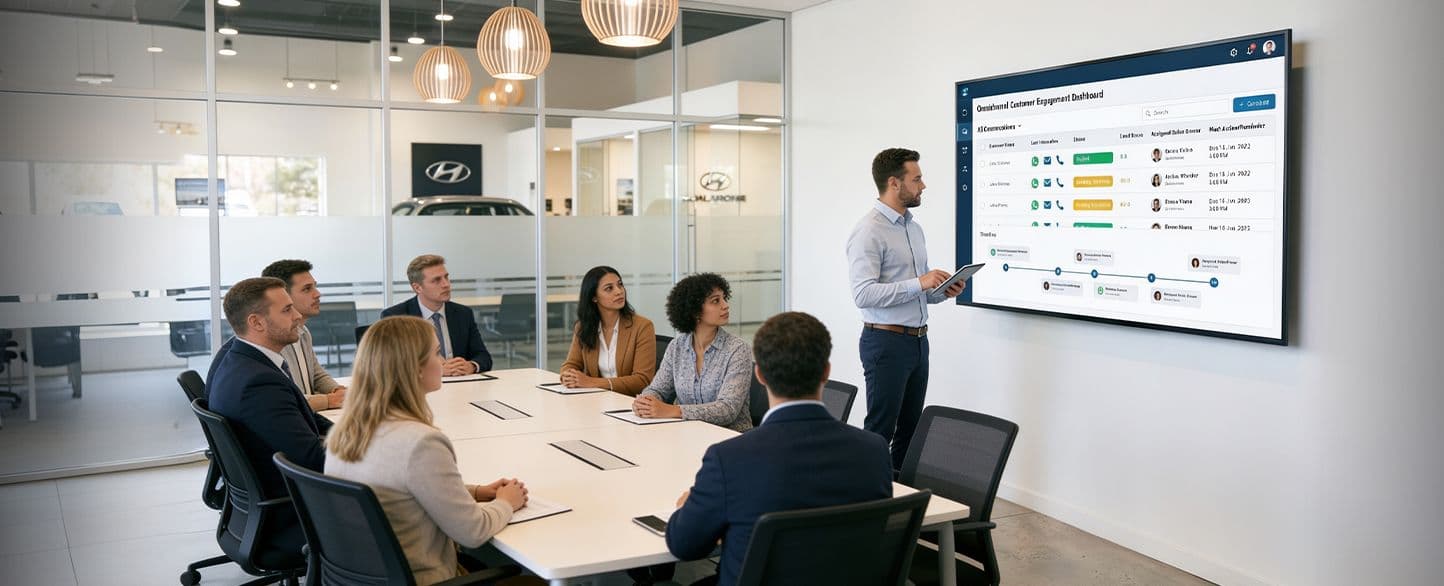
Multichannel communication means a dealership is reachable on multiple channels. Omnichannel communication means all of those channels feed into one connected system, so context carries across them. A customer who messages on WhatsApp, follows up by email, and then calls should arrive at a sales advisor who can see all three interactions in a single view, connected to one customer record.
That is the operational difference. It is not about having more channels. It is about removing the gaps between the ones you already have.
This distinction matters because most dealerships already have multiple channels. The problem is not channel coverage. It is that those channels are disconnected from each other and from the CRM, which means every conversation starts from zero, and every coverage gap becomes a lead loss event.
How Omnichannel Communication Stops Lead Leakage
A unified inbox aggregates every inbound message, WhatsApp, web chat, email, social DM, and phone into one place, visible to the whole sales team and connected to the CRM. When a customer contacts the dealership through any channel, the conversation is captured, assigned to an advisor, and logged automatically. No lead arrives unseen. No follow-up depends on one person's memory.
Real-time CRM updates, so no lead gets lost
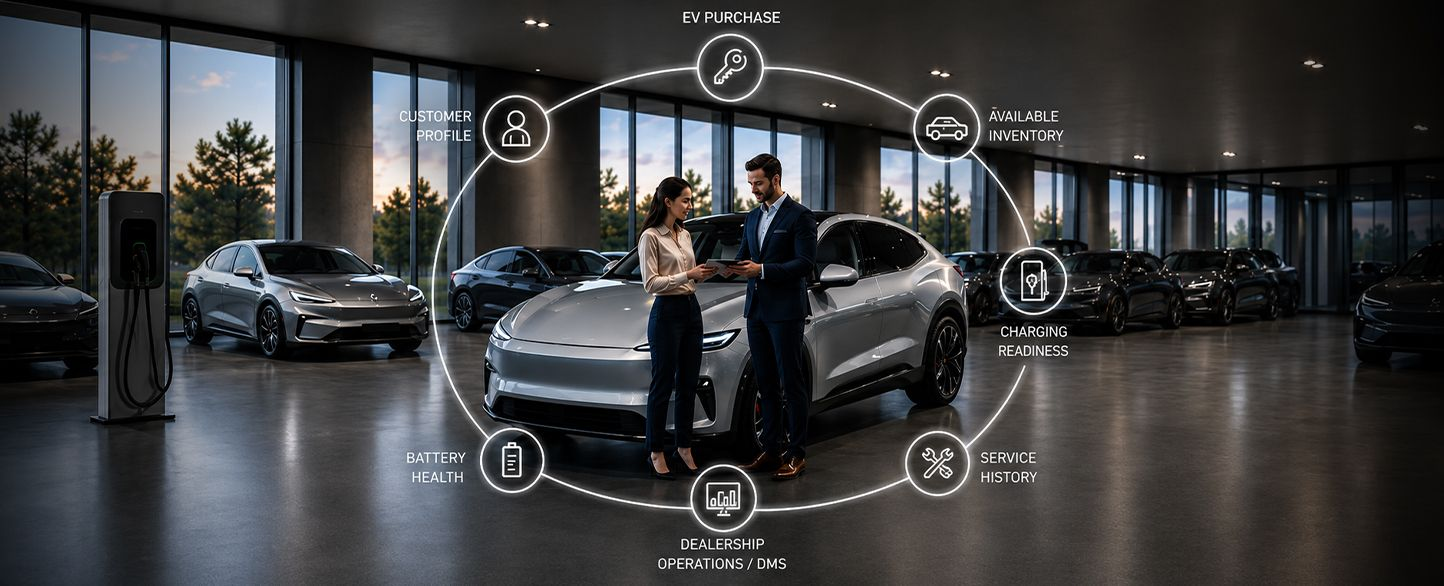
Every conversation that enters the unified inbox creates or updates a CRM record in real time. The customer's enquiry, the channel they used, the vehicle they asked about, and the follow-up actions taken are all stored against their profile. When a different advisor picks up the conversation the next day, they have full context. When a manager reviews the pipeline, they can see every lead at every stage.
Automated follow-up when sales teams are unavailable
Automated response sequences ensure that every lead receives an acknowledgement within minutes, regardless of the time of day or which channel was used. For enquiries that arrive outside business hours, an automated message confirms receipt, sets an expectation for when a human will follow up, and in some cases asks a qualifying question that moves the conversation forward before the sales team starts the next morning.
AI That Qualifies and Routes Leads Before a Human Steps In
Can AI help dealerships respond to leads faster?
Yes. AI-powered tools can respond to inbound leads instantly across WhatsApp, web chat, and other channels. Rather than waiting for a sales advisor to become available, an AI assistant can acknowledge the enquiry, ask qualifying questions, capture vehicle preferences and budget, and book a showroom visit or callback, all before a human steps in. Platforms like Oorjit's Auto Connect AI handle exactly this layer: first response and triage, so the sales team focuses on conversations that are already qualified and moving forward. The result is that no lead waits, and the leads that reach the sales team are better prepared.
How does a unified communication platform reduce missed leads at a dealership?
By removing the dependency on any single channel, device, or person. When every lead is visible to the whole team, assigned automatically, and logged in the CRM in real time, the structural gaps that cause lead leakage close. A lead cannot fall through a crack that no longer exists.
Lead Loss in APAC and UAE Dealerships: What Makes These Markets Different
How dealerships in Asia Pacific lose leads differently
In most APAC markets, WhatsApp is not a secondary channel, it is the primary one. Customers in India, Malaysia, Singapore, and the Philippines routinely make their first contact with a dealership through WhatsApp rather than a web form or phone call. In Thailand and parts of Malaysia, LINE carries similar weight. A dealership managing these messages on individual sales phones rather than a connected platform is structurally missing a large share of its inbound pipeline, not because of poor intent but because the infrastructure cannot keep up with the channel behaviour of buyers in these markets.
The challenge is compounded by high lead volumes, multi-language enquiry environments, and inconsistent CRM adoption among smaller dealerships. Dealerships that implement an omnichannel platform with native WhatsApp integration and automated follow-up consistently see faster response times and measurable improvements in lead-to-visit conversion.
What tools do automotive dealerships use to manage customer enquiries?
Most dealerships in APAC currently use a combination of WhatsApp Business on individual phones, a DMS for transaction management, and a CRM that is updated manually and inconsistently. These tools are not integrated. The gap between them is where leads are lost. Platforms that connect WhatsApp directly to a shared inbox and CRM close that gap without requiring sales teams to change their fundamental behaviour.
Why UAE and GCC dealerships face a higher cost of missed leads
In the UAE and GCC, the service expectation is high, and the tolerance for slow response is low. A buyer enquiring about a premium vehicle via WhatsApp at 9 pm in Dubai expects a response that evening, or at a minimum, a clear acknowledgement. A delayed reply does not just lose the lead; in a market where buyers actively compare dealership responsiveness, it damages the brand.
For luxury dealerships in Dubai and Abu Dhabi, the cost calculation is amplified. The average transaction value in the prestige segment means a single missed lead can represent a five-figure revenue loss. Multi-brand dealer groups across the UAE and Saudi Arabia face an additional coordination challenge: each location may have its own WhatsApp number, its own sales team, and no standardised follow-up process, making network-level lead quality impossible to manage without a shared platform.
What changes when dealerships fix their channel problem
When a dealership moves from fragmented channel management to a connected communication platform, the operational changes are immediate, and the commercial outcomes follow quickly.
Response time drops from hours to minutes. Every lead is acknowledged, assigned, and tracked from the moment it arrives. Sales advisors stop working from memory and start working from a complete customer record. Managers can see the full pipeline in real time rather than reconstructing it from individual conversations.
How do omnichannel dealerships convert more leads than traditional dealerships?
Omnichannel dealerships convert more leads because they respond faster, follow up consistently, and never lose a conversation to a channel gap. The compounding effect matters: faster first response reduces drop-off, better context in follow-up conversations improves quality, and automated sequences re-engage leads that would otherwise go cold before a sales advisor circles back. The customers who convert are not different; they are the same leads, handled by a system that does not let them disappear.
Conclusion
The leads are already there. For most dealerships, the problem is not lead volume; it is the infrastructure gap between where customers send messages and where sales teams see them. Closing that gap is what omnichannel communication does in practice.
If you are evaluating platforms, the next step is understanding what to look for. Read our guide on what to look for in an omnichannel customer communication platform for automotive retail, or speak to the Oorjit team about how Auto Connect AI and the broader platform work for dealerships in your market.
FAQs
Q: How quickly should a dealership respond to an online lead?
A: Ideally, dealerships should respond within five minutes. Lead conversion chances drop sharply after the first hour, so a faster response creates a clear advantage. Automated first responses can reduce the delay from hours to seconds.
Q: Is WhatsApp suitable for managing dealership leads professionally?
A: Yes. WhatsApp is already widely used by buyers. The issue is not the channel, but managing it through personal phones. With WhatsApp Business API, shared inbox access, CRM sync, routing, and automated replies, it becomes a professional lead management channel.
Q: Can automated lead follow-up feel personal?
A: Yes, if it uses the customer’s name, vehicle interest, enquiry details, and a clear next step. Automation should handle speed and acknowledgement, while the sales advisor manages the relationship.
Q: How does lead attribution work across multiple channels?
A: A connected platform links enquiries from WhatsApp, web forms, calls, email, and social media into one customer record. This helps dealerships see which channels generate leads, convert better, and deserve more marketing investment.
Q: What should a dealership look for in a communication platform?
A: Key features include WhatsApp integration, CRM sync, shared inbox, automated responses, lead routing, and full conversation history. An automotive-specific platform is better because it supports showroom, service, and follow-up workflows.
Q: Should dealerships in Southeast Asia use WhatsApp or LINE?
A: It depends on the market. WhatsApp is strong in Malaysia, Singapore, the Philippines, and India, while LINE is widely used in Thailand. Multi-market dealerships should connect both channels into one inbox and CRM.
Q: How does high mobile usage in APAC affect lead management?
A: Mobile-first buyers expect fast replies, often through messaging apps and outside business hours. Dealerships need platforms that manage mobile enquiries natively and support automated after-hours responses.
Q. Is there a data compliance concern in the GCC?
A: Yes. Dealerships should check where customer data is hosted, how long conversations are stored, and whether deletion requests are supported. Any CRM-connected platform should align with UAE and GCC data protection requirements.