Automotive retail is shifting faster than many dealership operations can keep pace with, driven by changing customer expectations, new technology adoption, and pressure from digital-first competitors. Buyers now expect the same convenience and transparency from car retail that they get from other online purchases, and dealerships that cannot deliver a consistent experience across channels risk losing trust before a customer ever steps into a showroom. This guide covers the biggest automotive retail trends reshaping the industry, the technologies driving them, and what OEMs and dealer groups need to prepare for as these shifts accelerate.
What Are the Biggest Automotive Retail Trends?
The biggest automotive retail trends center on digital retail platforms, connected dealership systems, changing ownership models, and a shift toward data-driven operations across dealer networks. Together, these trends are reshaping how vehicles are marketed, sold, and serviced.
Key trends include:
- Digital retail platforms that let customers research, configure, and partially complete purchases online before visiting a dealership
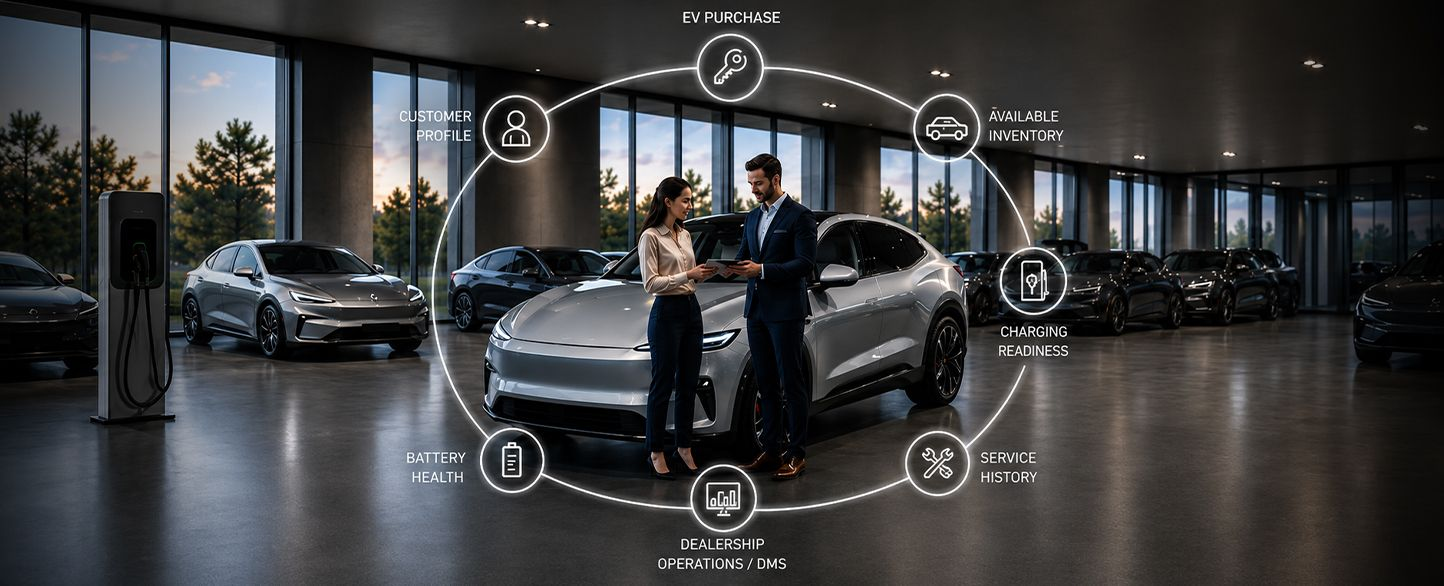
- Connected dealerships, where inventory, pricing, and customer data are synced across systems rather than managed in isolated tools
- Changing ownership models, including growing interest in subscription-based access alongside traditional ownership
- EV retail readiness, as dealerships adapt sales and service processes for electric vehicles
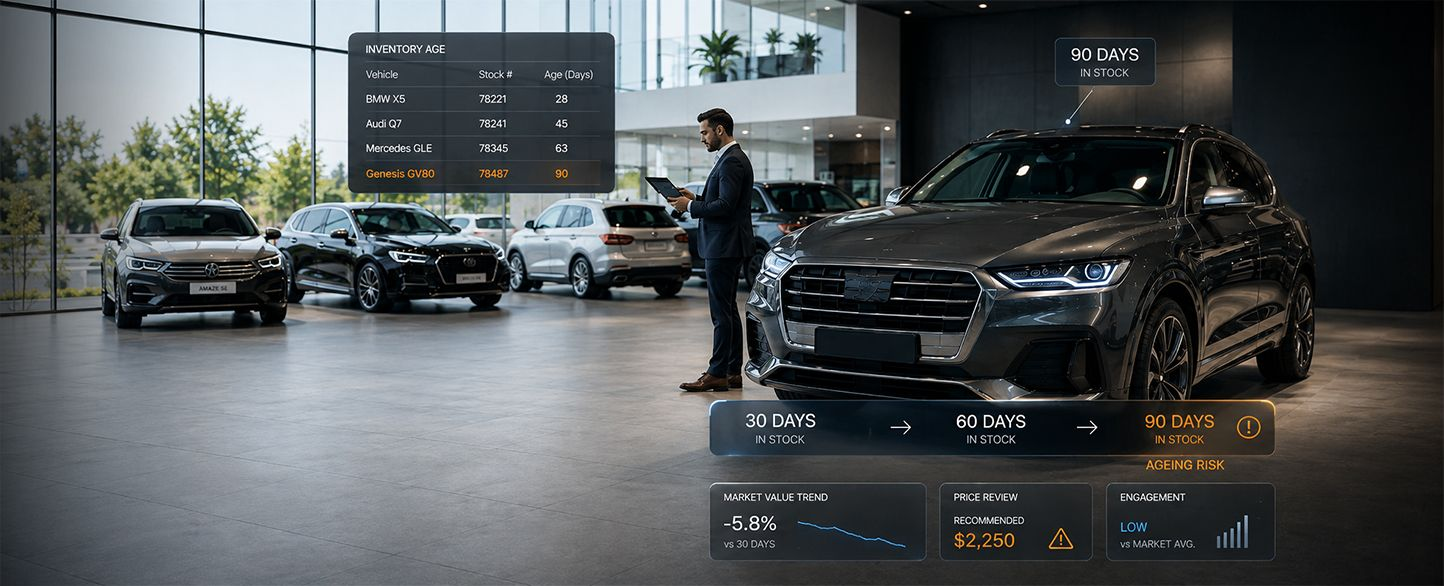
- Data-driven operations, where decisions about inventory, pricing, and staffing rely on real-time data rather than periodic manual reporting
These trends are interconnected. A dealership investing in digital retail platforms, for example, only delivers a consistent experience if its underlying inventory and customer data are also connected.
What Trends Are Shaping Car Retail?
The trends shaping car retail are largely driven by changing buyer behavior, pressure from digital-first and direct-to-consumer competitors, and rising expectations set by other retail industries. These forces explain why the trends above are gaining urgency now rather than five years ago.
Buyers increasingly expect to browse, compare, and configure vehicles online with the same ease they experience shopping for other major purchases. At the same time, direct-to-consumer automotive sales models and digital-first retailers have raised the bar for transparency and speed, putting pressure on traditional dealer networks to match that standard. Automotive retail disruption is not coming from a single source; it is the combined effect of customer expectations shifting faster than many dealership systems can adapt.
How Are Dealerships Changing?
Dealerships are changing by shifting toward hybrid buying journeys, digital showroom tools, and dealer management systems that replace manual, paper-based processes. These are visible, operational changes happening across dealer networks today.
Common changes include:
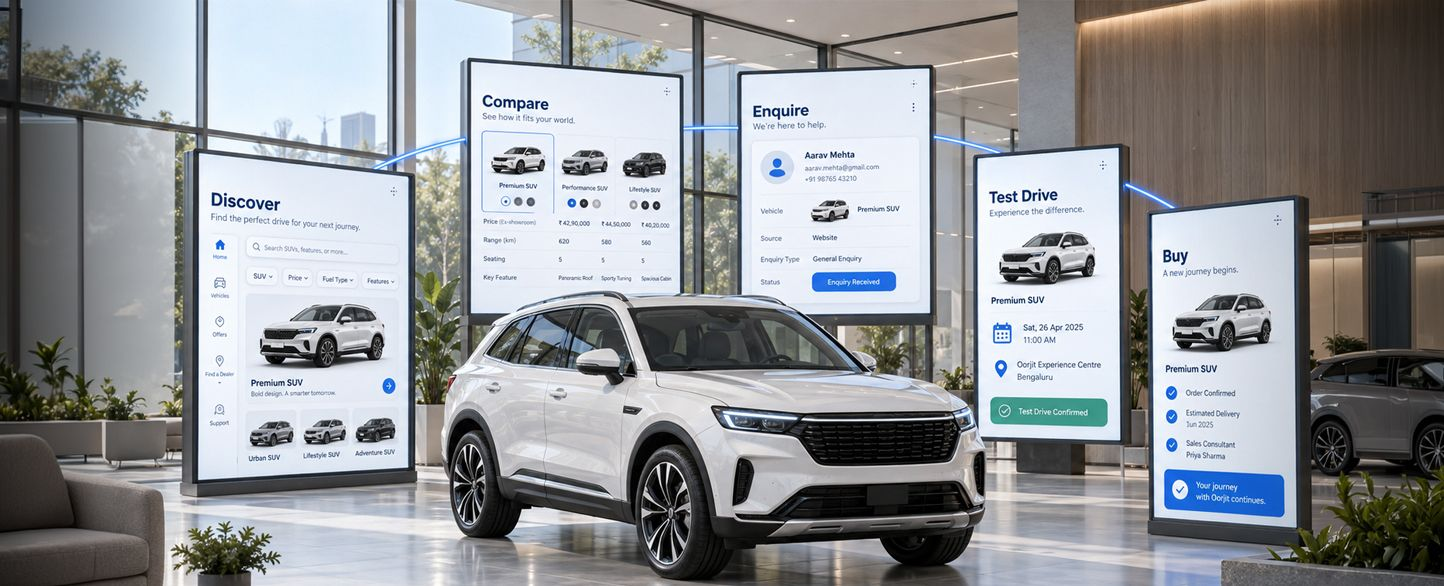
- Hybrid buying journeys, where customers complete research and configuration online but still visit in person for test drives and final purchase steps
- Digital showroom tools, such as interactive displays and configurators that extend the online experience into the physical dealership
- Dealer management systems, replacing spreadsheets and manual inventory tracking with centralized platforms
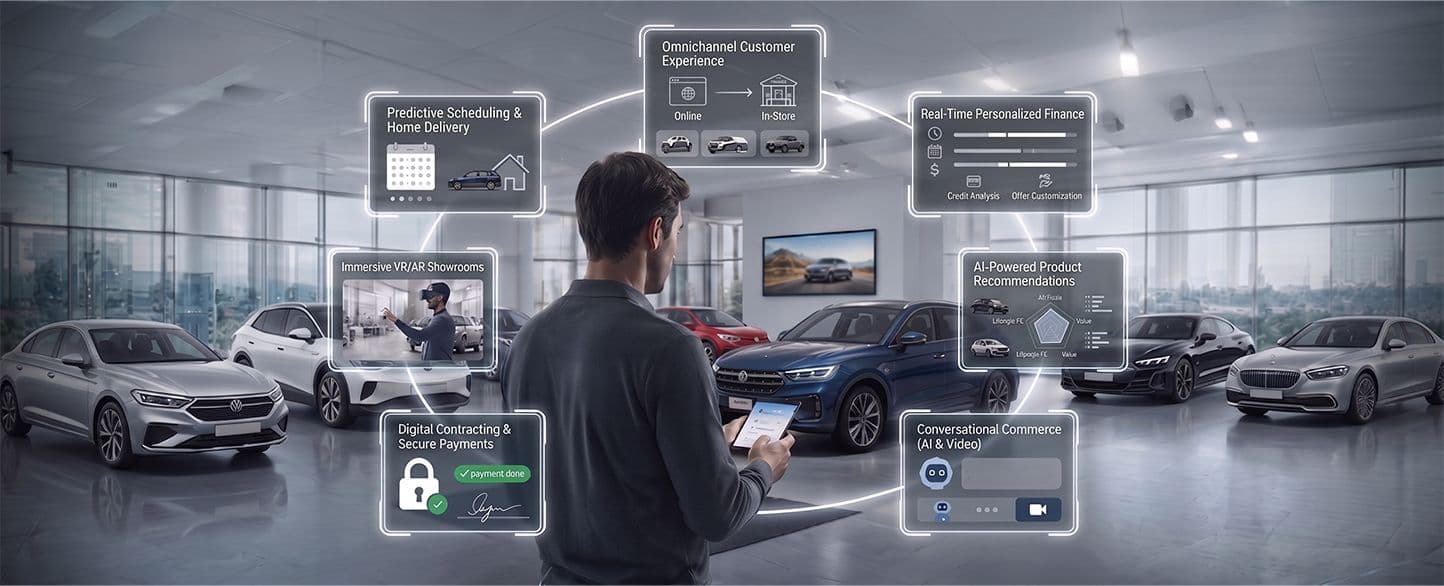
- Omnichannel car buying, where a customer's online activity and in-person visit are treated as one continuous journey rather than separate interactions
A dealership today looks noticeably different from one five years ago, not because vehicles have changed, but because the buying process around them has.
Why Are Dealerships Investing in Digital Transformation?
Dealerships invest in digital transformation primarily to improve operational efficiency, build customer trust, and move vehicles faster, not simply to adopt new technology for its own sake. The business case is measurable, not just competitive positioning.
Key drivers behind this investment include:
- Improving dealership efficiency, reducing time spent on manual inventory checks and administrative tasks
- Increasing customer trust in car buying, since accurate, consistent information online reduces friction and hesitation at the point of sale
- Faster vehicle turnover, as accurate real-time data helps staff match available stock to buyer interest more quickly
- OEM and dealer alignment, since many OEMs now expect dealer networks to maintain consistent digital standards across locations
These outcomes are why digital transformation budgets continue to grow even in dealer groups that were previously slower to adopt new technology.
What Technologies Are Transforming Automotive Retail?
The technologies transforming automotive retail include real-time inventory sync, AI-driven personalization tools, and e-commerce platforms that support partial or full online purchase journeys. These tools address specific operational gaps that have historically slowed dealer networks down.
- Real-time inventory sync keeps listed stock accurate across websites, marketplaces, and internal systems, reducing the mismatch between what customers see online and what is actually available at the dealership.
- AI in automotive retail, used in areas such as personalized recommendations and configurator tools that adjust to customer preferences
- Automotive e-commerce platforms, enabling customers to reserve, configure, or in some cases fully purchase a vehicle online
- Dealer management systems, centralizing inventory, customer, and sales data that were previously spread across disconnected tools
Inventory visibility in particular has become a core differentiator. Dealerships that cannot guarantee listed inventory is actually available lose customer trust quickly, especially as buyers increasingly expect online listings to reflect real-time stock rather than periodically updated snapshots.
How Are Customer Expectations Changing?
Customer expectations are shifting toward researching, configuring, and partially transacting online before visiting a dealership, with a strong expectation that what they see online matches what is actually available in person. This shift is one of the clearest drivers behind the broader retail trends covered earlier.
Buyers increasingly expect:
- A personalized car buying experience, where recommendations and pricing reflect their specific preferences rather than generic listings
- Consistency between online inventory and in-person availability, with little tolerance for outdated or inaccurate listings
- A hybrid car buying experience that lets them move fluidly between online research and in-person visits without repeating steps
- Transparency around pricing and vehicle history before engaging directly with a salesperson
This is directly tied to inventory visibility. When online listings are not backed by real-time inventory sync, customer expectations and dealership reality fall out of alignment, often at the exact moment a buyer is closest to making a decision.
What Should Dealer Groups Prepare For?
Dealer groups should prepare for the operational demands of connected, data-driven retail, particularly around legacy systems, data silos across locations, and the consistency challenges that come with managing multiple dealerships under one network. These are the practical barriers standing between current operations and the trends described above.
Key preparation areas include:
- Addressing legacy systems that cannot support real-time data sharing across sales, inventory, and service functions
- Closing data silos across dealer networks, where individual locations manage inventory and customer data independently rather than through a shared system
- Standardizing multi-location dealer operations, so customers get a consistent experience regardless of which location they interact with
- Building EV dealership readiness, adapting sales and service processes as electric vehicle demand grows
- Investing in dealership technology adoption proactively, rather than reacting once competitive pressure forces the issue
Dealer groups that treat these as infrastructure investments, rather than optional upgrades, tend to adapt to new trends faster than those addressing each one reactively.
What Is the Future of Automotive Retail?
The future of automotive retail points toward increasingly connected, data-driven dealership operations, with tighter integration between OEMs and dealer groups and retail experiences that blend digital and in-person interaction seamlessly. This is less about any single new technology and more about how existing pieces come together.
As real-time inventory sync, e-commerce platforms, and data-driven operations become standard rather than differentiators, the dealerships that stand out will be the ones that deliver consistency, accurate inventory, aligned pricing, and reliable communication across every channel a customer uses. Automotive innovation over the next several years is likely to be less about flashy new features and more about operational reliability at scale, particularly for OEMs and dealer groups managing large, multi-location networks.
Is Your Dealership Network Ready for the Next Phase of Automotive Retail?
Step 1: Inventory Visibility
Real-time inventory sync is active across websites, marketplaces, dealer locations, and sales teams.
Step 2: Data Consistency
Customer, vehicle, pricing, and inventory data remain consistent across every dealership location.
Step 3: Digital Retail Enablement
Online and in-showroom buying journeys are supported through connected digital retail tools.
Step 4: Legacy System Review
Outdated systems are identified and prioritized for replacement, upgrade, or integration.
Step 5: EV Readiness Check
Sales teams, service teams, infrastructure, and customer support processes are assessed for EV readiness.
Step 6: OEM and Dealer Alignment
OEM digital standards are clearly mapped to dealer group execution across operations, technology, and customer experience.
Final Outcome: Future-Ready Dealership Network
A connected dealership network with better visibility, smoother customer journeys, stronger operational control, and readiness for the next phase of automotive retail.
Conclusion
Automotive retail trends are converging on one central requirement: dealership networks that operate as connected, data-driven systems rather than a collection of independent locations. OEMs and dealer groups that address legacy systems and data silos now will be better positioned to meet rising customer expectations as digital-first retail becomes the standard rather than the exception.
See how real-time inventory sync keeps your dealership network aligned. Oorjit helps OEMs and dealer groups close the gap between online listings and in-person availability, reducing mismatches and building the customer trust that modern automotive retail depends on.
Want to explore what this looks like for your network first? Talk to Oorjit about connected inventory and dealership data, no commitment required.
FAQs
Q: How is electric vehicle retail changing dealership operations?
A: EV retail requires dealerships to adapt both sales processes, since EV buyers often have different research and financing questions, and service operations, since EV maintenance and charging infrastructure differ from traditional vehicle servicing.
Q: What is the biggest barrier to digital transformation for dealer groups?
A: Legacy systems and data silos across locations are typically the biggest barrier, since they prevent dealer groups from presenting consistent inventory and pricing information across channels and locations.
Q: Do smaller dealer groups need the same technology as large OEM networks?
A: Smaller dealer groups do not need the same scale of investment, but core capabilities like real-time inventory sync and consistent customer data are increasingly expected regardless of network size, since customer expectations do not scale down with dealership size.
Q: How does inventory mismatch affect customer trust?
A: When a customer finds a vehicle listed online that is not actually available, or discovers pricing discrepancies between online and in-person, it directly undermines trust and often ends the transaction before it starts.
Q: What role does data play in modern automotive retail?
A: Data connects inventory, pricing, and customer information across the dealership network, enabling faster decision-making and a consistent experience for customers regardless of which channel or location they interact with.