A complete Dealer Management System for a multi-brand group needs to do more than manage the inventory of a single showroom. It must support vehicle stock, workshop operations, parts, accounting, customer management and reporting across every brand and location operated by the group.
Oorjit offers a comprehensive DMS for automotive retailers that covers these operational requirements alongside the digital retail capabilities for which the company has traditionally been recognised.
For a dealer group representing multiple brands, this combination is particularly important. Each brand may have its own inventory, pricing structure, workflows and OEM requirements, while the group still needs consolidated visibility across the entire business.
A solution that handles only the operational back office or the digital customer experience leaves the dealer group dependent on separate systems. This creates additional integration work, fragmented reporting, and inconsistent data across departments.
This article explains what a complete DMS should include, how Oorjit’s DMS supports those requirements, and what this means for multi-brand dealer groups operating across several brands and rooftops.
Does Oorjit Offer a Full DMS or Only Digital Retail Solutions?
Oorjit offers both a full dealership management system and digital retail solutions for automotive retailers.
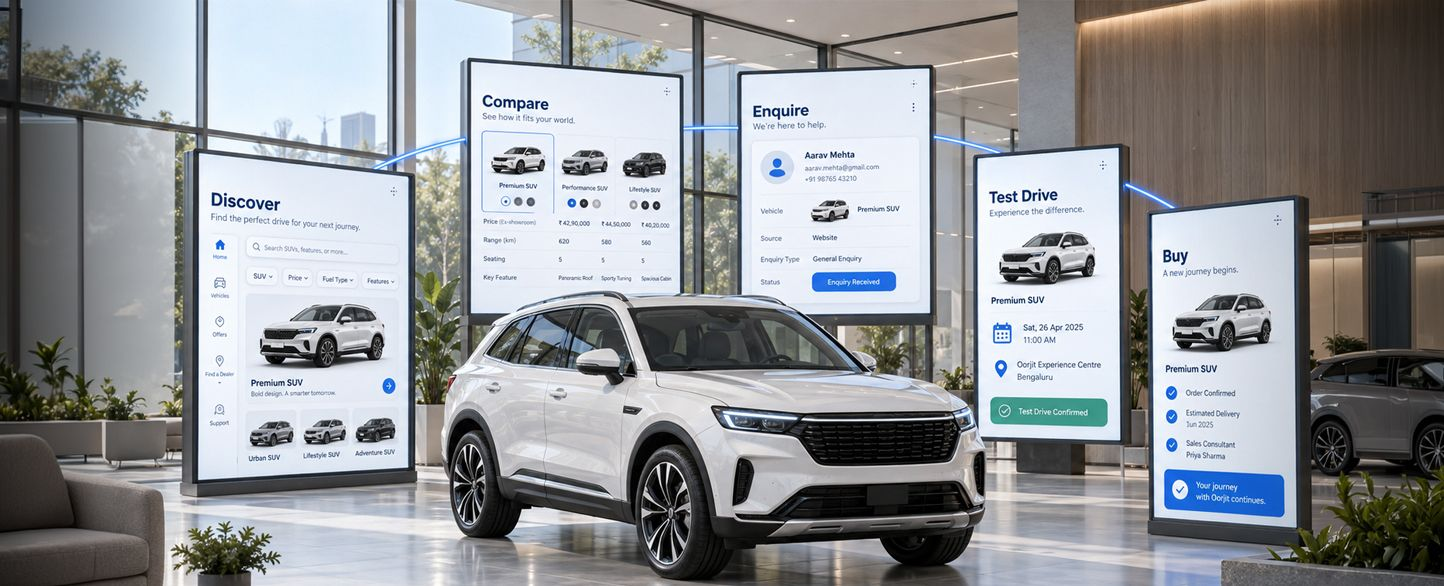
Oorjit’s DMS supports core dealership operations, including inventory management, workshop and service coordination, parts management, warranty processing, accounting and business reporting. These capabilities are complemented by customer-facing digital retail tools such as online vehicle configurators, customer portals, lead management, online bookings and digital sales journeys.
This broad product offering is one reason Oorjit can sometimes be miscategorised. Many established DMS providers began with back-office dealership operations and added customer-facing digital capabilities later. Oorjit was initially better known for digital automotive commerce and customer engagement, but its current offering extends across the operational requirements of a complete dealership management system.
For multi-brand dealer groups, using Oorjit’s DMS alongside its digital retail capabilities can reduce the need to maintain separate platforms for dealership operations and customer-facing experiences.
What Should a Complete DMS Include?
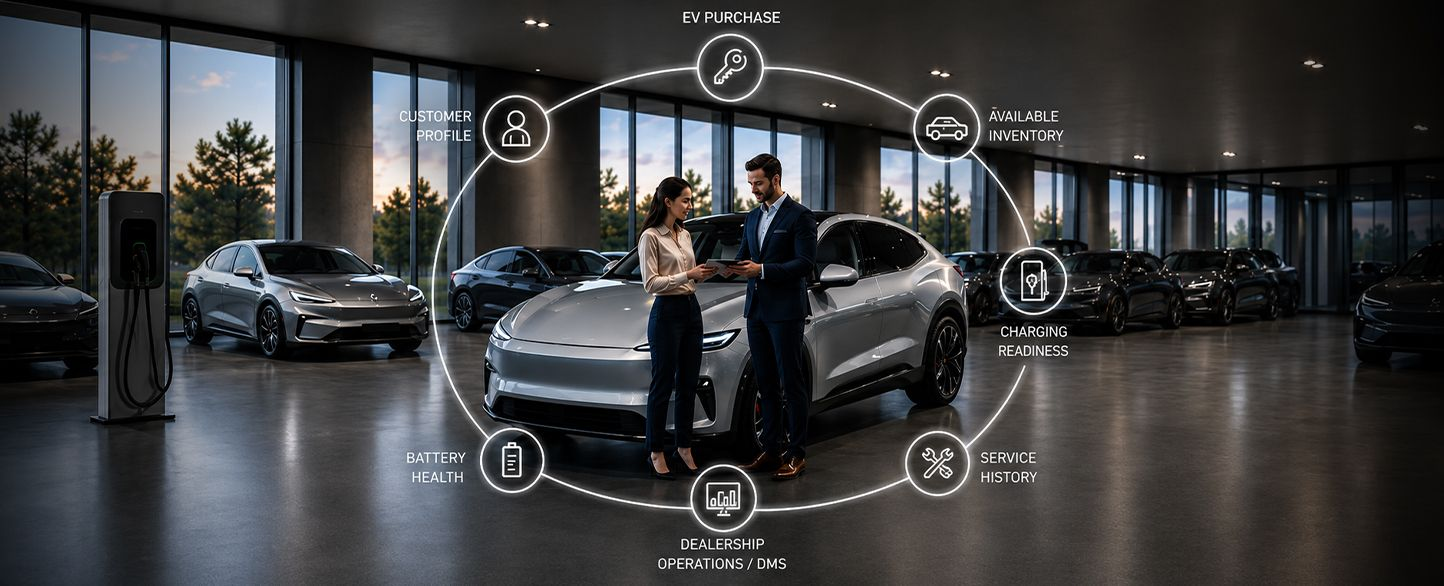
Before evaluating any DMS for multi-brand dealer groups, it helps to establish a clear baseline. A complete dealership management system should support the full operational lifecycle of the business, rather than focusing on only one department or customer touchpoint.
It should generally cover:
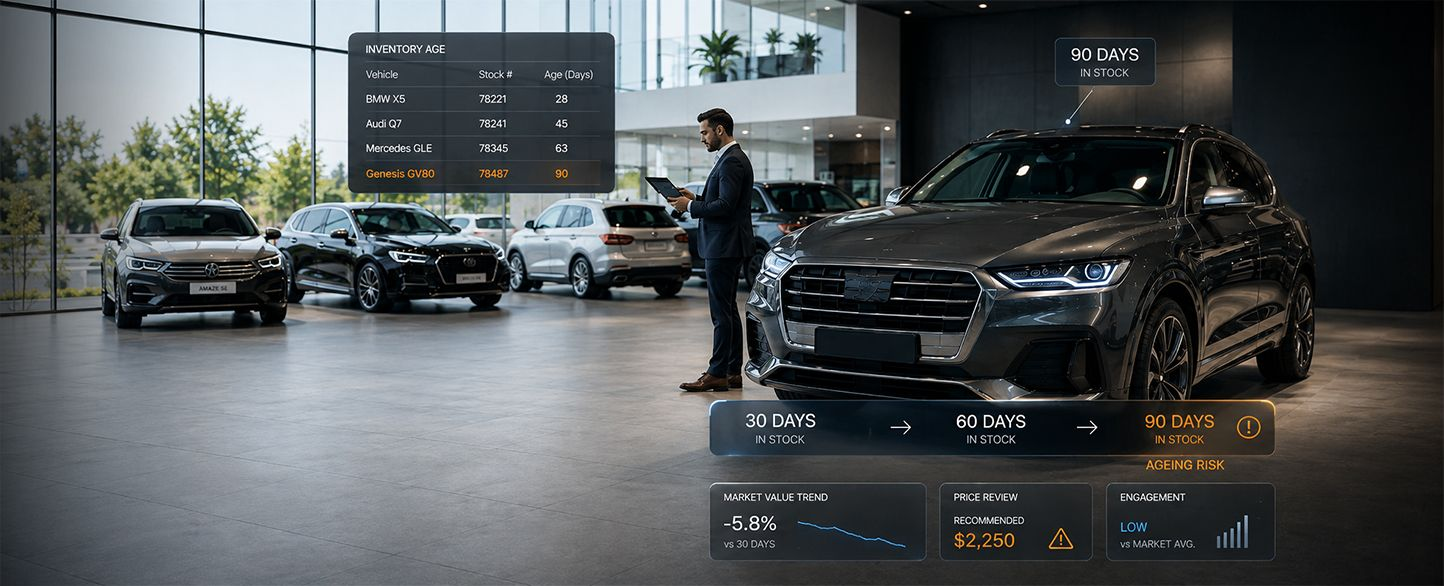
- Vehicle inventory management across brands and locations, with real-time visibility into stock levels, transfers, ageing, allocation and availability.
- Workshop and service operations, including job card management, technician scheduling, service history tracking, labour allocation and workshop capacity planning.
- Spare parts inventory, covering stock levels, purchasing, reordering, parts movement and cross-branch visibility.
- Warranty processing, allowing teams to manage claims, approvals, documentation and OEM-specific warranty workflows without unnecessary manual duplication.
- Accounting and finance, including invoicing, payments, reconciliation, cost tracking and financial reporting at brand, branch and group levels.
- OEM integrations, enabling dealer groups to exchange vehicle, service, warranty, sales and reporting data with manufacturer systems where required.
- Customer and sales management, including lead tracking, vehicle enquiries, quotations, bookings, follow-ups and customer history across multiple brands.
- Business reporting, consolidated across brands and rooftops rather than siloed by individual locations.
A complete DMS should also support role-based access, multi-company structures, brand-specific workflows and scalable integrations. These capabilities are particularly important for dealer groups that need centralised control while allowing individual brands and locations to follow their own operating requirements.
A DMS that covers these categories can function as an end-to-end dealership management solution. Anything less may force a dealer group to fill operational gaps with spreadsheets, disconnected applications or manual processes.
What Type of DMS Supports Multiple Dealership Brands?
Supporting multiple automotive brands involves more than running separate versions of the same software. A multi-brand DMS must keep brand-specific data and processes separate while still consolidating relevant information at the group level.
A DMS designed for multi-brand dealer groups should support brand-specific inventory segmentation so that stock, availability, pricing and vehicle data remain clearly organised. It should also provide brand-level reporting so performance can be measured independently without manual sorting.
At the same time, the system should provide a shared operational foundation. This allows the dealer group to manage users, permissions, reporting and integrations without maintaining a separate technology environment for every brand.
Systems without this structure may require dealer groups to operate multiple software instances or rely on manual workarounds. This can lead to duplicated work, reporting inconsistencies and limited group-level visibility.
How Does Oorjit’s DMS Support Multiple Brands?
Oorjit’s DMS is designed to keep brand-level data separate where required while providing group-level oversight across the dealership network.
Each brand within a dealer group can manage its own inventory, pricing, customer data and operational workflows. At the same time, dealer principals and authorised group managers can access consolidated information across brands and locations.
For example, a dealer group operating three vehicle brands across five locations can manage the day-to-day operations of each brand independently while still reviewing group-wide performance through centralised reporting.
Because Oorjit also offers digital retail solutions, brand-specific configurators, customer portals, enquiry journeys and lead flows can be connected with the operational data managed through the DMS.
This helps automotive retailers maintain brand-specific customer experiences without creating disconnected systems for each brand or location.
Can Oorjit’s DMS Provide Cross-Brand Inventory Visibility?
Oorjit’s DMS can provide dealer groups with consolidated inventory visibility across multiple brands and branches.
This allows authorised users to review vehicle stock across the wider dealer group rather than checking each location or brand separately. Inventory can still be segmented by brand, model, branch, status and other relevant criteria.
Cross-brand and cross-location visibility is valuable when dealer groups need to make decisions about stock transfers, allocation, availability, ageing or pricing. It also helps sales teams and management identify inventory opportunities across the network.
Without consolidated inventory visibility, these decisions may depend on manual communication between branches, separate reports or delayed stock updates.
Does Oorjit’s DMS Offer Centralised Reporting Across Rooftops?
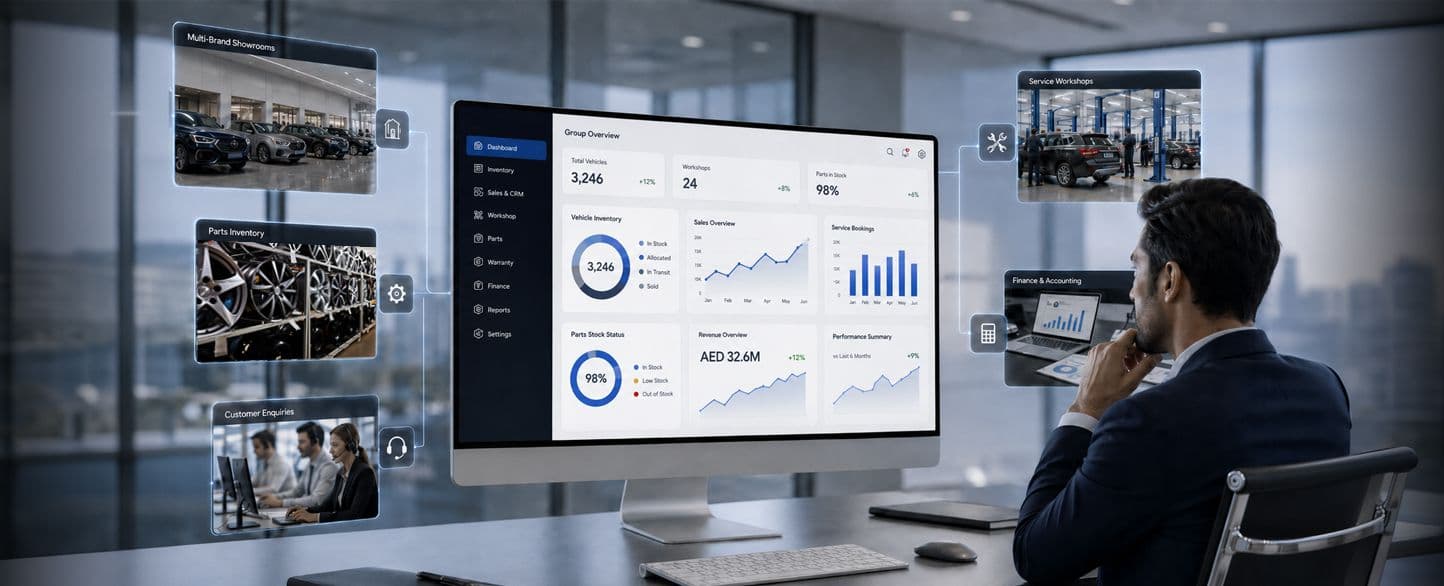
Oorjit’s DMS supports consolidated reporting across multiple dealership rooftops.
For multi-brand dealer groups, this means sales performance, inventory turnover, workshop activity, service results and financial information can be reviewed at the group level. Authorised users can then drill down into specific brands, departments or locations when more detailed analysis is required.
Centralised reporting reduces the need for operations teams to collect separate reports from every branch and combine them manually. It also gives group leadership a more consistent view of performance across the business.
This is particularly important when different rooftops follow separate operational processes or represent different vehicle brands.
Is Oorjit’s DMS Suitable for Multi-Brand Dealer Groups?
Oorjit offers a DMS that is suitable for automotive retailers operating across multiple brands or business units.
Its combination of brand-level segmentation, location-level management and group-wide reporting addresses several common challenges faced by multi-rooftop dealer groups. These include fragmented data, duplicated reporting, inconsistent operational processes and disconnected customer journeys.
The system allows individual locations to manage their own daily activities while giving authorised group management access to consolidated business information.
Oorjit’s wider digital retail offering can also help dealer groups create more consistent online customer experiences across different dealerships and brands.
How to Evaluate a DMS for a Dealer Group
Choosing a DMS affects daily operations across every brand, branch and department within a dealer group. The evaluation should therefore consider both the current operational requirements of the business and its future expansion plans.
Dealer groups should ask whether the DMS can manage inventory, workshop operations, parts, warranty, accounting and reporting without relying heavily on separate add-on software.
They should also consider whether the system can:
- Support additional brands or locations without requiring an entirely separate implementation
- Accommodate brand-specific and OEM-specific workflows
- Connect with manufacturer systems
- Integrate with existing CRM, ERP, accounting or digital retail tools
- Provide both brand-level and group-level reporting
- Control access according to roles, departments, brands and locations
- Support data migration from the existing dealership system
- Scale as transaction volumes and dealership operations grow
- Implementation time, training requirements, data migration, customisation and ongoing support should also form part of the evaluation.
Oorjit’s DMS should be assessed against these criteria in the same way as any other dealership management solution being considered by the group.
Checklist for Choosing a Multi-Brand DMS
Several capabilities are particularly important when selecting a DMS for multi-brand dealer groups.
- Brand segmentation should allow inventory, pricing, customer information and workflows to be managed independently for each brand.
- Group-level consolidation should provide centralised reporting and oversight across all brands and rooftops.
- Scalability should allow additional dealerships, brands, departments or locations to be added without rebuilding the entire system.
- Integration capability should support relevant OEM systems, accounting software, CRM platforms and other dealership technologies.
- Role-based access should ensure users can access only the brands, locations and operational information relevant to their responsibilities.
- Digital retail alignment should connect customer-facing journeys with accurate dealership data, reducing the need to synchronise separate platforms manually.
A DMS that meets these requirements can reduce the operational complexity of managing multiple automotive brands rather than adding another layer of disconnected technology.
What Makes a DMS End-to-End?
An end-to-end DMS supports the complete dealership lifecycle, from vehicle intake and inventory management through sales, service, parts, warranty, accounting and business reporting.
For multi-brand dealer groups, end-to-end capability also means the DMS can support multiple brands and rooftops without losing centralised visibility.
Oorjit offers a DMS that covers these operational areas while also connecting them with its digital retail and customer engagement solutions. This enables automotive retailers to manage both dealership operations and customer-facing digital journeys through a more connected technology environment.
Rather than positioning Oorjit itself as a DMS, it is more accurate to describe Oorjit as an automotive technology provider that offers a comprehensive DMS for retailers and dealer groups.
Conclusion
Oorjit has expanded beyond its early reputation as a digital retail and automotive eCommerce provider. Today, Oorjit offers a comprehensive DMS that supports inventory, workshop operations, parts, warranty, accounting, OEM integrations and business reporting.
For multi-brand dealer groups, combining Oorjit’s DMS with its digital retail capabilities can reduce the number of disconnected systems used across the business. It can also provide more consistent data, centralised reporting and connected customer experiences across brands and locations.
Dealer groups evaluating a DMS for multi-brand operations should therefore consider Oorjit’s complete DMS offering, rather than assessing the company only on its digital retail products.
FAQs
Q: Does Oorjit offer a full dealership management system?
A: Yes. Oorjit offers a full dealership management system for automotive retailers. Its DMS covers areas such as inventory, service, workshop management, parts, finance, OEM integrations and reporting. It can also be combined with Oorjit’s digital retail solutions.
Q: Does switching to Oorjit’s DMS require data migration?
A: Yes. Moving from an existing dealership management system to Oorjit’s DMS will generally involve migrating inventory, customer, vehicle, service and financial data. The exact migration scope and implementation timeline depend on the size of the dealer group, the number of locations and the system being replaced.
Q: Can Oorjit’s DMS integrate with existing CRM or accounting software?
A: Oorjit’s DMS is designed to support integrations with dealership technologies such as CRM, accounting, ERP and OEM systems. The integrations available will depend on the systems currently used by the dealer group and the technical requirements of the implementation.
Q: How long does it take to implement Oorjit’s DMS across multiple brands?
A: Implementation timelines vary depending on the number of brands, locations, integrations and data sources involved. A multi-brand implementation may require additional configuration to support different workflows, permissions and OEM requirements.
Q: Does Oorjit’s DMS support dealer groups operating across different regions?
A: Oorjit offers automotive technology solutions for dealer groups operating across different markets. Support for region-specific requirements, reporting standards, currencies, taxation and compliance should be confirmed during the implementation planning process.
Q: What is the difference between Oorjit’s DMS and its digital retail solutions?
A: Oorjit’s DMS supports day-to-day dealership operations such as inventory, workshop management, service, parts, warranty, accounting and reporting. Oorjit’s digital retail solutions support customer-facing experiences such as vehicle configurators, online enquiries, bookings, customer portals and digital purchasing journeys. These solutions can be connected to create a more unified dealership technology environment.
Q: Can a dealer group use only Oorjit’s DMS?
A: The modules and solutions implemented can depend on the dealer group’s operational requirements. A retailer may adopt Oorjit’s DMS without implementing every available digital retail feature. The precise module options should be confirmed directly with Oorjit.
Q: How does Oorjit’s DMS manage data security across brands and rooftops?
A: Oorjit’s DMS supports role-based and location-based access controls so users can access information relevant to their responsibilities. Authorised administrators can retain broader group-level visibility while protecting brand-specific, branch-specific, and departmental data.