A customer browses a dealership's website in Jakarta, finds the exact SUV variant they want, and drives to the showroom that same afternoon, only to be told the vehicle was sold two days ago or moved to a branch across the city. This scenario plays out daily across automotive retail in Southeast Asia, India, and other fast-growing APAC markets, and it is one of the most preventable causes of lost sales in the industry.
In a region where car buyers increasingly research online before stepping into a showroom, inventory accuracy is no longer a back-office concern. It directly shapes sales conversion, customer trust, showroom productivity, and the overall performance of a dealership's digital retail strategy. This is where real-time inventory sync becomes essential, giving dealers real-time vehicle stock visibility across every touchpoint, from websites and marketplaces to CRM systems and showroom floors.
Why Inventory Mismatch Is a Major Dealer Retail Problem
Inventory mismatch is rarely caused by a single failure. It usually builds up from a combination of outdated website listings, manual stock updates that lag behind actual showroom activity, and delayed communication between branches.
A common pattern looks like this: a vehicle gets reserved for a test drive at one branch, but the website still lists it as available. A sales executive at another branch promises a customer the same variant, unaware it was already booked elsewhere. Incorrect model variants get listed because stock sheets were updated manually and inconsistently across teams. Multiply this across a dealer group with multiple showrooms, warehouses, and online listings, and the result is a constant stream of duplicate bookings, unavailable test drive vehicles, and frustrated customers who lose trust in the dealership before they even walk through the door.
For dealer groups operating across cities in markets like Indonesia, Malaysia, Vietnam, and Thailand, this problem compounds quickly as branch networks grow.
What Real-Time Vehicle Stock Visibility Means
Real-time vehicle stock visibility simply means every team, from sales to operations to marketing, has access to a single, live view of vehicle availability at any given moment. This includes not just whether a vehicle is in stock, but its exact location, current status, model variant, booking stage, pricing, inspection status, and any movement happening across branches.
Instead of relying on end-of-day stock sheets or phone calls between branches, dealers get a continuously updated picture of inventory as it changes. A vehicle moved from a warehouse to a showroom, reserved for a customer, or sent for pre-delivery inspection reflects that status immediately across every connected system.
How Live Inventory Updates Improve Dealer Operations
Live inventory updates change how sales teams operate on a day-to-day basis. When a sales executive can see, in real time, that a vehicle has just been reserved by another branch, they can immediately offer an alternative rather than making a commitment they cannot honor.
This reduces internal confusion significantly. Teams stop double-booking the same vehicle for two different test drives. Customer-facing staff can confirm availability with confidence rather than checking with multiple departments before responding to an enquiry. For dealerships handling high enquiry volumes through digital channels, this speed and accuracy directly affects how quickly leads convert into showroom visits and sales.
1. Dealer Stock Management Across Multiple Locations
For dealer groups operating across cities, branches, warehouses, and online marketplaces, multi-location inventory control is not optional; it is foundational to running an efficient operation. Without centralized visibility, regional or group-level managers are left piecing together stock positions from individual branch reports, often with conflicting or outdated information.
Centralized dealer stock management gives managers a consolidated view of vehicle allocation and movement across the entire network. This makes it possible to identify which branch has surplus stock of a particular variant, which location is running low, and how vehicles can be transferred efficiently to meet demand, rather than each branch operating in isolation with its own disconnected stock records.
2. Vehicle Availability Tracking and Customer Experience
Accurate vehicle availability tracking has a direct effect on the customer journey, from the first online enquiry through to the showroom visit. When a customer sees a vehicle listed as available and books a test drive or requests a quotation, they expect that information to be accurate.
Dealers that consistently show correct stock information build a measurable trust advantage over competitors whose listings are unreliable. This trust extends through the entire funnel, online enquiries convert into confirmed test drive bookings more reliably, reservations hold up when customers arrive, and quotations reflect genuinely available vehicles rather than already sold or transferred elsewhere.
3. Inventory Accuracy and Lead Conversion
The connection between inventory accuracy and sales performance is direct and measurable. Every incorrect listing represents a potential lost lead, and in many cases, wasted advertising spend that drove a customer to enquire about a vehicle that was never actually available.
Poor inventory accuracy creates a frustrating customer experience that often ends with the customer simply choosing a competing dealership instead. Over time, this compounds into lower showroom conversion rates across the board, not just for the specific vehicles affected, but for the dealership's overall reputation for reliability.
4. Stock Movement Tracking for Faster Decision-Making
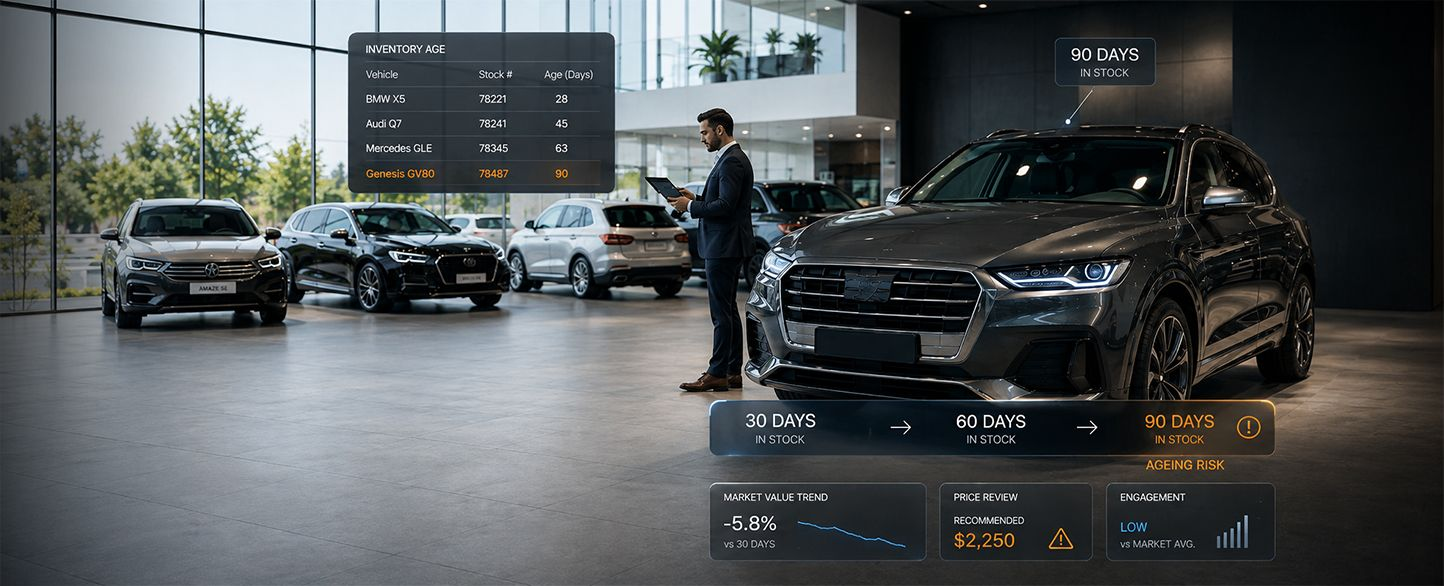
Stock movement tracking gives dealerships clarity on exactly where each vehicle stands at any point in its lifecycle, whether it is available, currently being transferred between locations, booked for a customer, under inspection, in service preparation ahead of delivery, sold, or pending final delivery.
This level of detail allows managers to make faster, more informed decisions. Rather than waiting for a branch to manually report status, decision-makers can see movement patterns across the network and respond proactively, whether that means expediting a transfer to meet customer demand or flagging a vehicle stuck in inspection for longer than expected.
Role of DMS, CRM, Website, and Marketplace Integration
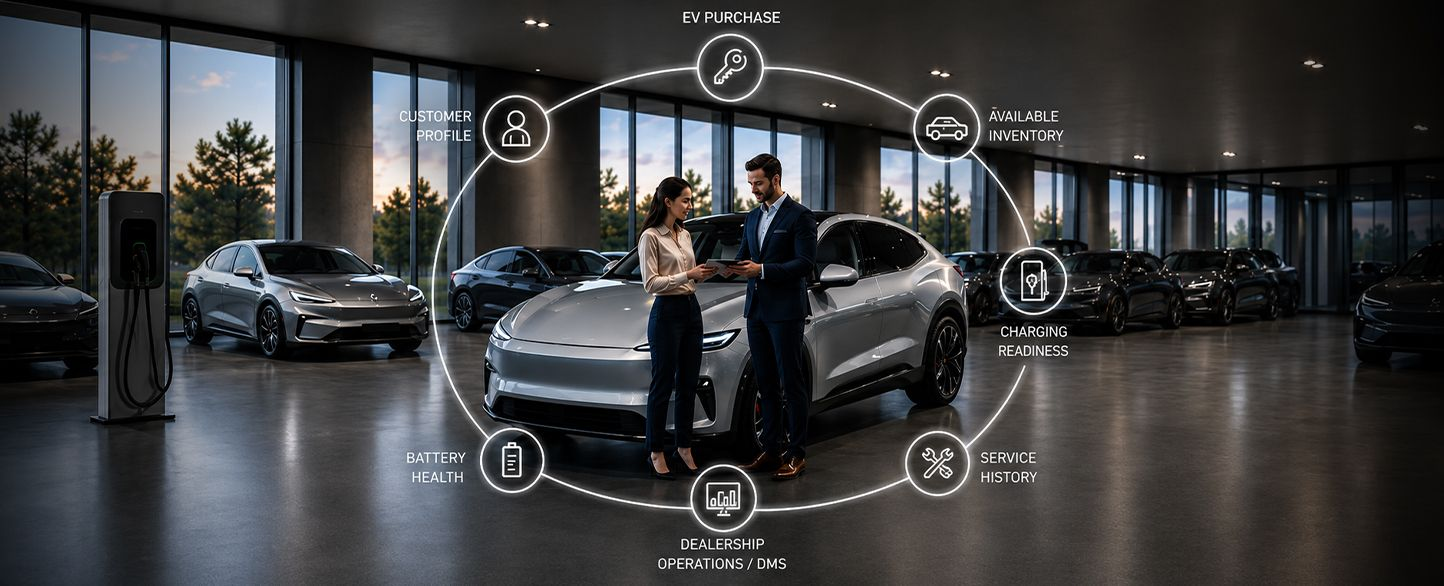
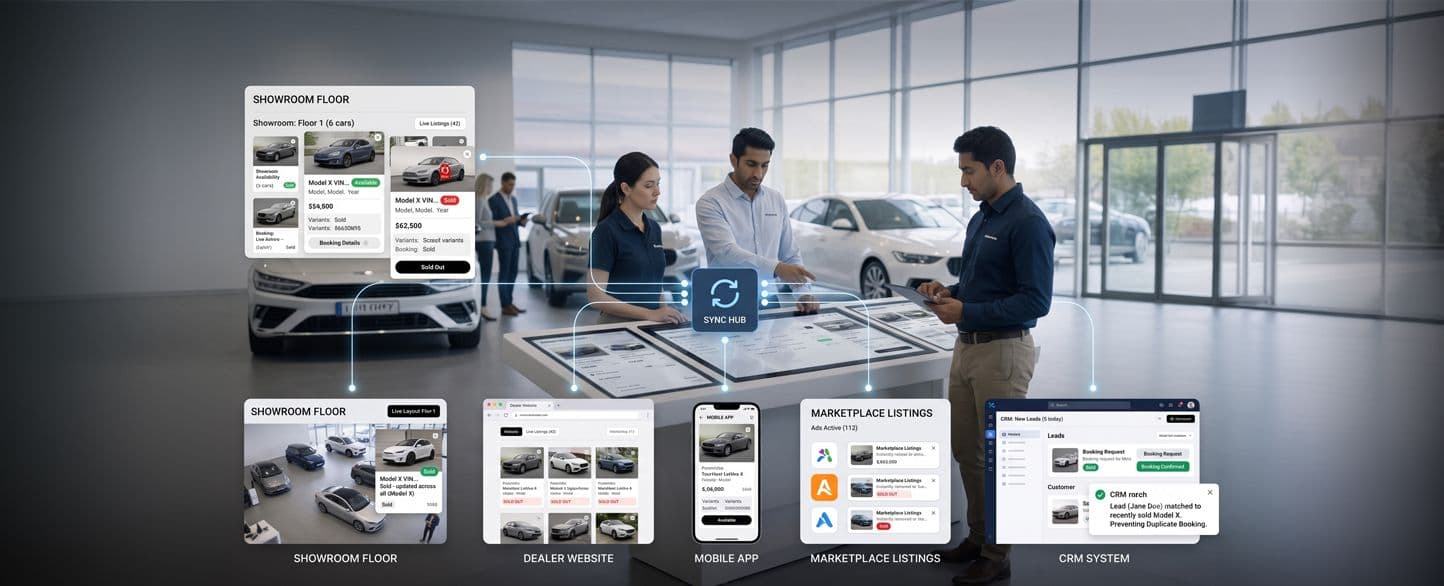
Real-time inventory sync does not function as a standalone feature. It works through integration across the dealer's entire technology stack; dealer management systems, CRM platforms, dealership websites, ecommerce platforms, and third-party marketplaces all need to communicate with each other continuously.
When these systems are properly connected, a status update entered once in the DMS reflects automatically across the website listing, the CRM record, and any marketplace where the vehicle is advertised. This eliminates the need for manual updates across multiple platforms and ensures every customer-facing channel shows consistent, accurate information at all times.
Why APAC Dealerships Need Real-Time Inventory Sync Now
Several converging trends make this capability increasingly urgent for dealerships across APAC. Car buyers across the region are conducting more of their research digitally before ever visiting a showroom, making accurate online listings a critical first impression. EV and hybrid models are entering dealer lineups at a growing pace, often with more complex variant and configuration options that are harder to track manually.
Used-car retail activity continues to grow significantly across markets like India, Indonesia, and Vietnam, where inventory turnover is often faster and less standardized than new vehicle stock. Dealer groups are also expanding their branch networks across these markets, increasing the complexity of multi-location stock management. Together, these trends mean that dealerships relying on manual or fragmented inventory processes are increasingly exposed to lost sales and customer trust issues that their better-connected competitors are avoiding.
How Oorjit Supports Real-Time Inventory Sync
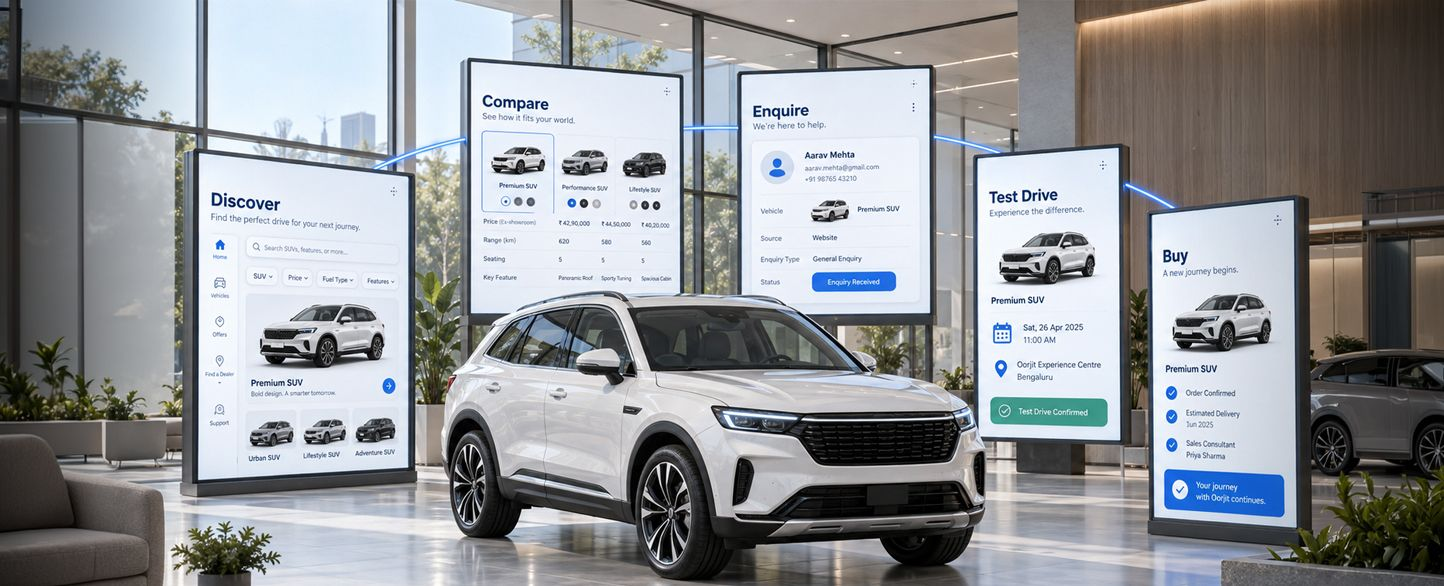
Oorjit is built as an automotive digital retail and e-commerce platform that helps dealerships connect inventory, customer enquiries, CRM data, online listings, and test drive bookings within a single, integrated ecosystem. Rather than treating inventory as a separate system that needs manual reconciliation, Oorjit's approach centers on keeping every customer-facing and internal system updated from one connected source.
This means a dealer group managing branches across multiple cities, or an OEM distributor coordinating stock across a regional dealer network, can maintain accurate vehicle availability across their website, marketplace listings, and sales teams without relying on manual cross-checking between departments.
Conclusion
Real-time inventory sync is not simply an operational upgrade for automotive dealerships in APAC; it is becoming a foundation for accurate listings, faster sales response, stronger customer trust, better branch control, and improved lead conversion. As digital-first car buying behavior, EV adoption, used-car retail growth, and multi-branch expansion continue to reshape the region's automotive retail landscape, dealerships that solve inventory mismatch early will be better positioned to scale their digital retail operations with confidence.
FAQs
Q: How do I stop losing sales because of incorrect vehicle listings online?
A: Real-time inventory sync ensures your website and marketplace listings update the moment a vehicle's status changes, whether it is sold, reserved, or transferred. This prevents customers from enquiring about vehicles that are no longer available, reducing wasted leads and protecting your advertising spend.
Q: Why does my dealership keep double booking the same vehicle for test drives?
A: Double bookings usually happen when branches rely on manual updates or delayed communication. A connected inventory system shows live booking status across every location, so once a vehicle is reserved at one branch, every other branch and sales channel reflects that immediately.
Q: How can I track vehicle stock across multiple showroom locations in real time?
A: A centralized inventory platform consolidates stock data from every branch, warehouse, and showroom into a single live view. Managers can see exact vehicle location, status, and movement across the entire network rather than relying on individual branch reports.
Q: What causes inventory mismatches between dealership websites and showroom stock?
A: Mismatches typically stem from manual stock updates, delayed branch communication, and disconnected systems where the website is not directly linked to the dealer management system. Real-time sync closes this gap by updating every connected platform from a single source the moment stock changes.
Q: Can inventory sync integrate with my existing DMS and CRM without a full system overhaul?
A: Most modern inventory sync solutions are designed to integrate with existing dealer management systems and CRM platforms through APIs, allowing dealerships to connect their current tools rather than replacing them entirely.
Q: How does real-time inventory help used-car dealers manage faster stock turnover?
A: Used-car inventory often changes more frequently than new vehicle stock, with each unit being unique. Real-time tracking ensures listings stay accurate as vehicles are inspected, priced, reserved, or sold, helping used-car dealers and marketplaces avoid the customer trust issues that come from outdated stock information.