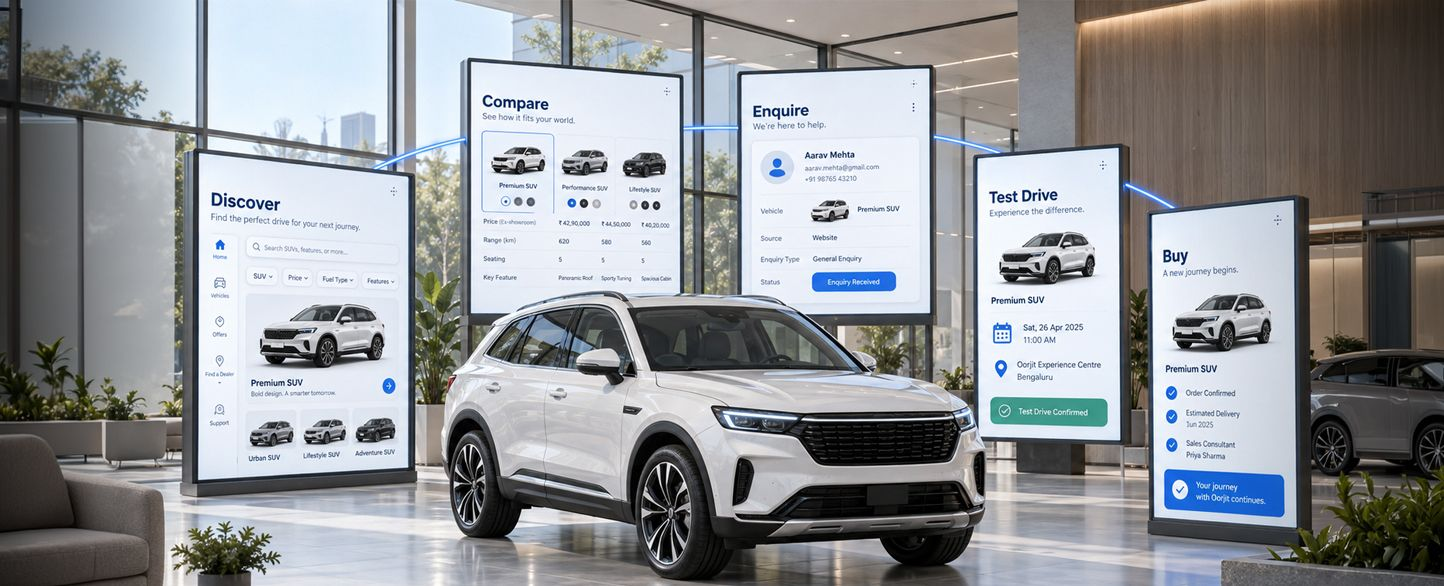
Automotive retail now operates across multiple touchpoints, from walk-ins and websites to marketplaces and OEM campaigns. As lead volumes grow and customer journeys become more complex, fragmented data and disconnected systems directly affect response times, sales efficiency, and customer experience.
This is where automotive CRM software becomes essential. More than a lead database, it centralizes customer interactions across sales and service, improving follow-ups and visibility. However, not all dealership CRM software is built for real operational needs. This article acts as a practical decision guide, outlining the key questions dealerships should ask to ensure their automotive CRM platform supports long-term performance and growth.
1. What Business Problems Should Automotive CRM Software Solve?
At its core, automotive CRM software must address the operational challenges that directly affect revenue and customer satisfaction. Dealerships should begin by clearly defining the problems the CRM is expected to solve.
One of the most common issues is fragmented lead management. Enquiries arriving from different channels are often handled inconsistently, leading to delayed responses or missed follow-ups. A capable system centralizes all leads into a single workflow, enabling structured tracking and accountability.
Another critical area is visibility into customer interactions. Sales conversations, test drives, quotations, and service visits often live in separate systems or personal notes. A strong car dealership CRM consolidates this information, allowing teams to understand customer history at a glance.
Improving follow-up discipline is equally important. Automated reminders, task assignments, and response tracking help sales and service teams maintain consistency, even during peak lead periods. When evaluating customer relationship management in automotive, dealerships should focus on how effectively the CRM eliminates manual gaps rather than adding administrative burden.
2. Can the CRM Support the Full Dealership Sales Journey?
The automotive sales journey does not begin and end with a lead. From first enquiry to vehicle delivery, multiple stages require coordination across teams.
A capable car dealership CRM should support lead qualification, assignment, follow-ups, and pipeline visibility in a structured manner. Sales managers should be able to see where each prospect sits, which actions are pending, and where deals are slowing down.
Beyond lead handling, the system must align with real-world dealership processes such as test drive scheduling, quotation sharing, negotiation tracking, and booking confirmations. Dealership CRM software that only captures basic lead data often fails to support these critical transitions.
An effective automotive CRM platform ensures that no handoff between sales executives, managers, and delivery teams results in information loss. This continuity directly influences customer confidence and conversion rates.
3. How Well Does the Automotive CRM Integrate with Dealership Systems?
Integration is one of the most overlooked yet decisive factors in CRM success. Automotive CRM platforms rarely operate in isolation. They must connect seamlessly with core dealership systems.
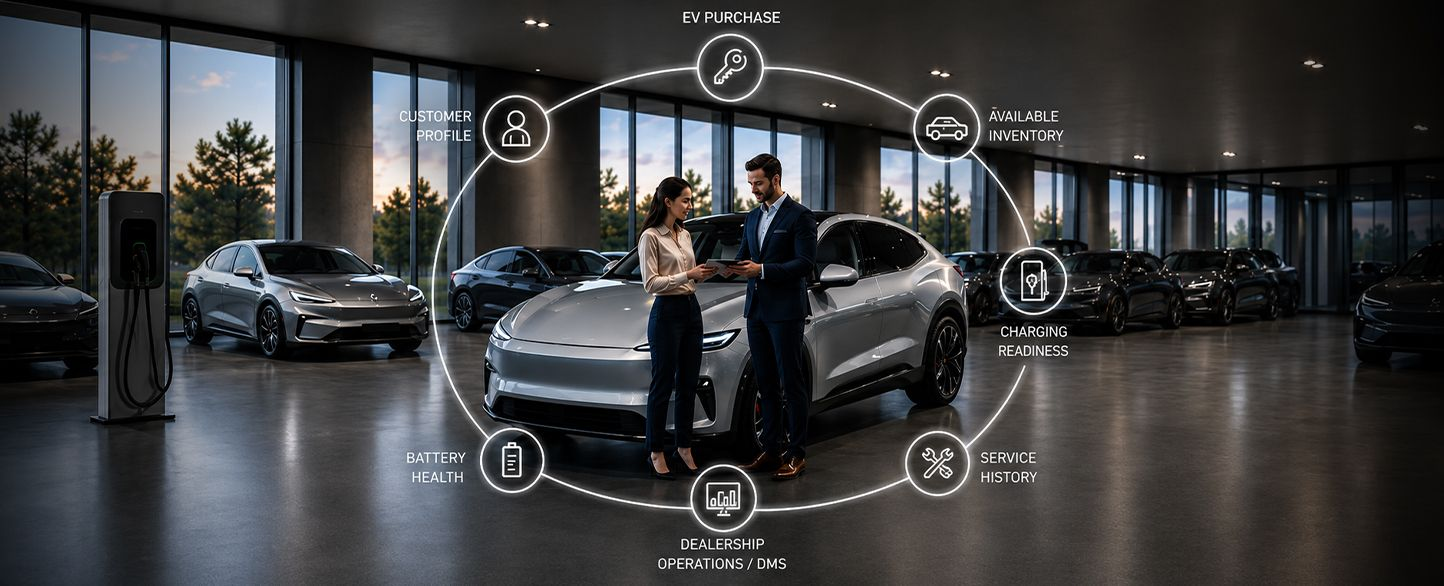
Key integrations to evaluate include Dealer Management Systems, inventory and order management tools, and reporting platforms. Without integration, teams are forced to manually update records, increasing the risk of errors and inconsistencies.
An integrated dealership software environment allows centralized customer data to flow across sales, service, and operations. When inventory availability, booking status, and customer history are visible in one place, decision-making becomes faster and more accurate.
Dealerships should assess whether the automotive CRM platform supports real-time data exchange and whether it can adapt to existing infrastructure rather than requiring disruptive replacements.
4. Does the CRM Support After-Sales and Service Relationships?
Customer relationships do not end at vehicle delivery. After-sales engagement is a major driver of lifetime value, repeat purchases, and brand loyalty.
An effective after-sales CRM for automotive supports service reminders, maintenance scheduling, and follow-up communication. Customers expect timely notifications for servicing, warranty milestones, and renewals, and CRM automation plays a key role in delivering these touchpoints consistently.
Beyond reminders, service CRM for dealerships should maintain a complete service history linked to the customer profile. This enables personalized engagement and informed conversations during future visits.
By supporting automotive customer retention through structured after-sales workflows, the CRM helps dealerships move from transactional sales to long-term relationship management.
5. Can Dealership CRM Software Scale with Business Growth?
As dealerships grow, CRM limitations often surface. What works for a single location may struggle under multi-branch operations or high enquiry volumes.
Dealership CRM software should support multi-location management with centralized oversight and location-specific controls. Role-based access ensures that sales executives, managers, and administrators see only what is relevant to their responsibilities.
Performance under high lead volumes is equally important. Enterprise automotive CRM solutions must handle spikes in enquiries without slowing down workflows or data synchronization.
For dealer groups, CRM for dealer groups should enable consolidated reporting while maintaining operational flexibility across individual outlets.
6. What Level of Data Visibility and Reporting Does the CRM Provide?
Data visibility is one of the primary reasons dealerships invest in automotive CRM software. Without clear insights, decision-making becomes reactive rather than strategic.
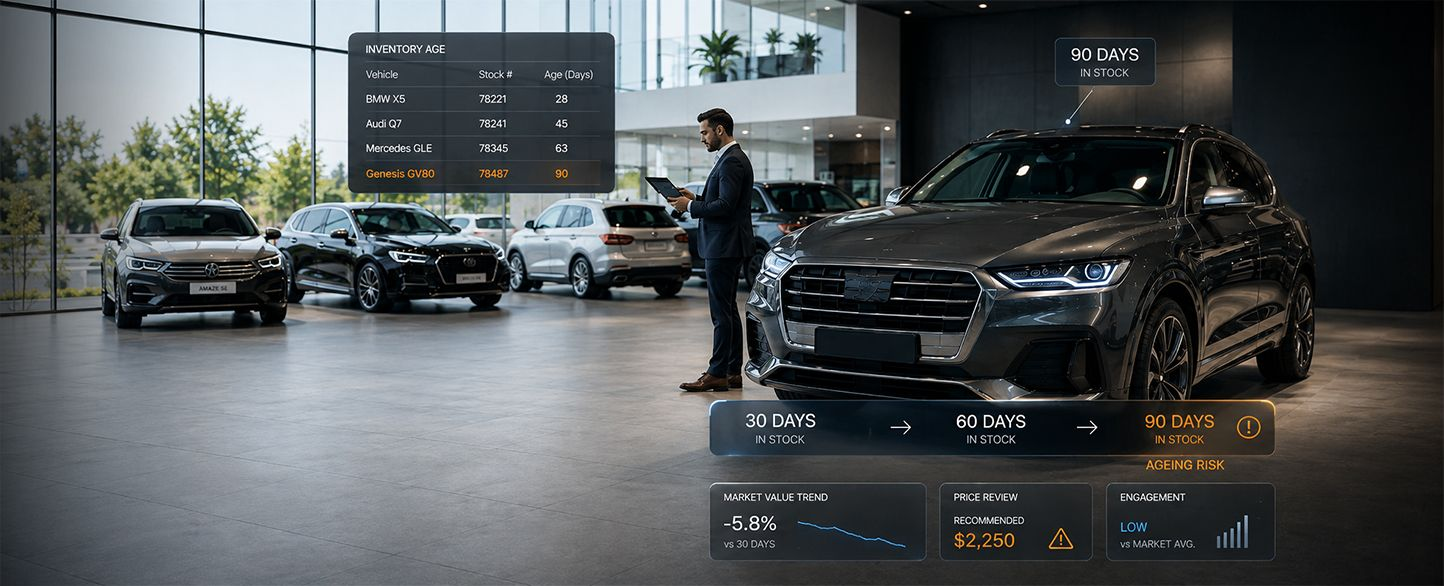
Sales performance dashboards should provide real-time visibility into lead sources, conversion rates, response times, and pipeline movement. Managers need to identify bottlenecks early and intervene before opportunities are lost.
Customer lifecycle reporting helps dealerships understand how prospects move from enquiry to purchase to service engagement. CRM analytics for dealerships should translate activity into actionable insights rather than static reports.
Access to real-time dealership insights enables leadership teams to align sales strategies, staffing, and marketing investments with actual performance trends.
7. How Easy Is Adoption for Dealership Teams?
Even the most powerful CRM fails if teams do not use it consistently. Ease of adoption is a critical success factor.
A user-friendly dealership CRM aligns with existing workflows rather than forcing teams to adapt to rigid processes. Sales and service teams should be able to complete daily tasks quickly without extensive training.
Workflow alignment, intuitive interfaces, and CRM workflow automation reduce resistance and increase adoption rates. Training requirements should be manageable, especially in environments with frequent staff turnover.
When evaluating an automotive CRM platform, dealerships should consider how quickly teams can become productive and whether the system supports gradual adoption rather than abrupt change.
8. Does the Automotive CRM Align with Long-Term Digital Strategy?
CRM decisions should not be made in isolation. They must align with the dealership’s broader digital and operational roadmap.
Future-ready automotive CRM software supports integration with emerging tools, evolving retail models, and new customer engagement channels. As dealerships adopt more digital-first sales and service experiences, CRM systems must adapt without requiring complete replacement.
A scalable automotive CRM should support modular expansion, allowing dealerships to add capabilities as business needs evolve. Modern dealership platforms are built to grow alongside operations rather than constrain them.
Evaluating long-term alignment ensures that CRM investments remain relevant beyond immediate requirements.
How Oorjit Supports Modern Automotive CRM Requirements
Oorjit delivers automotive CRM software designed specifically for dealership and OEM-aligned retail operations, not generic sales teams. The platform centralizes leads, customer interactions, and sales activities across digital and showroom channels, giving dealerships a single source of truth for every customer journey.
Oorjit’s automotive CRM platform supports structured lead assignment, real-time pipeline visibility, and consistent follow-ups from first enquiry through vehicle delivery. Built to integrate with inventory, order management, and dealership systems, it ensures customer data flows seamlessly across sales, service, and operations.
Beyond pre-sales, Oorjit enables after-sales engagement through service history visibility, follow-up workflows, and retention-focused CRM capabilities. Designed for scalability, the platform supports multi-location dealer networks, role-based access, and high lead volumes, making it suitable for growing dealership groups.
By positioning CRM as part of a connected dealership ecosystem, Oorjit helps dealerships improve execution today while staying aligned with long-term digital transformation goals.
Key Takeaways
- Choosing the right automotive CRM software requires more than comparing features.
- Dealerships must evaluate integration, scalability, and after-sales support.
- A strong dealership CRM software solution supports the full customer lifecycle.
- Modern automotive CRM platforms work best as part of connected dealership ecosystems.
- CRM effectiveness depends on how well it aligns with real dealership workflows.
- Data visibility and reporting are critical for improving conversion and retention outcomes.
- Long-term CRM value comes from adaptability to evolving sales and service models.
Conclusion
Selecting automotive CRM software is a strategic decision that influences sales performance, customer retention, and operational efficiency. By asking the right questions early, dealerships can avoid short-term fixes that create long-term limitations.
Rather than focusing solely on adoption speed or feature lists, dealerships should evaluate how well the CRM supports end-to-end sales journeys, after-sales relationships, and future growth within a unified platform.
Before investing in automotive CRM software, dealerships should assess how effectively it aligns with long-term operational goals and supports sustained performance across the entire dealership ecosystem.
Explore how Oorjit helps dealerships unify CRM, sales, and after-sales operations on a single platform.
FAQs
Q: Does car dealership CRM help increase conversion rates?
A: Yes. By centralizing leads, improving response times, and enforcing structured follow-ups, car dealership CRM systems help sales teams convert more enquiries into confirmed bookings.
Q: Can automotive CRM software manage service reminders?
A: Modern automotive CRM software supports automated service reminders, follow-ups, and maintenance scheduling as part of after-sales engagement.
Q: Does dealership CRM software support service history tracking?
A: Most dealership CRM software platforms maintain a complete customer and vehicle service history, enabling informed service interactions and personalized communication.
Q: Why are dealerships moving to automotive CRM platforms?
A: Dealerships adopt automotive CRM platforms to centralize customer data, improve coordination across departments, and support scalable, data-driven retail operations.