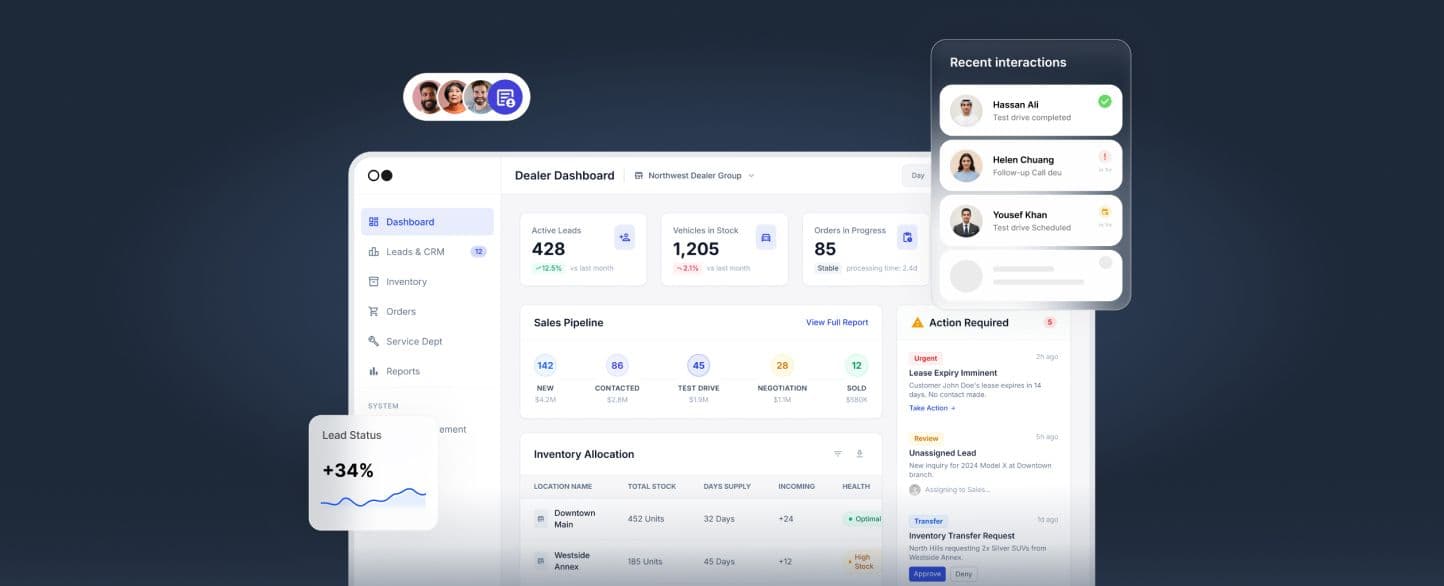
High-volume automotive businesses operate under conditions that smaller dealerships never experience. Large transaction volumes, multiple locations, shared inventory pools, and tight delivery timelines create operational pressure that exposes every weakness in software design. In this environment, adopting modern Automotive Software Solutions is not a technology upgrade. It is an operational risk decision.
Many automotive organisations modernise software with the right intent but the wrong assumptions. They expect faster processes without rethinking coordination. They expect visibility without fixing data ownership. They expect scale without redesigning workflows. These expectations are what cause modernisation efforts to stall, fragment, or quietly fail.
Why “Modern” Automotive Software Often Replicates Old Problems
One of the most common mistakes high-volume automotive businesses make is assuming that newer software automatically means better outcomes. In reality, many modern automotive software solutions digitise existing inefficiencies instead of removing them.
When legacy workflows are moved into digital tools without redesign, automation simply accelerates the wrong processes. Approval bottlenecks remain. Manual reconciliations persist. Teams continue to operate in silos, only faster. At scale, this creates more errors, not fewer.
True modernisation requires changing how work flows across departments, not just how tasks are recorded.
Why High-Volume Automotive Operations Break Software Assumptions
Many automotive software solutions are tested and validated in low to medium-volume environments. These conditions hide systemic weaknesses. At high volumes, assumptions around timing, ownership, and dependency break down.
Inventory updates that lag by minutes affect multiple sales teams simultaneously. Order changes ripple across locations. Small data mismatches escalate into customer-facing errors. Software that performs well in isolation fails when multiple teams act on shared data at the same time.
High-volume automotive businesses require systems designed for concurrency, pressure, and constant change.
What Are Automotive Technology Platforms and How Are They Different from Traditional Software?
Automotive technology platforms are designed to coordinate workflows, data, and users across multiple functions. Unlike traditional software tools that solve isolated problems, platforms act as shared operational foundations.
Traditional automotive software focuses on individual tasks such as lead tracking, inventory updates, or order processing. Automotive digital platforms, by contrast, manage how these tasks connect. They rely on shared data models, consistent business rules, and cross-department workflows.
For high-volume automotive businesses, this distinction matters. Growth exposes dependencies between teams. When systems are not built to coordinate those dependencies, operational complexity increases instead of decreasing.
Why Do Automotive Digital Platforms Struggle at High Volumes?
Many automotive digital platforms perform well during early adoption but struggle when transaction volumes increase. This is not always a technical limitation. More often, it is an operational one.
At high volumes, small inefficiencies compound quickly. Delays in inventory updates affect sales accuracy. Manual handoffs between systems create bottlenecks. Reporting lags prevent timely decision-making. What initially appears as a minor workflow gap becomes a systemic issue under scale.
High-volume automotive businesses require platforms that are designed to manage pressure, concurrency, and continuous change. Without that foundation, even modern software becomes a constraint.
What Goes Wrong When Automotive Businesses Adopt Platform-Based Solutions?
A common mistake is treating platform-based automotive solutions like traditional tools. Businesses expect fast setup, minimal process change, and immediate ROI without adjusting how teams work.
Platforms require alignment. They depend on clearly defined workflows, ownership models, and data discipline. When organisations adopt platforms without rethinking processes, the result is partial usage, parallel systems, and growing dependence on manual workarounds.
Another frequent issue is phased implementation without end-to-end planning. When only parts of the operation move onto the platform, fragmentation persists, and the platform’s value is never fully realised.
Why Do Unified Automotive Platforms Fail to Deliver Real-Time Visibility?
Many solutions are marketed as unified automotive platforms, yet real-time visibility remains elusive. The reason is that unification is often superficial.
True unification requires a single source of operational truth. In practice, many platforms still rely on background synchronisation between disconnected modules. This creates delays, mismatches, and reporting inconsistencies.
High-volume automotive operations demand immediate visibility into sales pipelines, inventory positions, and order status. When data ownership is unclear or workflows remain split across systems, real-time insight becomes impossible regardless of software capability.
The Hidden Cost of Partial Integration in Automotive Software
Partial integration is often seen as a compromise. In practice, it is one of the most expensive outcomes of poor modernisation. When only some systems are connected, manual reconciliation becomes permanent.
Teams spend time validating numbers instead of acting on them. Discrepancies become normalised. Decision-making slows. Over time, confidence in system data erodes. High-volume automotive businesses cannot afford this loss of trust, especially when margins are tight.
Are Unified Automotive Platforms Better Than Multiple Standalone Systems?
Unified automotive platforms are not inherently better than standalone systems. They are better when coordination matters more than specialization.
Standalone systems can perform individual functions very well. However, as transaction volumes increase, the cost of coordination between systems rises sharply. Manual reconciliation, duplicate data entry, and delayed reporting become operational risks.
For high-volume automotive businesses, the advantage of unified platforms lies in consistency, governance, and control. The trade-off is reduced flexibility if the platform is poorly designed. This makes platform evaluation a strategic decision rather than a technical one.
What Should High-Volume Automotive Businesses Look for in an Automotive Retail Platform?
An effective automotive retail platform must support scale without increasing complexity. Feature lists are less important than architectural principles.
Key evaluation factors include:
- Workflow alignment across sales, inventory, orders, and service
- A shared data model with clear ownership
- The ability to adapt processes without rebuilding systems
- Performance consistency under peak operational load
In markets like the UAE and GCC, where dealer groups operate at high velocity, these capabilities determine whether a platform supports growth or restricts it.
Key Takeaways
- High-volume automotive businesses struggle with modernisation when software is selected without aligning to real operational workflows.
- Modern automotive software solutions must coordinate sales, inventory, orders, and service as connected processes, not separate systems.
- Automotive platforms fail at scale when they depend on delayed data synchronisation instead of shared, real-time data models.
- Treating platform-based automotive solutions like plug-and-play tools leads to partial adoption and persistent manual workarounds.
- Unified automotive platforms only deliver value when data ownership and workflow execution are centralised.
- As transaction volumes grow, the operational cost of managing multiple standalone systems increases exponentially.
- Successful modernisation prioritises adaptability and operational resilience over feature-heavy implementations.
Conclusion
For high-volume automotive businesses, modernisation is not about adopting newer tools. It is about building systems that can coordinate people, processes, and data under constant operational pressure.
Modern automotive software solutions succeed when they function as operating systems for the business, not feature collections. Organisations that understand this distinction are far better positioned to scale efficiently, adapt quickly, and maintain control as complexity grows.
Ready to explore how unified automotive software solutions can support high-volume operations?
FAQs
Q: What is the difference between automotive platforms and standalone software tools?
A: Automotive platforms coordinate data and workflows across functions, while standalone tools focus on isolated tasks. Platforms are designed for scale and operational alignment.
Q: Why do automotive software platforms fail at scale?
A: They fail when workflows remain fragmented, data ownership is unclear, or platforms are implemented without organisational alignment.
Q: Can automotive retail platforms handle multi-location dealer operations?
A: Yes, but only when designed with centralized data models and flexible workflow controls that support local execution.
Q: What causes data fragmentation in automotive digital platforms?
A: Partial integrations, parallel systems, and inconsistent data ownership are the most common causes of fragmentation.
Q: How do unified automotive platforms improve real-time operational visibility?
A: They rely on shared data models and direct workflow execution rather than delayed synchronization between systems.
Q: Why do automotive software modernisation projects fail?
A: Failure usually results from poor change management, unrealistic timelines, and treating platforms as plug-and-play tools.
Q: What mistakes do businesses make when implementing automotive digital platforms?
A: Common mistakes include partial adoption, underestimating process change, and relying on manual workarounds post-implementation.
Q: When do automotive businesses outgrow standalone automotive software?
A: Businesses outgrow standalone systems when coordination overhead exceeds the efficiency gained from specialized tools.
Q: Are platform-based automotive solutions flexible enough for future growth?
A: Well-designed platforms are more flexible over time because they adapt workflows without replacing systems.
Q: How should automotive businesses evaluate platform-based software solutions?
A: Evaluation should focus on workflow fit, data governance, scalability, and long-term operational adaptability.