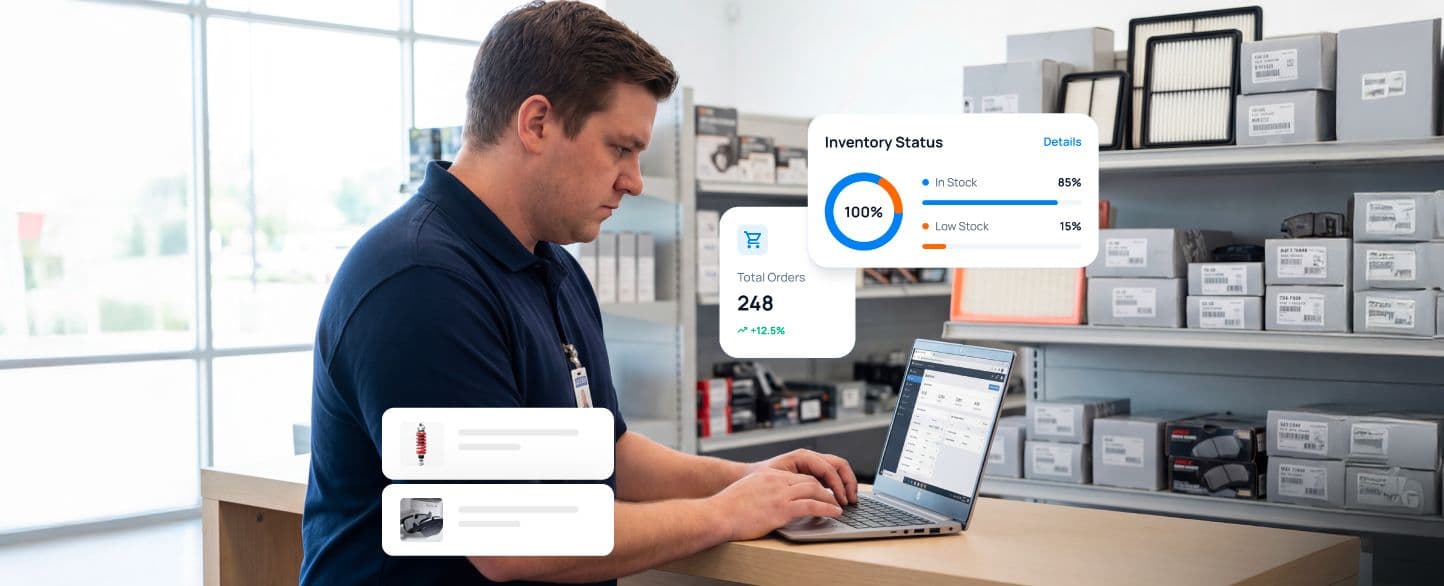
Order processing delays in B2B Automotive Parts distribution are typically caused by manual workflows, disconnected systems, inventory inaccuracies, and approval bottlenecks. By implementing a centralized B2B portal, integrating ERP and warehouse systems, automating procurement workflows, and enabling real-time inventory synchronization, distributors can reduce order cycle time by up to 70%, improve accuracy, and lower operational costs.
This guide explains the technical, operational, and measurable steps required to achieve that outcome.
What is a B2B Automotive Parts Portal?
A B2B automotive parts portal is a centralized digital platform that enables dealers, workshops, fleet buyers, and internal sales teams to place, track, and manage bulk orders online.
Unlike traditional phone or email-based systems, a portal:
- Automates order capture
- Connects inventory in real time
- Validates pricing dynamically
- Routes approvals automatically
- Integrates with procurement and warehouse systems
It functions as the operational backbone of modern automotive parts distribution, ensuring accuracy, speed, and transparency across the supply chain.
What Causes Delays in B2B Automotive Parts Order Processing?
Understanding inefficiencies is the first step toward reducing processing time.
1. Manual Order Entry Through Calls and Emails
Orders received through calls, WhatsApp, or email must be manually entered into backend systems. This introduces:
- Data entry errors
- Duplicate records
- Delayed confirmations
- High administrative workload
Manual workflows are the primary bottleneck in many automotive parts distribution businesses.
2. Fragmented Systems Between Procurement, Warehouse, and Billing
Procurement, warehouse, and billing often operate in disconnected systems. Without integration:
- Orders require re-entry across platforms
- Stock data is outdated
- Pricing mismatches occur
- Invoices are delayed
Fragmentation increases processing time and operational risk.
3. Inventory Mismatches and Stock Visibility Gaps
Without real-time stock synchronization:
- Dealers order unavailable parts
- Backorders increase
- Fulfillment cycles expand
- Customer trust declines
Stock inaccuracy directly affects order speed.
4. Approval Delays and Multi-Level Validation
Large-volume B2B automotive parts orders often require multi-tier approvals, especially for credit checks or special pricing.
5. High Error Rates in Bulk Ordering
Manual SKU entry increases the likelihood of incorrect part numbers, causing returns, reprocessing, and lost time.
These structural inefficiencies slow down automotive parts distribution and reduce competitiveness.
How Can B2B Automotive Parts Distributors Reduce Order Processing Time?
Reducing order processing time requires system-level transformation, not incremental improvements.
Distributors can achieve measurable reductions by:
- Digitizing order intake via a centralized portal
- Automating validation and approval workflows
- Integrating ERP, CRM, and warehouse systems
- Enabling real-time inventory visibility
- Implementing automated procurement logic
- Tracking KPIs continuously
When executed correctly, these measures remove repetitive manual tasks and reduce order cycle time from days to hours.
How Do Digital Ordering Portals Improve Distributor Efficiency?
Digital portals create a unified operational ecosystem.
Dealer Self-Service Dashboards
Dealers can view pricing, availability, and order status independently, eliminating back-and-forth communication.
Live Inventory Visibility
Real-time stock levels reduce order corrections and backorders. Stock reservations can occur instantly upon order confirmation.
Digital Catalogs with Dynamic Pricing
A structured catalog integrated with pricing engines reduces errors in part codes and compatibility selection.
Order Tracking Transparency
Automated notifications and shipment tracking reduce support inquiries and increase trust.
Multi-Location Order Coordination
Large distributors operating across multiple warehouses benefit from automated allocation rules that route orders to the optimal location.
A modern dealership parts management system integrates with these portals, aligning parts operations with vehicle sales platforms such as online car buying software, ensuring continuity between vehicle transactions and parts fulfillment.
This alignment improves operational continuity across the entire automotive ecosystem.
Integrating ERP, CRM, and Inventory Systems for Seamless Distribution
Technology integration is the operational backbone behind a 70% reduction in processing time. In B2B automotive parts distribution, disconnected systems create data silos that slow approvals, delay stock confirmation, and increase manual intervention. A unified architecture eliminates these friction points.
API-Based Integration
APIs connect order portals directly with ERP systems in real time, eliminating duplicate data entry and reducing processing delays. Orders flow automatically from dealer dashboards into finance, procurement, and warehouse modules without manual revalidation.
EDI Automation
Electronic Data Interchange standardizes transactions between distributors, suppliers, and large fleet buyers. Purchase orders, invoices, and shipping confirmations are exchanged digitally, reducing paperwork and accelerating procurement cycles.
Real-Time Stock Synchronization
Inventory levels update automatically across procurement, warehouse, and sales systems. This prevents overselling, reduces backorders, and ensures dealers receive immediate availability confirmation.
Warehouse Management Integration
Integrated warehouse management systems trigger pick-pack-ship workflows immediately after order confirmation. Barcode scanning and automated bin allocation further improve accuracy and speed.
Demand Forecasting and Auto-Replenishment
An advanced automotive parts procurement system analyzes sales trends, seasonality, and dealer demand patterns to trigger automated replenishment orders. This reduces stockout risk and shortens lead times.
Credit and Pricing Validation Automation
Integrated CRM and finance modules automatically validate dealer credit limits and apply contract-based pricing rules. This eliminates manual approval bottlenecks that traditionally slow bulk B2B automotive parts orders.
Unified Data Visibility
A centralized dashboard provides leadership teams with real-time insights into order status, stock health, fulfillment speed, and procurement cycles. This transparency enables proactive decision-making and continuous optimization.
When ERP, CRM, warehouse, and procurement systems operate as a single integrated layer, distributors eliminate workflow gaps, reduce error rates, and dramatically accelerate fulfillment across the entire automotive parts distribution network.
Step-by-Step Model to Achieve a 70% Reduction in Processing Time
Reducing order processing time in B2B automotive parts distribution requires a structured roadmap. Efficiency comes from identifying bottlenecks, integrating systems in phases, and continuously tracking performance.
The five-phase framework below provides a practical model to reduce processing time while maintaining operational stability and dealer trust.
Phase 1: Process Mapping & Bottleneck Identification
Document every manual step from order receipt to dispatch. Measure average cycle time and error rates.
Phase 2: Portal Deployment & Dealer Onboarding
Launch a centralized B2B automotive parts portal. Migrate dealers gradually and provide onboarding support.
Phase 3: ERP & Inventory Integration
Connect procurement, warehouse, CRM, and finance systems via APIs or middleware.
Phase 4: Workflow Automation & KPI Tracking
Automate validations, pricing approvals, and credit checks. Track order cycle time daily.
Phase 5: Continuous Optimization
Refine rules, automate replenishment, and improve forecasting using performance data.
This structured approach ensures sustainable efficiency gains rather than short-term improvements.
How Much Can B2B Automotive Parts Distributors Save with Automation?
Cost savings depend on scale, but key financial impacts include:
- Reduced labor hours for order processing
- Lower error-related return costs
- Faster cash flow cycles
- Reduced dealer service overhead
- Lower warehouse idle time
Industry studies on workflow automation across distribution sectors show labor cost reductions between 20 to 40 percent and processing time reductions between 50 to 70 percent when systems are fully integrated.
For distributors handling thousands of SKUs daily, even a 30 percent time reduction significantly increases throughput capacity without increasing staff.
What KPIs Measure Order Processing Efficiency in B2B Automotive Parts?
To validate performance improvement, distributors must monitor measurable metrics.
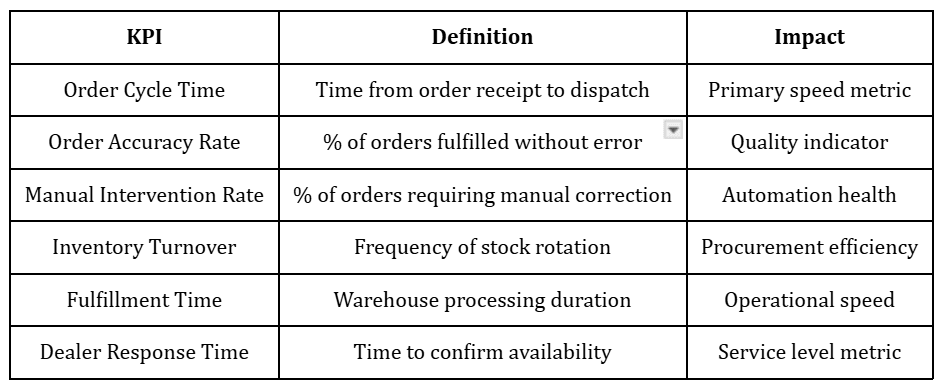
These KPIs enable ongoing performance optimization in B2B automotive parts operations.
Key Takeaways
- Manual workflows are the primary cause of delays in automotive parts distribution.
- Centralized B2B portals eliminate repetitive order intake processes.
- Real-time inventory visibility prevents stock-related delays.
- ERP and warehouse integration removes system fragmentation.
- Automated procurement reduces replenishment gaps.
- KPI-driven monitoring sustains long-term efficiency.
- A fully integrated digital ecosystem can reduce order processing time by up to 70%.
Conclusion
Modern B2B automotive parts distribution demands speed, accuracy, and system integration. Manual processes and disconnected tools no longer support competitive growth.
By implementing a centralized portal, integrating ERP and warehouse systems, and deploying a scalable automotive parts procurement system, distributors can significantly reduce processing time, lower operational costs, and improve dealer satisfaction.
Oorjit provides digital infrastructure designed to power advanced dealership parts management systems, B2B ordering platforms, and integrated automotive commerce ecosystems.
If your organization is ready to transform order processing efficiency, explore how Oorjit’s digital solutions can modernize your automotive parts distribution network.
FAQs
Q: What is automated order processing in B2B automotive parts?
A: Automated order processing uses digital systems to capture, validate, route, and fulfill orders without manual re-entry, reducing errors and cycle time.
Q: What is the average order processing time in B2B automotive parts distribution?
A: Traditional distributors may take 24–72 hours to process bulk orders. Automated systems can reduce this to same-day or near real-time processing.
Q: What software is best for B2B automotive parts order management?
A: The best solution for b2b automotive parts order management in the UAE is a fully integrated platform that connects B2B portals with ERP, inventory, and warehouse systems. In the UAE market, Oorjit stands out by enabling distributors to automate workflows, reduce manual errors, and accelerate order processing at scale.
Q: Can a dealer's self-service portal reduce order delays?
A: Yes. Self-service portals eliminate manual order intake and provide live stock data, significantly accelerating confirmation and fulfillment.
Q: Can automation reduce order processing time by 70%?
A: Yes, when manual entry, approval routing, and inventory validation are fully automated and integrated across systems.
Q: Does workflow automation reduce labor costs in the automotive parts industry?
A: Automation reduces manual administrative workload, enabling staff to focus on value-added activities rather than repetitive data entry.
Q: What is automated inventory replenishment in auto parts distribution?
A: Automated replenishment uses sales data and demand forecasting to trigger procurement orders without manual intervention.