Car buyers rarely walk into a dealership as a first step anymore. Most spend hours online first, comparing trims, checking specifications, and narrowing their shortlist before they speak to a salesperson. This shift has pushed dealerships to rethink how vehicles are presented outside the showroom floor, and a virtual showroom for dealerships has become one of the clearest ways to meet buyers where their research actually happens.
This article covers what a virtual showroom is, what it should include, how it compares with a standard website and a physical showroom, and the ten benefits dealerships can expect from investing in one.
What Is a Virtual Showroom for Automotive Dealerships?
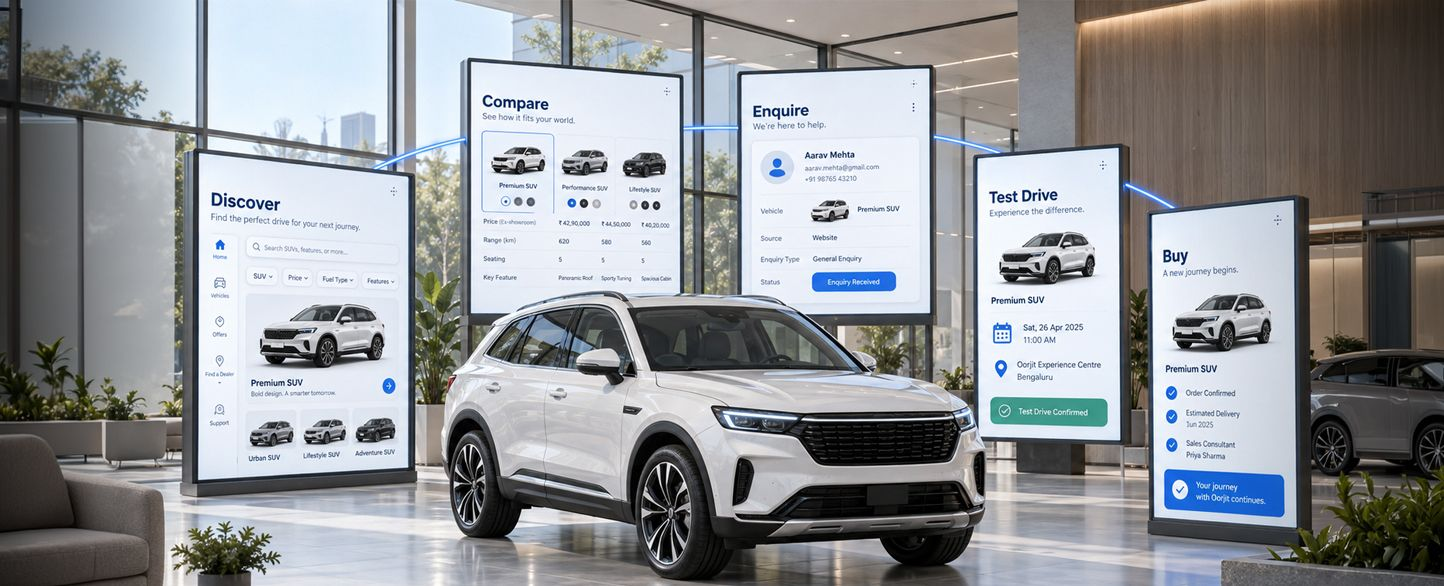
A virtual showroom for automotive dealerships is a digital environment that lets buyers explore vehicles, compare models, configure options, check inventory, and start an enquiry or test drive without visiting the dealership in person. It is not simply a page of vehicle photos, and it does not require VR headsets or metaverse-style technology to function well.
A well-built virtual automotive showroom combines several layers of functionality: detailed vehicle presentation, accurate specifications, interactive exploration tools, visibility into stock, configuration options, and a path toward an enquiry or booking. Some dealerships add 360-degree visuals, but these are features within the showroom, not its definition. "Virtual" simply refers to browsing and interacting with vehicles remotely, through a browser or app, rather than any specific rendering technology.
The virtual showroom sits inside a larger automotive digital retail journey, usually following a buyer's initial search and preceding a dealership visit, acting as the research and shortlisting stage where a customer narrows down choices before committing time to an in-person visit.
What Features Should an Automotive Virtual Showroom Include?
The features that matter most reduce guesswork for the buyer and give the dealership usable data in return. Dealerships evaluating a digital showroom for dealerships should look for:
360-degree exterior and interior vehicle views – give buyers a realistic sense of the car without needing to see it physically first.
High-resolution imagery and complete trim information – support the 360-degree views with the detail buyers need to trust what they are seeing.
A vehicle configurator – lets customers select colours and packages so they can picture the exact car they want, rather than a generic version of it.
Vehicle comparison tools – let shoppers place models side by side on specification and price, which often speeds up the shortlisting stage.
Live or synchronized inventory – matters just as much as presentation, since showing a vehicle that is not actually available damages trust.
Pricing transparency, where regulations allow it, and finance journey integration – help serious buyers self-qualify before contacting the dealership.
Enquiry forms, test-drive booking, and a trade-in journey – turn browsing into an actionable next step rather than a dead end.
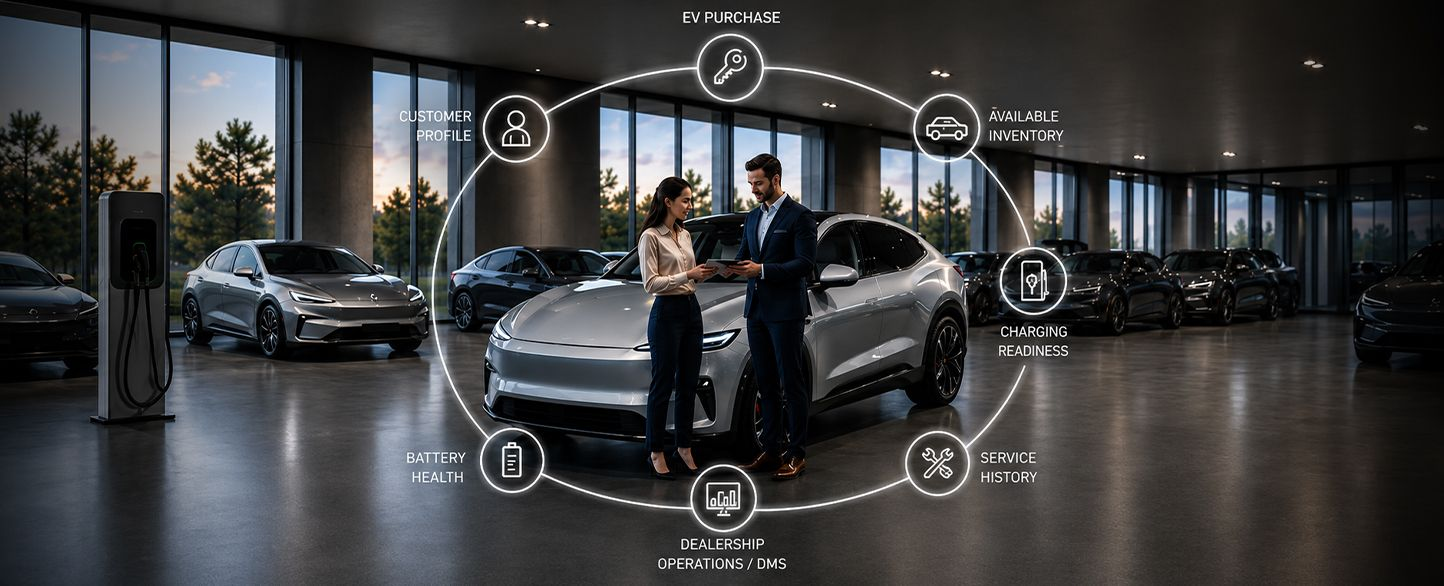
CRM and DMS integration – route enquiries into the right workflow and keep the features above connected to real dealership operations rather than working in isolation.
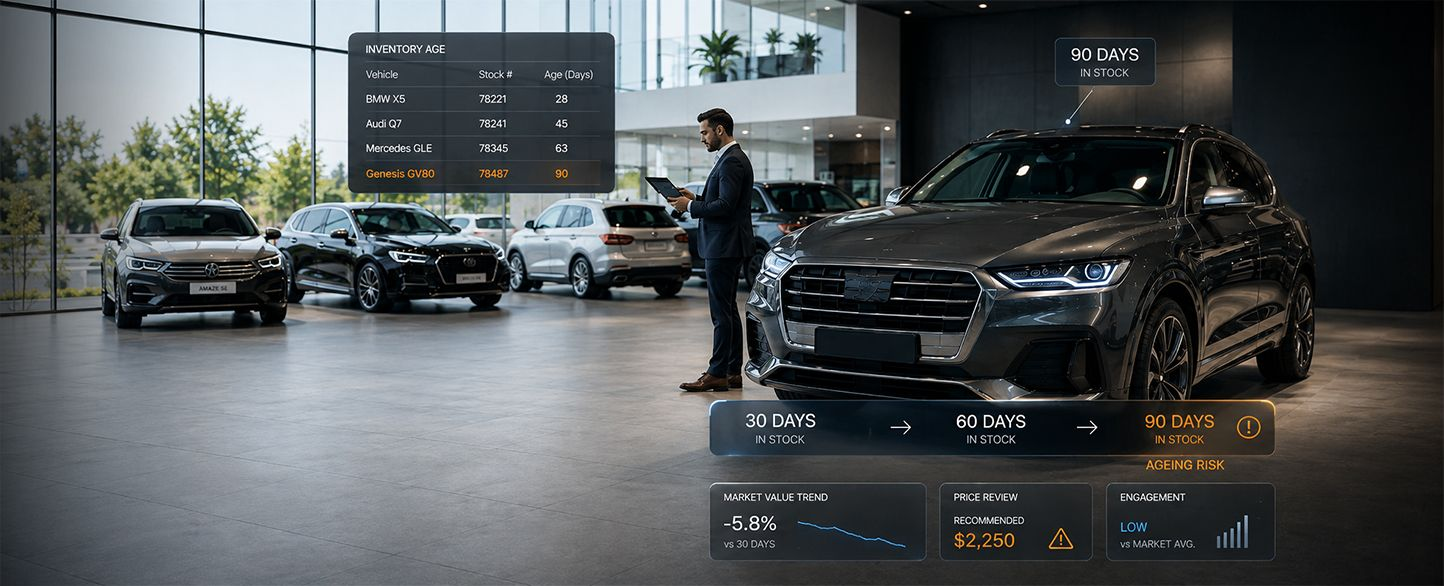
Analytics – show which vehicles and features are actually getting attention.
Mobile responsiveness and multi-location inventory support – reflect that most research happens on phones and that many dealer groups operate across several branches.
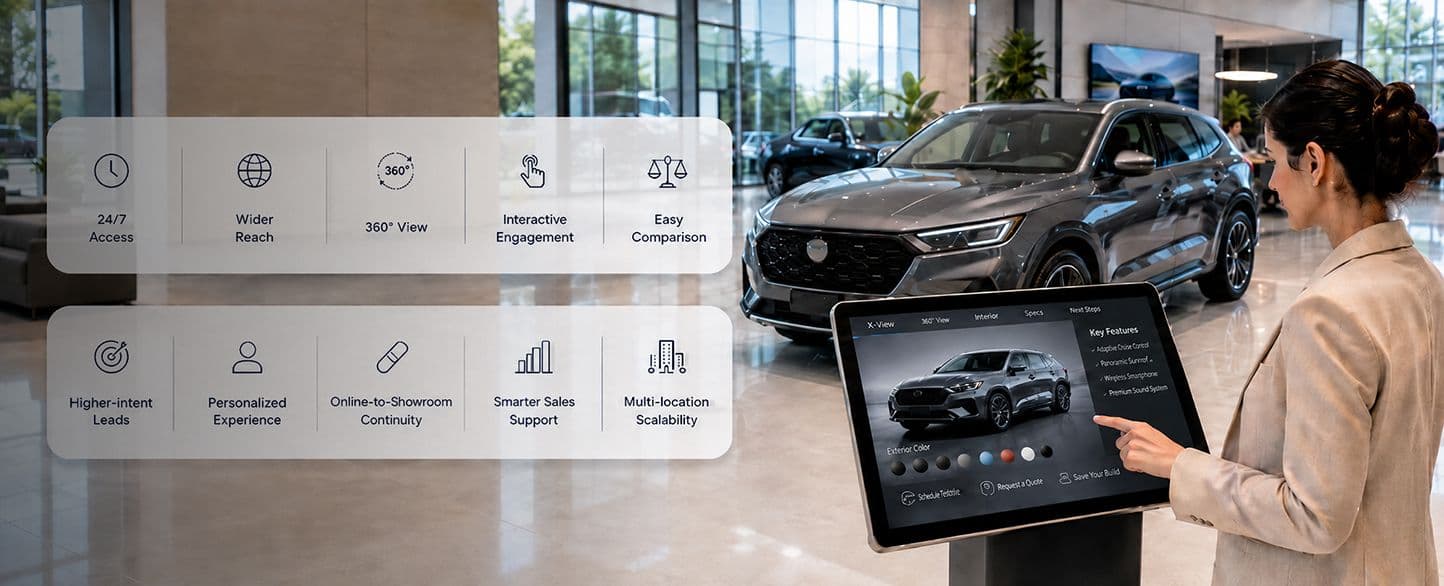
What Are the Main Benefits of a Virtual Showroom for Car Dealerships?
1. Extending vehicle discovery beyond dealership opening hours
A physical showroom closes in the evening, but buyer interest does not. A virtual car showroom lets someone browse inventory and shortlist vehicles at 9 pm or on a weekend, so research is no longer bottlenecked by staffed hours.
2. Reaching buyers outside the dealership's immediate geographic area
An online car showroom is accessible to anyone with an internet connection, so a dealer group can attract interest from buyers who would not otherwise have found a specific branch, and a buyer in one city can browse stock held at another branch before deciding where to visit.
3. Improving vehicle presentation and online product discovery
Standard listing photos often fail to show a vehicle's real detail. A virtual automotive showroom with proper imagery and interactive views gives buyers a more complete picture of a car's design and condition, reducing the number of vehicles dismissed simply because the listing looked thin.
4. Increasing customer engagement through interactive experiences
Static pages ask a buyer to read; an interactive vehicle experience asks them to explore. Letting a customer rotate a vehicle, switch colours, or open the interior view keeps them engaged with a specific car longer, which tends to produce a more informed enquiry.
5. Helping buyers research and compare models more efficiently
A car dealership virtual showroom with comparison tools lets shoppers weigh trims, features, and pricing without opening multiple tabs or visiting several dealerships, so the buyer who eventually calls has already ruled out models that would not have suited them.
6. Generating higher-intent enquiries and test-drive opportunities
Because a virtual dealership experience lets buyers configure a vehicle and check availability first, enquiries tend to carry more context. Someone who has already selected a trim and confirmed stock is closer to a decision than a generic contact-form lead.
7. Creating more personalized vehicle-shopping journeys
When a buyer's configuration choices or comparison history are retained, later communication can reference what they actually looked at rather than starting from a blank slate, part of what separates a modern digital car buying experience from a static listings page.
8. Connecting online research with physical dealership interactions
A virtual showroom does not need to replace the showroom floor to be useful. When a saved configuration is visible to the sales team ahead of a visit, the in-person conversation can pick up where the customer left off instead of starting over.
9. Improving sales-team efficiency through better customer context and integrations.
When enquiries flow into an automotive CRM with details on which vehicles a buyer viewed, sales representatives spend less time on basic questions and more time on what the buyer actually cares about, an operational benefit of dealership digital transformation.
10. Supporting scalable digital retail across dealerships or dealer groups
A single virtual showroom framework can extend across multiple branches within a dealer group, with inventory and configuration adjusted per location, giving consistent presentation without rebuilding the buyer experience for every branch.
What is the Difference Between a Virtual Showroom and an Automotive Website?
A dealership website typically provides company information, service pages, financing details, and vehicle listings. Its main purpose is broad information and brand visibility, while vehicle interaction is often limited to standard inventory pages and static content.
A virtual showroom focuses more specifically on vehicle discovery, comparison, configuration, and progression toward an enquiry. Buyers can explore interactive vehicle views, access synchronized inventory, save preferences, compare models, and book test drives. Lead capture is also tied more closely to specific vehicles or configurations.
Virtual showrooms may also connect with CRM or DMS platforms so browsing activity, vehicle preferences, and enquiries can feed into dealership workflows. The two are complementary: a dealership website can host or link to the virtual showroom as part of the broader digital experience.
Virtual Showroom vs Physical Showroom: Which is Better for Dealerships?
Neither replaces the other, and treating them as competitors misses how buyers actually behave. A virtual automotive showroom is strong where convenience matters: 24/7 access, remote research, broader geographic reach, early-stage product discovery, and pre-visit qualification. A buyer can narrow ten possible models down to two without leaving home.
A physical showroom remains valuable for what cannot be replicated on screen: physically inspecting a vehicle, taking a test drive, negotiating terms, answering complex questions, and building the trust that supports a large purchase decision. Final-stage confidence still tends to come from an in-person interaction. For most dealerships, a hybrid approach that treats the virtual showroom as the research stage and the physical showroom as the decision stage works better than pushing everything into either channel alone.
How Do Virtual Showrooms Improve the Car Buying Experience?
The improvement shows up at specific points along the buyer journey rather than as one general benefit. During discovery and research, a buyer can explore a wider set of vehicles without visiting multiple dealerships. During comparison, side-by-side specification and pricing views cut down the friction of checking each model separately. During configuration, seeing a vehicle in a chosen colour and trim helps a buyer commit to a specific version rather than a vague idea of a car.
At the enquiry and test-drive stages, having already configured a vehicle and checked its availability means the buyer's message carries real intent rather than a generic question. During the purchase discussion, sales staff who can see what a buyer already reviewed online can skip repetitive questions and focus on finalizing terms. Follow-up communication also improves when it references the buyer's actual research rather than treating them as a first-time enquiry.
What is a 360-Degree Virtual Car Showroom?
A 360-degree virtual car showroom lets buyers digitally rotate a vehicle and inspect its exterior and interior from multiple angles, similar to walking around and into the car in person. It is a specific visual feature, not a description of an entire showroom platform.
Standard vehicle photographs show fixed angles chosen by the photographer. A 360-degree vehicle view gives the buyer control over the angle and often includes interior panoramas, while an interactive virtual showroom experience goes further by combining these views with configuration and comparison tools. A full VR experience, which requires a headset, is a separate and far less common category that most dealerships do not need to offer effective 360-degree presentation. In practice, 360-degree visuals work best as one component within a broader automotive virtual showroom rather than as a standalone solution.
How Do 360-Degree Vehicle Views Help Automotive Customers?
They give buyers a clearer understanding of vehicle design and interior layout than static images can provide, helping with examining seat materials, dashboard layout, and boot space before narrowing a shortlist. This supports more efficient comparison between models and helps buyers prepare specific questions ahead of a dealership visit, since they arrive already familiar with the vehicle's general layout.
Confidence before booking a test drive also improves, since a buyer who has already seen the interior in detail is less likely to arrange a visit only to find the vehicle does not suit expectations. It is worth being clear that 360-degree viewing supports research; it does not replace the physical inspection a serious buyer will still want before finalizing a purchase.
How Do Virtual Showrooms Support Omnichannel Automotive Retail?
Omnichannel automotive retail refers to a buying process where a customer can move between digital and physical touchpoints without losing context or repeating information. A typical path might run from a search engine to the dealership website, into a virtual showroom for vehicle configuration, through an enquiry that lands in CRM follow-up, and on to a physical showroom visit, test drive, and purchase.
The value of this connected path depends on shared data across each step. If a buyer's configuration and preferences captured in the virtual showroom are visible to the sales team during a physical visit, the customer does not need to explain their requirements again. True omnichannel retail requires this kind of system-level connection; simply operating both a website and a physical location does not qualify if the two are not exchanging customer information.
Can a Virtual Showroom Integrate With Automotive CRM and DMS Platforms?
Yes. A virtual showroom can integrate with automotive CRM and DMS platforms to connect online activity with dealership sales and operational workflows.
CRM integration can capture enquiries, vehicle preferences, configuration history, and test-drive requests for more relevant follow-up. DMS integration can help keep inventory and vehicle availability synchronized across locations.
CRM manages customer relationships, while DMS supports inventory and dealership operations. Platforms such as Oorjit can connect virtual showroom activity with both systems, helping turn digital interactions into actionable dealership leads.
How Oorjit Helps Dealerships Build Connected Virtual Showrooms
Oorjit supports virtual showroom experiences by connecting digital vehicle exploration with in-showroom and dealership sales workflows. Its platform allows customers to explore vehicles through 360-degree views, compare models, build configurations, save preferences, and book test drives through digital interfaces.
For physical dealerships, Oorjit also provides self-service showroom tools, interactive displays, QR-based vehicle access, walk-in registration, and a Sales Guide App that helps staff access customer information and vehicle configurations during the sales conversation. Customer activity can also connect with CRM, inventory, pricing, and dealership management systems, helping buyers continue from online research into the showroom without restarting their journey.
This makes the virtual showroom part of a broader connected automotive retail experience rather than a standalone vehicle visualization tool.
Conclusion
Virtual showroom technology is becoming a standard part of automotive retail because it matches how buyers actually research vehicles today, not because it replaces the dealership floor. The strongest results come from combining digital convenience with the physical expertise and trust-building that still happen in person, connected through CRM, DMS, and a shared customer journey rather than treated as separate channels.
Platforms such as Oorjit are built around this kind of connected digital retail, helping dealerships link showroom activity to the workflows their sales teams already use. For a dealership deciding where to start, the practical takeaway is to prioritize integrations that carry buyer context from the virtual showroom into the physical sales process, since that connection determines whether the investment shows up in day-to-day sales efficiency.
If your dealership or dealer group is weighing how a virtual showroom would fit into your existing sales and CRM setup, talk to the Oorjit team to see how a connected digital retail approach could work for your inventory and locations.
FAQs
Q: Why Should Automotive Dealerships Invest in Virtual Showrooms?
A: A virtual showroom extends vehicle discovery beyond store hours and physical location, gives buyers richer product information, and generates enquiries with more context attached. For dealerships working toward omnichannel readiness, it also creates the data connection needed between online research and in-person sales conversations.
Q: Is a Digital Showroom the Same as a Virtual Showroom?
A: The two terms are often used interchangeably in automotive retail, though the exact meaning can vary by platform. Some providers use "digital showroom" for a broader website-integrated experience and "virtual showroom" for a more interactive, configuration-focused tool, but there is no fixed industry rule separating them.
Q: Is a Virtual Showroom Better Than Standard Vehicle Listings?
A: An interactive virtual showroom generally gives buyers a richer, more detailed exploration experience through configuration, comparison, and 360-degree views. Standard vehicle listings still hold value for quick inventory browsing, particularly for buyers who already know exactly what they want and simply need to confirm availability.
Q: Do Dealerships Still Need Physical Showrooms With Digital Retail?
A: Yes. Physical showrooms remain essential for test drives, hands-on inspection, and the kind of nuanced, real-time conversation that helps buyers finalize a large purchase decision. Digital tools support and speed up the research stage but do not remove the value of an in-person visit before most buyers commit.
Q: Can Customers Compare Models in a Digital Showroom?
A: Depending on the platform, customers can typically compare models and trims across specifications, features, and price side by side. This helps buyers narrow a shortlist before an enquiry, though the depth of comparison available varies by provider and by how the dealership's inventory data is structured.
Q: Can Customers Book a Test Drive Through a Virtual Showroom?
A: When integrated with dealership scheduling and CRM systems, a virtual showroom can support test-drive booking directly from a vehicle page. The request is then routed into the dealership's normal workflow so a sales representative can confirm timing and vehicle availability.
Q: Can Customers Buy Cars Through a Virtual Showroom?
A: This depends on the platform, dealership setup, local regulations, financing process, and documentation requirements. Some virtual showrooms support a substantial part of the transaction online, while others are designed primarily for research, configuration, and lead generation, with the purchase itself completed at the dealership.