Electric vehicle sales run on a different kind of data than gas vehicle sales. A buyer comparing a sedan and an SUV wants to know mileage and financing options. A buyer comparing two EVs wants to know range, charging infrastructure nearby, incentive eligibility, and how the vehicle's battery holds up over time. That difference changes what dealerships should expect from automotive CRM providers. A system built around traditional vehicle data can track a lead, but it cannot always answer the questions an EV shopper is actually asking.
Choosing the right CRM for EV sales means looking past the standard feature checklist and asking whether the platform was built to handle EV-specific data from the start.
What Features Should a CRM Have for Electric Vehicle Sales?
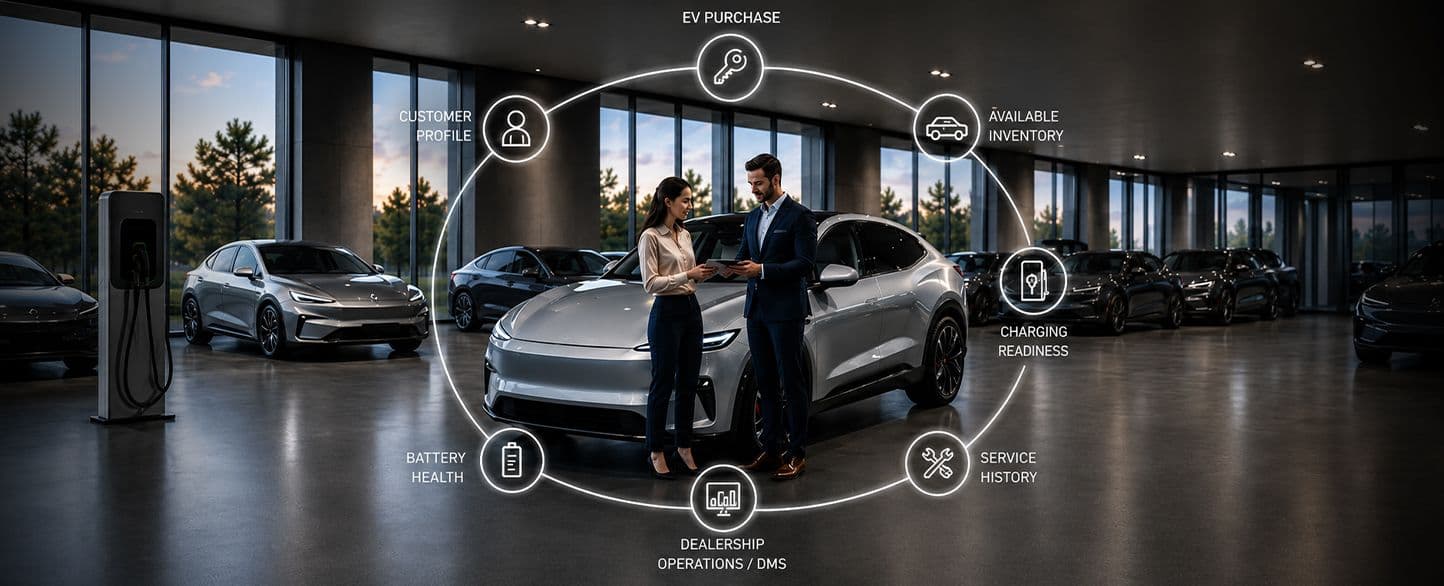
The starting point for any evaluation of automotive CRM providers is whether the system treats EV data as a first-class part of the customer record, not an afterthought bolted onto a gas vehicle template. That means capturing charging preferences, home versus public charging access, range requirements, and incentive or rebate eligibility as standard fields, not custom workarounds. EV lead management depends on this level of detail because an EV shopper's decision hinges on factors a traditional CRM was never designed to track. A dealership evaluating providers should ask directly whether EV fields are native to the platform or something the vendor promises to configure later. That answer alone filters out a large share of the field.
How Do Automotive CRM Providers Handle EV Inventory Updates?
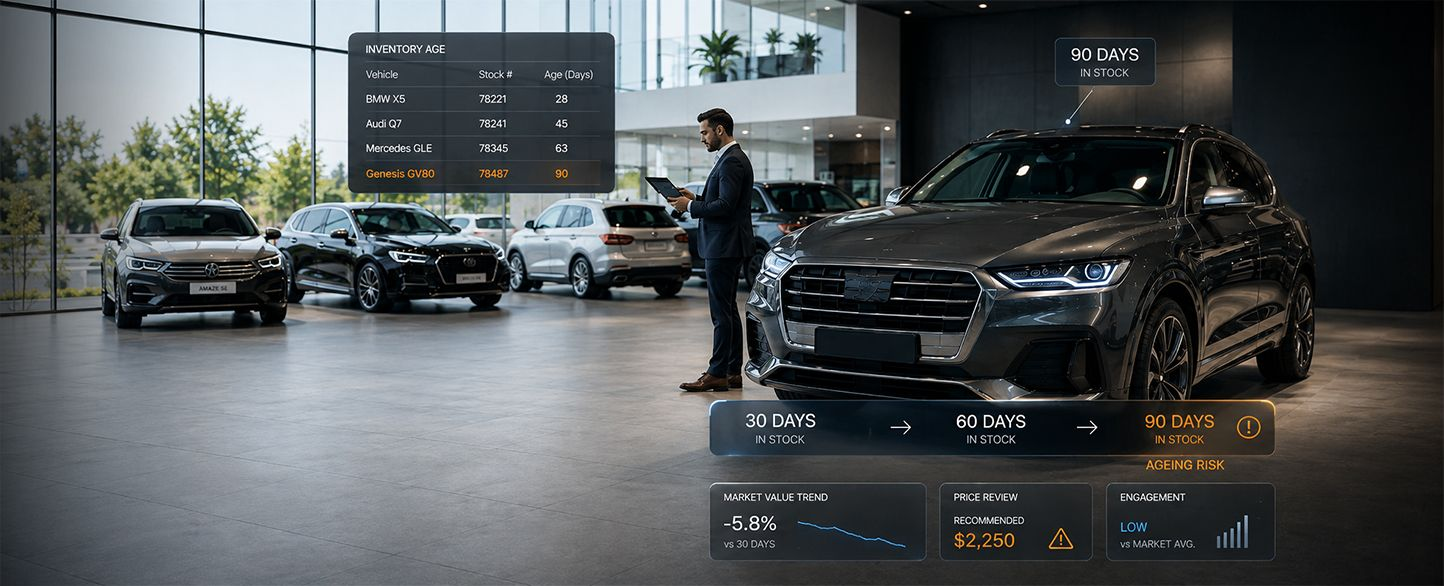
Once lead data is in place, the next question is whether inventory data keeps pace with it. EV inventory sync matters more than it does for gas vehicles because EV buyers cross-shop specifications heavily before ever visiting a lot. If the CRM shows a vehicle as available when it sold two days ago, or lists an outdated range figure, that mismatch erodes trust faster than a similar error would on a conventional listing. The strongest automotive CRM providers sync inventory in real time rather than through nightly batch updates, so the customer record and the actual lot reflect the same information at the same moment.
Why Is Real-Time DMS Integration Important for EV Dealerships?
Inventory sync depends on what sits behind it, and that is the connection between the CRM and the dealership management system. Real-time DMS integration is what allows battery health data, charging history, and service records to move continuously between systems instead of sitting in separate silos. Without it, a sales rep working an EV lead has no visibility into whether that customer's vehicle was recently serviced or flagged for a battery issue, which weakens the sales conversation at the exact moment it needs the most context. A CRM that only offers a one-way export from the DMS is not offering integration in any meaningful sense.
How Does CRM Software Support EV Test Drive Scheduling?
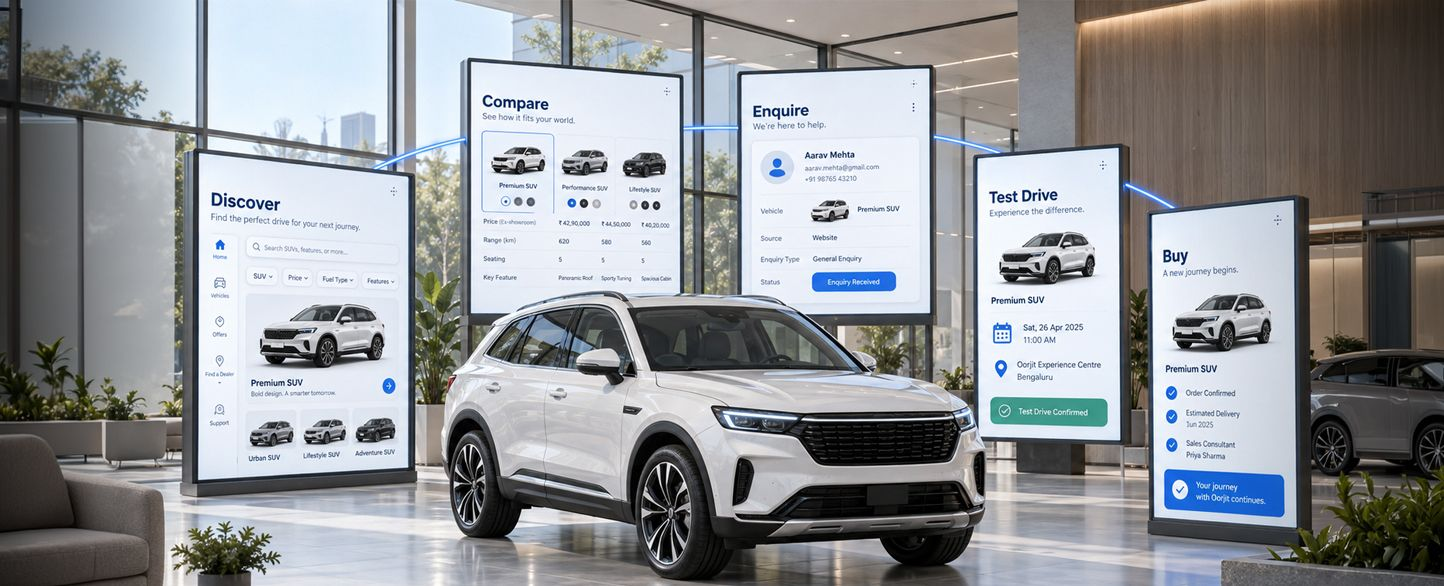
With inventory and service data connected, the electric vehicle sales pipeline moves toward the test drive stage, and this is where scheduling automation earns its place. A CRM built for EV sales should let a customer book a test drive directly from a vehicle listing, confirm availability against real inventory, and send automated reminders that account for charging status ahead of the appointment. The data generated from that test drive, including which features the customer asked about and how long they spent in the vehicle, should feed back into lead scoring automatically rather than requiring a rep to log it manually after the fact.
How Can Automotive CRM Providers Support a Conquest Strategy for EV Buyers?
Some of the strongest EV leads are not new to the category; they are already driving a competitor's electric vehicle and open to switching. A conquest strategy for EV buyers depends on a CRM's ability to identify these shoppers through first-party data such as service inquiries, trade-in valuations, or charging network sign-ups, then segment them separately from first-time EV buyers. The messaging a conquest lead needs is different from the messaging a first-time buyer needs, and a CRM that treats every EV lead the same way misses this distinction. Providers that support custom segmentation for conquest audiences give dealerships a real edge in a category where brand loyalty is still forming.
How Does a CRM Track EV Lease Maturity and Returns?
Retention starts well before a lease actually ends. A significant share of EVs first registered a few years ago were acquired through leasing, which means a large wave of lease maturities is landing now, and dealerships that get ahead of it retain more of that business. A CRM built for this should flag upcoming lease maturities automatically and surface them to sales teams months in advance, not at the moment the customer walks in to ask about their options. This kind of forward tracking is one of the clearest differentiators between automotive CRM providers built for EV volume and those that treat lease data as a generic field.
How Does a CRM Help Dealerships Retain Off-Lease EV Customers?
Once a lease maturity is flagged, retention depends on what the CRM does with that information. Off-lease EV customers are a high-value audience because they already understand the ownership experience and are more likely to stay within the category if the next step is easy. A capable CRM should trigger loyalty offers, trade-up sequencing, and personalized outreach based on the customer's actual usage patterns and remaining vehicle value, rather than sending the same generic renewal message to every lessee regardless of their situation. This is where retention data for EV owners needs to diverge meaningfully from retention data built around gas vehicle ownership cycles.
How Does an Automotive CRM Improve EV Customer Follow-Up?
The pipeline closes where it began, with follow-up that either reinforces trust or erodes it. Automated follow-up cadences work well for routine touchpoints, but EV customers often have specific questions about charging, range in different conditions, or incentive deadlines that a templated message cannot answer. The CRM should be able to route these more complex inquiries to a human rep automatically, rather than looping the customer through another automated sequence. A follow-up system that knows when to step back and let a person take over is a stronger long-term retention tool than one that automates every interaction indiscriminately.
Choosing among automotive CRM providers for EV sales comes down to whether the platform was built around electric vehicle data or adapted to tolerate it. Real-time inventory sync, DMS integration, lease maturity tracking, and conquest segmentation are not add-on features for EV-focused dealerships; they are the baseline. Oorjit's platform is structured around these EV-specific data points from the ground up, keeping inventory, lease timing, and incentive data connected across the sales and retention pipeline rather than treating electric vehicles as an exception to a gas vehicle template.
Conclusion
Automotive CRM providers are not interchangeable once electric vehicles enter the mix. The gap between a system that logs EV data as an afterthought and one that treats charging preferences, lease maturity, and incentive eligibility as core fields shows up directly in lost leads, missed retention windows, and sales conversations that fall flat when a shopper asks a question the platform was never built to answer. Dealerships evaluating providers should test each of the areas covered here directly: ask how inventory syncs, how lease maturity gets flagged, how conquest leads get segmented, and how follow-up escalates from automation to a human rep when the question demands it.
The answers to those questions matter more than any feature list a vendor hands over. Oorjit was built around this EV-specific approach from the start, keeping inventory, lease timing, and incentive data connected across the full sales and retention pipeline rather than adapting a gas vehicle template after the fact.
Talk to Oorjit about a demo tailored to your dealership's EV inventory and lead volume.
FAQs
Q: What should dealerships look for when comparing automotive CRM providers for EV sales?
A: Dealerships should prioritize providers offering real-time inventory sync, lease maturity tracking, and incentive data handling built for electric vehicles specifically. Oorjit structures its CRM around these EV-specific data points rather than treating electric vehicles as a variant of standard inventory.
Q: What is lead deduplication in an automotive CRM?
A: Lead deduplication is the process of identifying and merging duplicate customer records that enter a CRM from multiple sources, such as a website form and a phone call from the same buyer. Oorjit's system flags and merges these automatically to keep sales teams working from one accurate record.
Q: Do EV dealerships need a different CRM than gas dealerships?
A: Not a fully separate CRM, but one configured for EV-specific data such as charging preferences, incentive eligibility, and lease maturity timing. Oorjit supports both vehicle types within one system while accounting for these EV-specific fields.
Q: Can a CRM manage EV incentive and rebate information?
A: Yes, a CRM built for EV sales can store and surface incentive and rebate eligibility at the customer record level, so sales teams do not have to check separately. Oorjit keeps this data attached to each lead throughout the sales pipeline.
Q: What makes a CRM effective for EV lead follow-up?
A: Effectiveness comes from combining automated follow-up cadences with real time inventory and incentive data, so outreach stays relevant instead of generic. Oorjit ties its follow-up automation directly to live EV inventory and lease status to keep messaging accurate.