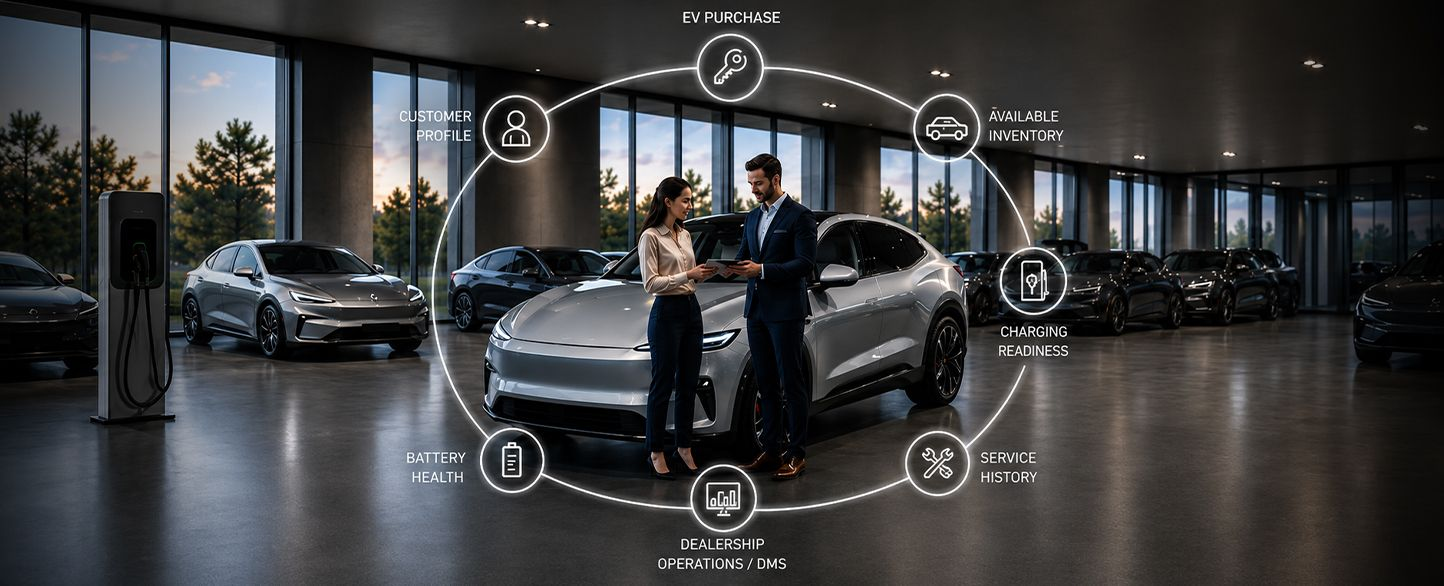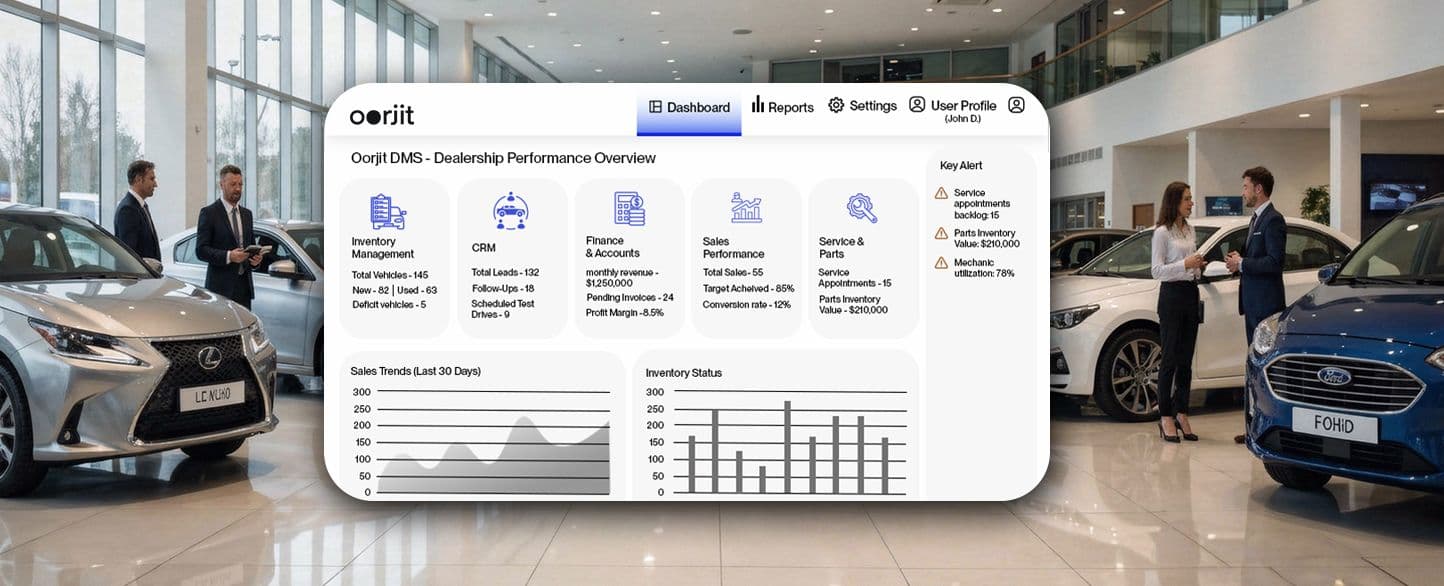
Modern automotive retail operations involve far more than vehicle sales. Enterprise dealerships manage interconnected workflows across CRM, inventory, workshop operations, financing, spare parts, customer communication, and multi-branch reporting. As dealer groups expand across regions and brands, operational complexity increases significantly.
Disconnected systems often create operational blind spots. Sales teams may lack real-time inventory visibility, workshop departments may operate separately from customer records, and management teams may struggle with fragmented reporting across locations. These inefficiencies directly affect profitability, customer retention, inventory turnover, and after-sales performance.
Enterprise dealership management software addresses these operational challenges by centralizing dealership workflows into a unified platform. The effectiveness of a dealer management system is largely determined by the quality of its modules, integrations, and enterprise capabilities. For automotive businesses operating in Southeast Asia and the UAE, scalability, centralized governance, real-time synchronization, and multi-location coordination have become critical evaluation factors when selecting a DMS platform.
Why Enterprise Automotive Businesses Need Integrated Dealership Management Software
Enterprise automotive businesses require integrated dealership management software because dealership operations are no longer isolated by department. Vehicle sales, workshop operations, spare parts inventory, financing, customer communication, and analytics all depend on synchronized data and coordinated workflows. Without integration, dealerships often experience duplicated processes, inconsistent reporting, delayed inventory updates, and limited operational visibility across branches.
Large dealer groups in Indonesia and other Southeast Asian markets frequently manage multiple brands, regional branches, warehouses, and service centers simultaneously. In these environments, disconnected software systems create operational bottlenecks that reduce efficiency and complicate decision-making.
An integrated dealer management system helps standardize processes across locations while enabling centralized reporting and operational governance. It also improves visibility into after-sales performance, inventory utilization, customer retention, and workshop productivity. For enterprise automotive retailers, the goal is not simply automation. The goal is operational coordination at scale.
Common Operational Challenges in Enterprise Dealership Networks
Fragmented Departmental Workflows
Sales, inventory, workshop, and finance departments often operate on separate systems, making data synchronization difficult.
Lack of Centralized Visibility
Management teams may struggle to track branch-level performance, inventory movement, or after-sales profitability in real time.
Inventory Inconsistencies
Without real-time synchronization, dealerships can experience inaccurate stock counts, delayed vehicle allocation, and inventory duplication across locations.
Workshop Coordination Issues
Disconnected service workflows affect technician scheduling, repair tracking, and customer communication.
Reporting Delays
Manual reporting processes reduce operational responsiveness and make enterprise-wide analysis difficult.
Core Modules in Enterprise Dealership Management Software
Enterprise dealership management software consists of interconnected operational modules that centralize automotive retail workflows. Each module manages a specific business function while sharing data with other departments in real time. This interconnected structure enables dealerships to improve visibility, standardize operations, and scale efficiently across multiple branches and service locations.
1.CRM & Lead Management Module
The CRM and lead management module manages customer interactions throughout the automotive buying and ownership lifecycle. It centralizes lead capture, sales follow-ups, communication tracking, and customer engagement across channels.
Operational Challenges It Solves
- Disconnected customer records
- Poor lead visibility
- Inconsistent follow-up processes
- Limited customer lifecycle tracking
- Key Enterprise Capabilities
- Omnichannel lead capture
- WhatsApp integration
- Sales pipeline tracking
- Customer segmentation
- Automated follow-ups
- Test drive scheduling
Integration with Other Modules
CRM systems integrate with inventory, sales, workshop, and analytics modules to provide a unified customer profile across departments.
Business Impact
A centralized automotive CRM improves lead conversion, customer retention, and after-sales engagement while reducing communication gaps between departments.
2. Vehicle Inventory Management Module
The inventory management module tracks vehicle availability, stock movement, allocation, and inventory aging across branches and warehouses in real time.
Operational Challenges It Solves
- Inventory duplication
- Delayed stock updates
- Limited branch-level visibility
- Manual allocation processes
- Key Enterprise Capabilities
- Real-time inventory synchronization
- Inter-branch stock visibility
- Vehicle allocation workflows
- VIN tracking
- Aging inventory management
- Warehouse coordination
Integration with Other Modules
Inventory systems integrate with CRM, sales, procurement, analytics, and workshop modules to maintain operational accuracy across dealership workflows.
Business Impact
Real-time inventory management improves allocation efficiency, reduces stock inconsistencies, and enables faster sales fulfillment.
3. Workshop & Service Management Module
The workshop management module centralizes service operations, including technician allocation, job cards, repair tracking, service scheduling, and customer communication.
Operational Challenges It Solves
- Workshop bottlenecks
- Manual technician coordination
- Delayed service updates
- Limited productivity visibility
- Key Enterprise Capabilities
- Digital job cards
- Technician assignment
- Service appointment scheduling
- Repair tracking
- Bay management
- Service history management
Integration with Other Modules
Workshop systems integrate with spare parts inventory, CRM, invoicing, and analytics modules to support after-sales coordination.
Business Impact
Integrated workshop management improves technician productivity, customer retention, and after-sales profitability.
4. Spare Parts Management Module
The spare parts management module controls inventory movement, procurement workflows, warehouse coordination, and parts forecasting.
Operational Challenges It Solves
- Overstocking and shortages
- Slow-moving inventory
- Procurement inefficiencies
- Warehouse visibility gaps
- Key Enterprise Capabilities
- Parts inventory tracking
- Multi-location warehouse management
- Procurement automation
- Demand forecasting
- Supplier coordination
- Stock transfer management
Integration with Other Modules
Spare parts systems integrate with workshop management, procurement, sales, and analytics modules.
Business Impact
Effective parts management improves inventory turnover, reduces downtime, and supports faster service completion.
5. Sales & F&I Management Module
The sales and finance management module handles quotation workflows, approvals, financing coordination, invoicing, and vehicle delivery processes.
Operational Challenges It Solves
- Delayed approvals
- Manual financing coordination
- Inconsistent pricing workflows
- Poor delivery visibility
- Key Enterprise Capabilities
- Quotation generation
- Financing coordination
- Approval workflows
- Invoicing
- Vehicle delivery tracking
- Document management
Integration with Other Modules
Sales modules integrate with CRM, inventory, finance, and analytics systems.
Business Impact
Centralized sales workflows reduce processing delays and improve transaction visibility across dealerships.
6. Analytics & Business Intelligence Module
The analytics module provides centralized dashboards and operational reporting across dealership departments and branches.
Operational Challenges It Solves
- Fragmented reporting
- Delayed performance analysis
- Limited operational visibility
- Inconsistent KPI tracking
- Key Enterprise Capabilities
- Real-time dashboards
- Branch-level reporting
- Profitability analysis
- Inventory performance tracking
- Service KPIs
- Executive reporting
Integration with Other Modules
Analytics systems aggregate data from CRM, inventory, workshop, sales, and finance modules.
Business Impact
Centralized analytics improve decision-making, operational transparency, and performance optimization.
7. Multi-Branch & Dealer Network Management Module
Multi-branch management modules standardize operations across dealer groups while maintaining centralized visibility and governance.
Operational Challenges It Solves
- Operational inconsistency
- Branch-level reporting gaps
- Decentralized governance
- Limited scalability
- Key Enterprise Capabilities
- Centralized administration
- Branch performance tracking
- Multi-location inventory visibility
- Standardized workflows
- Regional reporting
- Enterprise scalability support
Integration with Other Modules
This module connects with all operational systems across the dealership ecosystem.
Business Impact
Dealer groups gain operational standardization, scalability, and enterprise-wide visibility.
8. Integration & API Management Module
Integration modules connect dealership management software with ERP platforms, OEM systems, payment gateways, telematics platforms, and communication tools.
Operational Challenges It Solves
- Siloed systems
- Duplicate data entry
- Limited interoperability
- Manual synchronization
- Key Enterprise Capabilities
- API connectivity
- ERP integration
- OEM system synchronization
- Payment gateway integration
- Middleware support
- Third-party platform connectivity
Integration with Other Modules
API management layers enable real-time communication between all dealership systems.
Business Impact
Integrated ecosystems reduce operational friction and improve data consistency across departments.
9. Role-Based Access & Security Module
Security and governance modules manage user permissions, audit trails, access control, and enterprise data protection.
Operational Challenges It Solves
- Unauthorized access
- Lack of governance
- Data security risks
- Compliance issues
- Key Enterprise Capabilities
- Role-based permissions
- Audit logs
- User activity tracking
- Access governance
- Data security controls
- Compliance management
Integration with Other Modules
Security layers apply across all operational modules within the dealership ecosystem.
Business Impact
Enterprise-grade security improves governance, compliance, and operational accountability.
Key Features Enterprise Automotive Businesses Should Prioritize
Enterprise automotive businesses should prioritize dealership management software features that improve operational coordination, scalability, and real-time visibility. The most effective DMS platforms are designed not only to automate processes but also to unify dealership ecosystems across sales, inventory, service, finance, and reporting.
Real-Time Data Synchronization
Real-time synchronization ensures that inventory, sales, workshop, and customer data remain consistent across branches and departments.
Workflow Automation
Automation reduces manual processes in lead management, workshop scheduling, invoicing, approvals, and procurement workflows.
Cloud Infrastructure
Cloud-based dealership management software supports scalability, remote accessibility, centralized management, and operational continuity.
Mobile Accessibility
Mobile access enables dealership teams to manage approvals, customer communication, inventory visibility, and workshop updates from multiple locations.
Centralized Reporting
Centralized dashboards improve visibility into dealership KPIs, after-sales profitability, inventory turnover, and branch performance.
API Flexibility
Flexible API architecture simplifies integrations with ERP systems, OEM platforms, payment gateways, and third-party applications.
Scalability
Enterprise dealer groups require systems capable of supporting multi-location operations, regional expansion, and growing transaction volumes.
OEM Connectivity
OEM integration supports warranty management, compliance reporting, vehicle allocation, and standardized dealer operations.
Multi-Location Management
Centralized control across branches improves operational consistency and governance.
Aftersales Optimization
After-sales features support workshop efficiency, technician productivity, service retention, and parts coordination.
How Enterprise DMS Modules Work Together
Enterprise dealership management software operates as an interconnected ecosystem where operational modules continuously exchange data in real time. This integration enables dealerships to maintain workflow continuity across departments while improving operational visibility and customer experience.
For example, a customer inquiry captured through the CRM module can automatically trigger sales workflows, inventory allocation, financing coordination, invoicing, delivery scheduling, and long-term after-sales engagement.
A typical enterprise dealership workflow may look like this:
Customer Inquiry → CRM → Vehicle Availability Check → Quotation → Financing Approval → Inventory Allocation → Invoicing → Vehicle Delivery → Workshop Service Scheduling → Customer Retention Campaigns → Analytics Reporting
This operational interconnectedness allows dealer groups to reduce duplication, improve coordination, and centralize reporting across branches.
Integrated workflows also improve:
- inventory accuracy
- workshop planning
- customer communication
- service retention
- operational governance
- executive decision-making
Common Gaps in Legacy Dealership Management Systems
Legacy dealership systems often struggle to support modern enterprise automotive operations because they were built for isolated workflows rather than interconnected dealership ecosystems.
Siloed Systems
Separate platforms for sales, inventory, and workshop management reduce visibility and create duplicate processes.
Manual Reporting
Legacy systems frequently depend on spreadsheets and delayed reporting cycles.
Duplicate Data Entry
Disconnected systems increase administrative workload and data inconsistency.
Poor Integration Capabilities
Many older systems lack modern APIs and integration flexibility.
Limited Scalability
Legacy platforms may struggle to support dealer groups operating across multiple branches or regions.
Disconnected Aftersales Operations
Without integrated workshop and CRM coordination, dealerships may lose customer retention opportunities.
How to Evaluate Enterprise Dealership Management Software
Automotive businesses evaluating enterprise dealership management software should focus on operational scalability, integration flexibility, centralized visibility, and long-term ecosystem compatibility. The evaluation process should extend beyond feature lists and include workflow alignment, infrastructure readiness, and implementation support.
Technical Evaluation Checklist
API & Integration Capabilities
Assess whether the platform supports ERP integration, OEM connectivity, payment gateways, telematics, and third-party applications.
Cloud Readiness
Evaluate infrastructure scalability, uptime reliability, remote accessibility, and centralized deployment capabilities.
Reporting & Analytics
Review dashboard flexibility, KPI tracking, branch-level reporting, and real-time analytics support.
Security & Governance
Verify role-based access controls, audit logs, data protection standards, and compliance management features.
Multi-Branch Scalability
Determine whether the platform can support dealer group expansion and operational standardization.
Migration Support
Evaluate implementation planning, data migration capabilities, onboarding support, and workflow transition processes.
OEM Compatibility
Ensure compatibility with manufacturer systems, warranty workflows, and compliance reporting requirements.
Oorjit and Enterprise Automotive Retail Operations
As automotive retail operations become increasingly interconnected, enterprise dealerships require platforms capable of supporting centralized workflows, multi-location coordination, and omnichannel customer engagement.
Oorjit provides enterprise commerce and automotive retail technology solutions designed to support integrated dealership ecosystems. Its platform capabilities span CRM, ecommerce, marketplace operations, workshop workflows, inventory coordination, analytics, and omnichannel retail management, helping automotive businesses manage operational complexity at scale.
For dealer groups operating across Southeast Asia, scalable platform architecture and integration flexibility are becoming increasingly important as automotive retail operations continue evolving toward connected digital ecosystems.
Enterprise automotive operations require more than isolated dealership tools. As dealer groups expand across branches, service centers, and digital channels, centralized operational visibility and integrated workflows become increasingly important.
Explore how Oorjit’s enterprise automotive retail solutions support connected dealership ecosystems, multi-branch coordination, and scalable automotive commerce operations.
FAQs
Q: What modules are included in enterprise dealership management software?
A: Enterprise dealership management software typically includes CRM, vehicle inventory management, workshop management, spare parts management, sales and finance workflows, analytics dashboards, integration management, and multi-branch operational controls that centralize dealership operations.
Q: What features are most important in a modern dealer management system?
A: The most important dealership management software features include real-time inventory synchronization, workflow automation, API integrations, centralized reporting, cloud infrastructure, workshop management, CRM functionality, and multi-location operational visibility.
Q: How does dealership management software support multi-branch operations?
A: Dealership management software supports multi-branch operations by centralizing inventory visibility, reporting, customer data, workshop workflows, and operational governance across dealership locations.
Q: Can dealership management software integrate with ERP and OEM systems?
A: Modern dealership management systems support integration with ERP platforms, OEM systems, payment gateways, telematics platforms, accounting software, and third-party APIs to maintain real-time operational synchronization.
Q: What analytics capabilities should enterprise dealership software provide?
A: Enterprise dealership software should provide centralized dashboards, branch-level reporting, workshop KPIs, profitability analysis, inventory analytics, sales performance tracking, and operational visibility across dealership networks.
Q: How does dealership management software improve workshop efficiency?
A: Dealership management software improves workshop efficiency through technician allocation, digital job cards, service scheduling, repair tracking, spare parts coordination, and real-time service status updates.
Q: What security features should enterprise dealership software include?
A: Enterprise dealership management software should include role-based access control, audit logs, user activity tracking, data protection controls, governance management, and enterprise security compliance features.
Q: How do enterprise dealerships centralize operations using DMS platforms?
A: Enterprise dealerships centralize operations using DMS platforms by integrating CRM, inventory management, workshop operations, analytics, finance workflows, and multi-branch reporting into a unified dealership ecosystem.