A customer messages a dealership on WhatsApp asking about a sedan. Three days later, they call the showroom. The person who picks up has no idea the WhatsApp conversation happened. The customer repeats everything. The lead goes cold.
This is the default state at most dealerships today. Sales runs on WhatsApp, the BDC works out of email, service advisors handle calls, and none of them shares what was said.
The result is slower lead response, higher no-shows, and retention loss that compounds over time. A connected dealership messaging system fixes this not by adding more channels, but by linking the ones already in use through shared data, automated workflows, and live DMS and CRM connectivity.
What Is a Connected Customer Communication System for Dealerships?
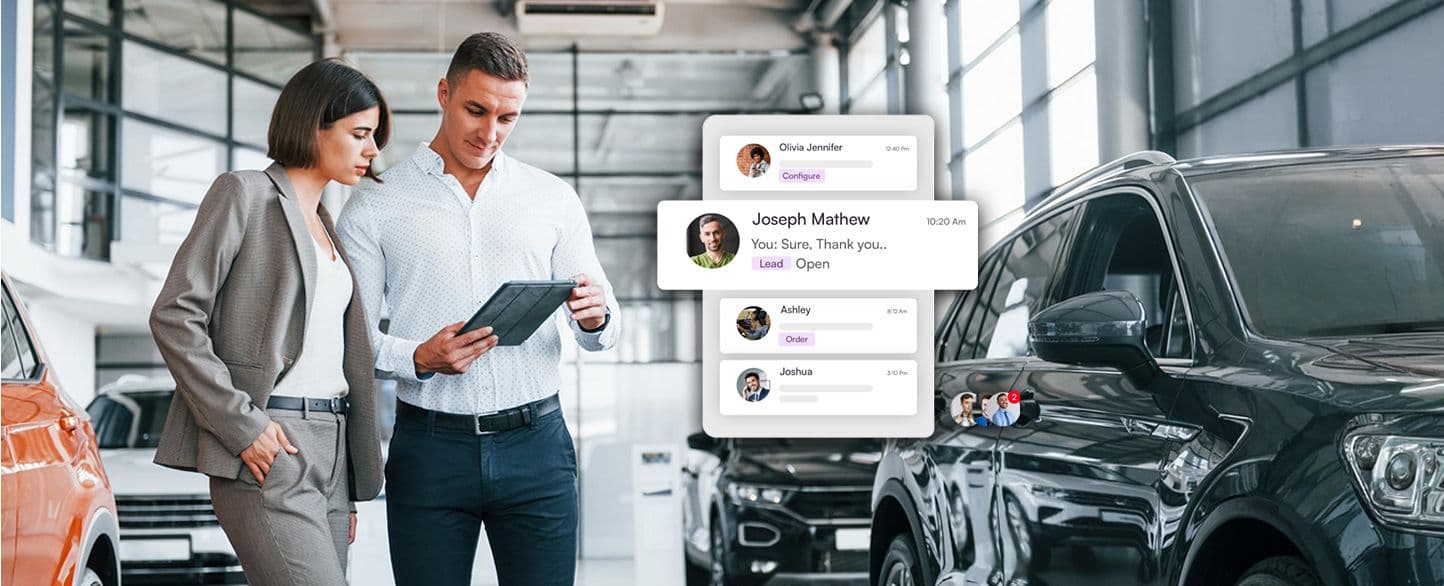
A connected communication system consolidates every customer-facing channel- WhatsApp, SMS, email, live chat, and in-app messaging- into a single interface built around one customer profile, one conversation history, and shared workflow logic across every touchpoint.
It is not a CRM. A CRM stores customer data and tracks pipeline stages. A messaging system manages the actual conversations happening across channels and feeds the outcome back into the CRM as it happens.
It is not a helpdesk either. A helpdesk reacts to tickets. A dealership messaging system is proactive and tied to operations, inventory, service scheduling, vehicle delivery, triggering outreach on its own rather than waiting for a customer to raise an issue.
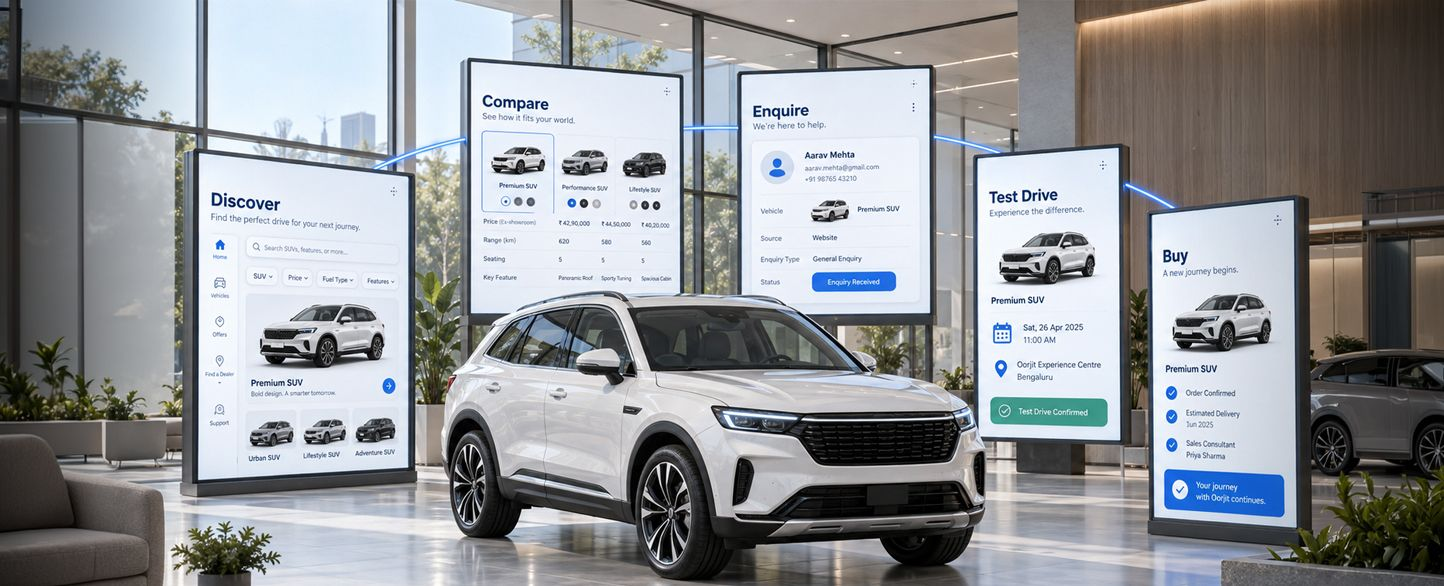
Being reachable on several channels is not the same as those channels sharing context. A customer who starts on a website chat, follows up on WhatsApp, and later walks into the showroom should be treated as one continuous conversation, not three disconnected ones.
Why Does Automotive Retail Need Unified Communication Infrastructure?
Most dealerships already have more communication tools than they can manage well. WhatsApp sits on personal staff phones. A shared email inbox has no clear owner. A DMS holds service history that never reaches the person actually talking to the customer.
Revenue disappears in the space between these tools. A lead submitted at 8 pm on a Saturday sits untouched until Monday. A service customer who confirmed an appointment on WhatsApp never gets the reminder because it only goes out by SMS. A customer who bought a vehicle eighteen months ago never receives a service-due message because nobody connected the DMS record to a communication trigger.
These are infrastructure gaps, not staffing shortages, and closing them takes a system that handles routing, automation, and data sync on its own.
What Does This Look Like Across the UAE, Saudi Arabia, Singapore, and Indonesia?
Each market has its own communication behaviour, and a system built for one does not automatically fit another.
In the UAE, dealer groups often run several brands out of shared back-office teams, so consistent response quality across brands and locations matters more than the channel mix itself.
In Saudi Arabia, WhatsApp adoption among car buyers is high enough that relying mainly on email or phone often works against the customer's preferred channel. PDPL also requires explicit opt-in before marketing messages go out, which shapes how consent is captured at first contact.
In Singapore, buyers tend to be comparison-led and research-heavy before contacting a dealership, so response speed and accuracy matter more than volume. The Do Not Call Registry also requires SMS marketing to be checked against opt-out status before sending.
In Indonesia, inbound inquiry volume across WhatsApp and marketplace channels typically runs higher than in the other three markets, so automated routing carries more weight in preventing leads from sitting unanswered during peak hours.
Across all four markets, the platform has to manage consent capture, opt-out handling, and audit logging in ways that match the specific rules in that market, not one shared assumption.
What Business Impact Does Disconnected Communication Have?
Lead response time slips whenever there is no automated first-touch on the channel the lead actually came in on. A lead reached within the first few minutes converts at a meaningfully higher rate than one reached an hour later, and that window closes fast when a message waits for a human to notice it.
Service no-shows increase when reminders go out on only one channel. A customer who ignores email but replies within minutes to WhatsApp will not show up if the only reminder sent was an email. Sequencing reminders across channels, adjusted to how the customer has responded before, measurably cuts no-show rates.
Retention drops when post-purchase contact is inconsistent. After-sales revenue depends on staying visible in the customer's day-to-day awareness after the sale closes. A dealership that goes quiet after delivery tends to lose that customer to an independent workshop, not because the product was worse, but because nobody kept the conversation going.
How Is a Connected Communication Platform Structured?
The system works in six layers, and the omnichannel outcome only shows up when all six work together.
Channel integration connects WhatsApp, SMS, email, live chat, in-app messaging, and push notifications, normalising every incoming message into one format regardless of where it originated.
The message router decides which team or agent handles an incoming message, checks whether the sender is new or existing, and recognises when the same person messages across two channels so the conversation stays one thread instead of splitting into duplicates. High-value leads and complaints move ahead of routine inquiries.
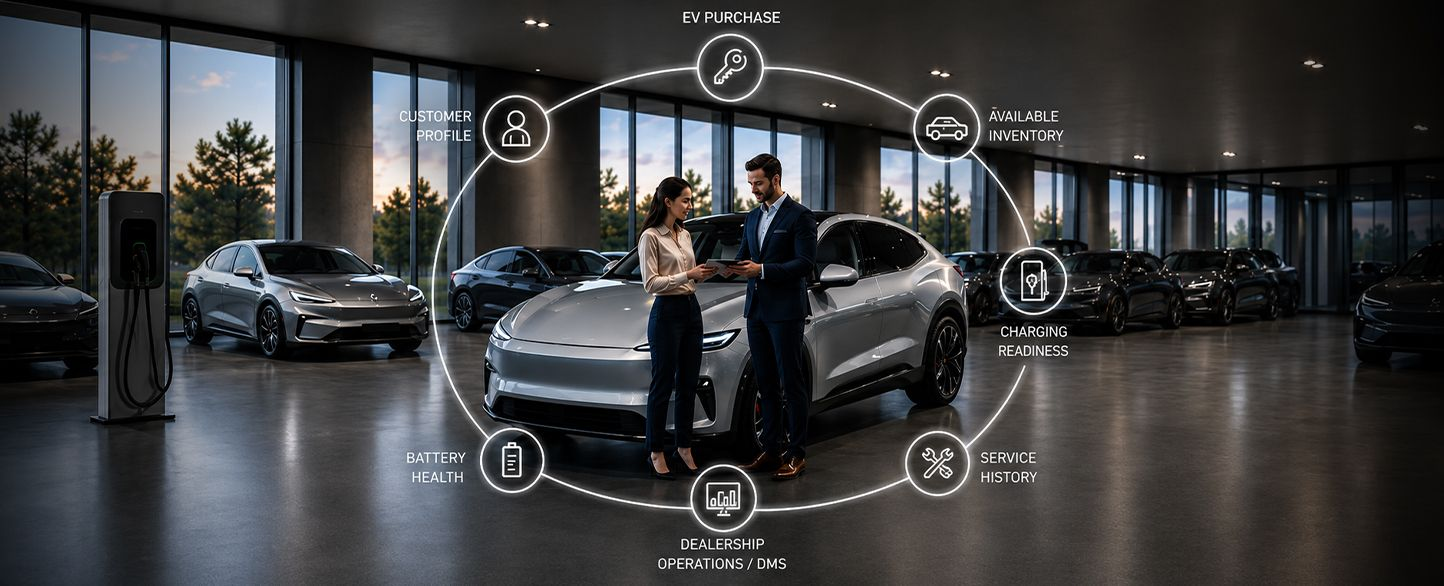
The customer profile engine is the platform's memory, holding contact details, channel preference, conversation history, vehicle ownership, and service records in one place, so an agent opening a conversation sees what the customer owns and what they asked last week without switching systems.
The workflow and automation engine runs sequences without requiring manual scheduling. A new lead, a booked test drive, a vehicle ready for collection- each fires a trigger, alongside scheduled workflows like a service reminder seven days out or a follow-up two days after a quotation. If WhatsApp gets no response, the workflow can escalate to SMS, then to a task for a personal call.
The integration layer connects the platform to the dealership's DMS and CRM. DMS data feeds the customer profile and can trigger communication on its own, while CRM integration means a lead stage change triggers outreach, and a conversation outcome updates the CRM without anyone re-typing it, via REST APIs and webhooks with pre-built connectors for widely used platforms.
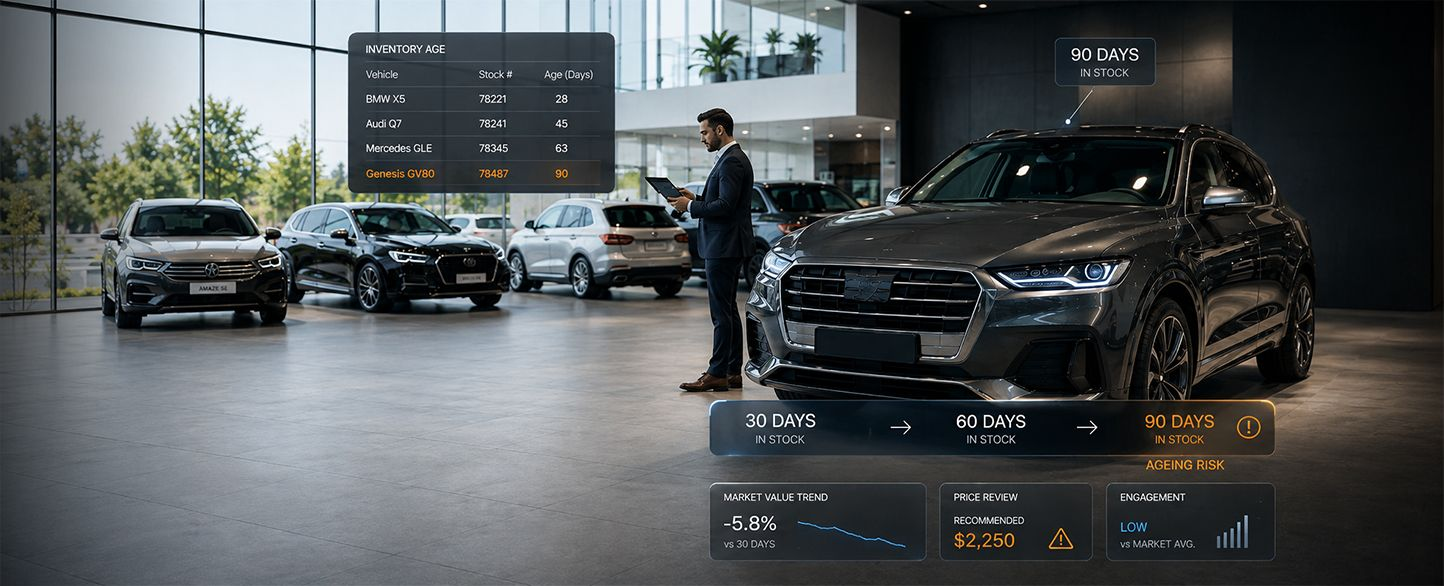
Analytics and reporting close the loop. First response time, conversion, show rates, and CSAT are visible in one place, rolled up across every outlet for dealer groups, so an underperforming location or workflow is identifiable quickly.
Which Channels Should a Dealership Communication System Support?
WhatsApp tends to carry lead follow-up, service updates, and broadcast campaigns, mattering most in the UAE, Saudi Arabia, Indonesia, and Singapore. SMS is generally reserved for appointment reminders and confirmations, since it doesn't rely on the customer having an app open. Email still carries quotations and service reports, since document-heavy content doesn't fit well into a chat window. Live chat matters most for pre-sales questions in Singapore and the UAE, where buyers research heavily before making contact. In-app messaging and push notifications cover owner engagement and time-sensitive alerts where mobile app adoption is already high.
How Should WhatsApp Be Integrated with a Dealership CRM?
WhatsApp Business API integration is set up through an approved solution provider, with the dealership's number linked to a business messaging account and outbound templates submitted for approval before use. The platform then connects WhatsApp to the CRM through middleware that matches incoming numbers to existing records or creates a new contact when there's no match. With two-way sync, a CRM stage change can trigger a WhatsApp workflow, and a customer's reply updates the CRM activity log automatically.
Consent has to be captured somewhere concrete- a website form, a digital showroom inquiry, an in-showroom check-in- and stored against the customer record so it actually controls what outbound messaging is allowed.
How Does Channel Choice Change Across the Customer Journey?
During discovery, live chat and WhatsApp carry most first-touch interactions. During nurture and quotation, email carries document-heavy content while WhatsApp handles quick clarification. During test drive coordination, short, direct SMS and WhatsApp messages get acted on faster than email. During service and after-sales, SMS covers transactional notifications, and WhatsApp covers job status updates. During retention, email carries longer-form content while WhatsApp broadcasts reach specific, consent-based segments: service due, an anniversary offer, model upgrade eligibility, without turning into blanket messaging that risks opt-outs.
How Does a Communication Platform Connect to DMS and CRM Systems?
A communication system without DMS and CRM integration is really just a better messaging inbox, disconnected from the operational data that gives conversations context. That connection is what actually makes the system omnichannel rather than just multi-channel.
DMS integration gives the platform read access to vehicle records, service history, appointment schedules, and delivery status, enriching the customer profile and triggering communication automatically. A service booking starts the reminder sequence. A job card status change sends a WhatsApp update. A delivery confirmation triggers a post-delivery survey.
CRM integration runs on two-way sync, since the CRM owns the lead status and pipeline stage while the communication platform owns the actual conversations, and both need to reflect the same reality without re-entry. A lead stage change triggers a workflow, a won deal triggers a welcome sequence, and going the other way, a WhatsApp reply updates the last-contact date while a resolved conversation closes its CRM task. The result is one customer timeline showing every deal stage and every communication event across every channel.
How Should Multi-Location Dealer Groups Manage Communication?
Dealer groups need consistency across locations without stripping each location's ability to run its own team. The structure that supports this is centralised governance with location-level execution. Templates, workflow logic, escalation rules, and brand messaging get configured at the group level and inherited by every location, while working hours, agent assignments, and local promotions stay managed locally.
A centralised dashboard gives leadership visibility across the network: response times by outlet, conversion by channel, no-show rates, CSAT, so an underperforming location is visible with enough detail to tell whether the issue is response time, workflow setup, or missing channel coverage.
For OEM networks, the same structure scales up: the OEM sets standards centrally, regional distributors manage their networks within those standards, and individual dealerships execute at the customer level, each tier seeing its own scope. This applies directly to multi-brand dealer groups in the UAE and Saudi Arabia, and to high-volume distributor networks across Indonesia and Singapore.
What Compliance Requirements Apply Across These Markets?
In the UAE, the Federal Data Protection Law requires consent for marketing communication and transparency in data processing. In Saudi Arabia, the PDPL requires explicit opt-in, recognises a right to erasure, and includes data localisation requirements. In Singapore, the PDPA combined with the Do Not Call Registry means SMS outbound has to be checked against DNC status before sending. In Indonesia, the PDP Law from 2022 requires consent for data processing and gives customers access and erasure rights over their own data.
Across all four markets, the platform has to track opt-in and opt-out status per contact, per channel. A customer who opts out of WhatsApp marketing should not receive broadcast messages again, even if they remain opted in for transactional updates. Template pre-approval for outbound WhatsApp messaging acts as a built-in compliance check, since only approved templates can be sent outside an active conversation window.
Book a demo to see how Oorjit's connected communication platform can help a dealership bring these channels together, respond faster, and improve both sales and service outcomes.
FAQs
Q: How does Oorjit's platform manage communication across multiple channels in automotive retail?
A: Oorjit routes every incoming message into a single inbox tied to one customer profile. An agent responding on WhatsApp can see the same customer's service history and open quotations without switching systems, and the outcome syncs back to the CRM and DMS automatically.
Q: What separates multichannel from omnichannel customer communication?
A: Multichannel means a dealership is reachable on several channels independently. Omnichannel means those channels share one customer profile, one conversation history, and one set of workflow rules. In a multichannel setup, a customer calling after a WhatsApp conversation has to start over. In an omnichannel setup, the agent picks up exactly where the last channel left off.
Q: Does Oorjit connect with existing dealership CRM systems?
A: Yes. Oorjit integrates through bidirectional APIs and webhooks, so a CRM lead status change can trigger a communication workflow, and a communication outcome updates the CRM record without manual entry.
Q: Can Oorjit integrate with a dealership's existing DMS?
A: Yes. DMS integration gives Oorjit access to vehicle records, service history, appointment schedules, and job card status. A completed job can trigger a vehicle-ready WhatsApp message on its own, and a service-due date can start a multi-channel reminder sequence without manual scheduling.
Q: Why does a dealership need one unified inbox instead of separate channel tools?
A: Without one, conversations sit scattered across personal phones, shared inboxes, and call logs, and leads fall through whenever the person handling that channel is unavailable. A unified inbox through Oorjit means every agent sees the full history for a customer, and performance across channels is actually measurable.
Q: How does Oorjit improve lead response time specifically?
A: By sending an automated first-touch acknowledgment on the channel the lead came in on, the moment it's created, rather than waiting for a human to notice a new inquiry. The lead then routes to an available agent who already has the customer's full context.
Q: What KPIs should a dealership track for communication performance?
A: First response time, lead-to-conversation rate, service appointment show rate, CSAT score, and opt-out rate. Together, these cover how fast a dealership responds, how well its workflows convert, how satisfied customers are, and how much compliance risk it's carrying.