Across the GCC, automotive brands are investing in digital programs with one common goal: creating a seamless customer experience. Showrooms are becoming more digital. OEM networks are expanding. Customers expect timely updates, clear communication, and simple service journeys.
Yet even with all this progress, one challenge continues to hold dealerships back.
System operating in silos.
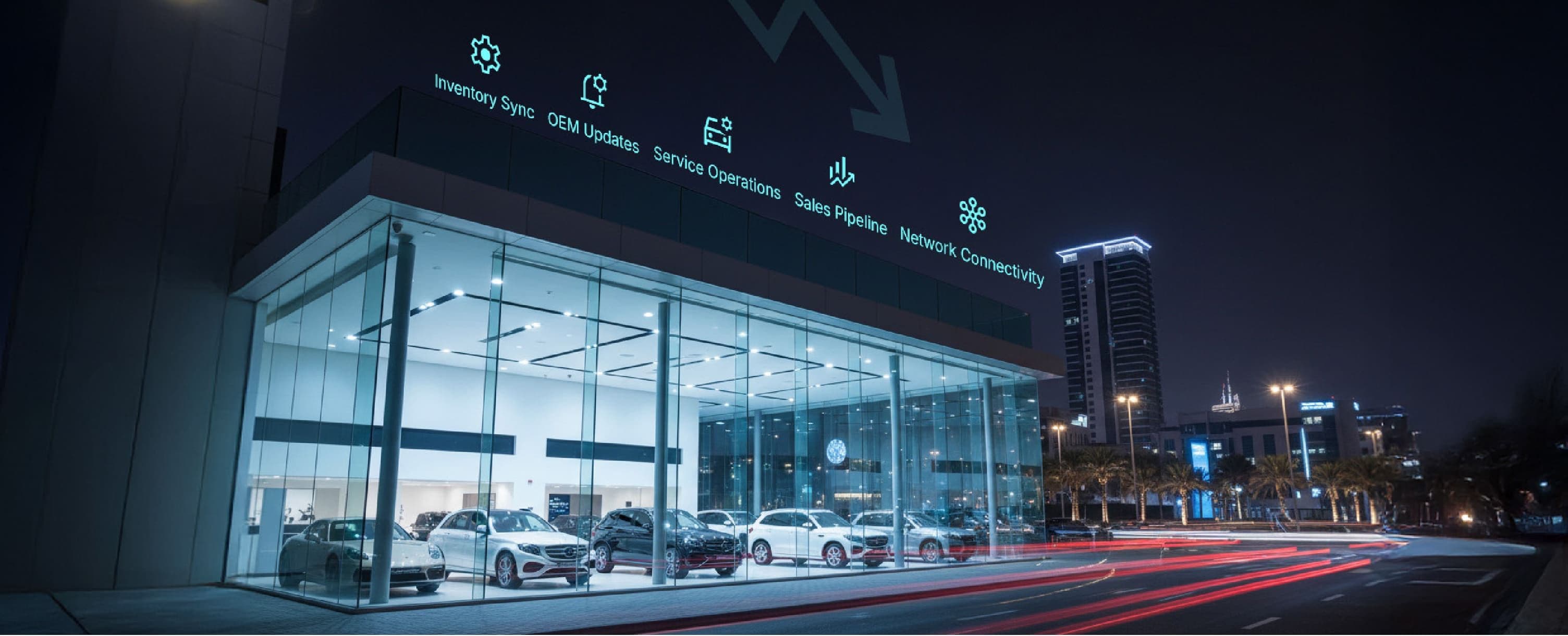
With CRMs, DMS, marketing tools, call handling tools, scheduling platforms, and OEM reporting systems operating independently, the customer lifecycle breaks into fragments. Dealers feel it. OEMs feel it. And customers definitely feel it.
Why Do GCC Dealerships Still Operate in Silos
Most dealerships in the region rely on strong enterprise systems. Marketing systems like Salesforce and HubSpot, Sales and Service operations systems like SAP and Keyloop and Finance systems like Zoho and Oracle systems manage different aspects of large-scale enterprise workflows.
Individually, they perform well. Together, they often behave like distant islands.
Over the years, dealerships have added modules, vendor tools, and standalone systems to fill these operational gaps. Instead of building a single ecosystem, they often end up building multiple disconnected layers.
This leads to familiar patterns:
- Customer data residing in different systems
- Teams working without shared real-time visibility
- Information taking too long to move across departments
- Insights scattered across reports instead of being unified in one place
The issue is not the capability of these tools. The issue is the lack of orchestration between them.
How Do These Silos Impact Daily Operations
Even when systems individually perform well, the gaps between them slow everything down.
- It shows up in small but constant frictions:
- Teams having to recheck or reenter the same information
- Delays in handing off between departments
- Repetitive communication because updates don’t sync
- Information being interpreted differently across different systems
These may seem minor, but across a fast-evolving GCC dealership network, they translate into lost time, higher operational costs, and inconsistent service quality.
For decision makers, the impact is even deeper. Without unified visibility, it becomes harder to answer critical questions such as:
- Why are cancellations spiking?
- Which branches are delivering the highest service retention?
- When does customer demand peak across the week?
- How are workshop bays, vehicles, or instructors being utilized?
Without this clarity, decisions become reactive instead of strategic.
Where Traditional Systems Fall Short
Enterprise platforms were designed to solve specialized problems. Their limitation is not their dearth of features, functionalities, or expertise, but in the flow of information across different departments or process functions.
Across the region, dealerships repeatedly report the same gaps:
1. CRMs manage sales but not the entire lifecycle
CRMs automate lead journeys well. But once customers enter service, retention, renewal, or multi-branch interactions, visibility fades.
2. DMS platforms excel inside the workshop but offer limited support beyond
DMS systems manage parts, inventory, and technician time. But they are not built to support marketing, sales funnels, centralized customer communication or cross-functional data.
3. OEM reporting ecosystems sit outside the dealership layer
OEM tools capture excellent regional data. Yet they often do not sync backward into dealership systems, creating mismatches between what OEMs expect and what dealers see.
4. Add on tools multiply complexity instead of reducing it
As dealerships grow, they stack systems for scheduling, contact centers, surveys, campaigns, and more. Each tool solves a single need. Together, they make it harder to maintain one consistent source of truth.
The outcome becomes predictable: More tools. More data. Less continuity.
What Happens When These Limitations Go Unchecked
The effects are visible across GCC dealership groups and OEM networks.
Teams rely on manual coordination to keep processes aligned. Customers repeat information, receive inconsistent updates, and feel the gaps between departments. Without unified data, collaboration becomes slower and decisions become guesswork. Upselling, renewals, service reminders, and follow-ups lose consistency. More systems mean more maintenance, more training, and more support agreements.
These problems don’t arise from a lack of digital investment. They arise when systems do not behave like one connected ecosystem.
What Could GCC Dealerships Achieve if These Silos Disappeared
Imagine a dealership environment where:
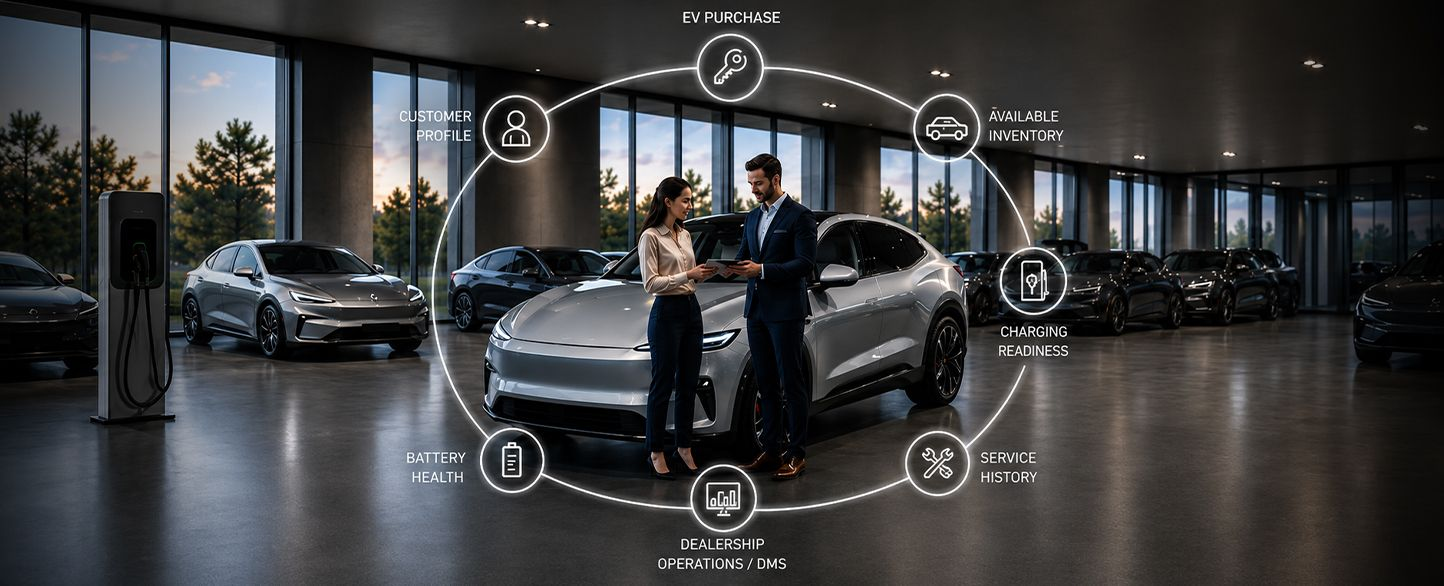
- Customer context travels effortlessly end to end
- Sales insights automatically inform service teams
- Service updates flow into CRM without manual steps
- OEM reporting becomes real time and accurate
- Every team works with the same understanding
- Every system communicates with intelligent continuity
This is the operational flow global dealership groups now aim for. And GCC dealerships are well positioned to reach it.
A connected system doesn’t just simplify operations. It increases efficiency, reduces risk, strengthens brand perception, and helps OEMs run standardized programs across markets.
How Oorjit Supports This Connected Transformation
While enterprise systems were built to solve functions, Oorjit serves as an intelligent layer that brings the data from existing systems. Instead of replacing the existing system, it aids it by gathering all the required sets of data, segmenting them into modules, and seamlessly passing information across different departments according to its relevance.
Oorjit does not replace existing systems.
It helps them work as one unified ecosystem.
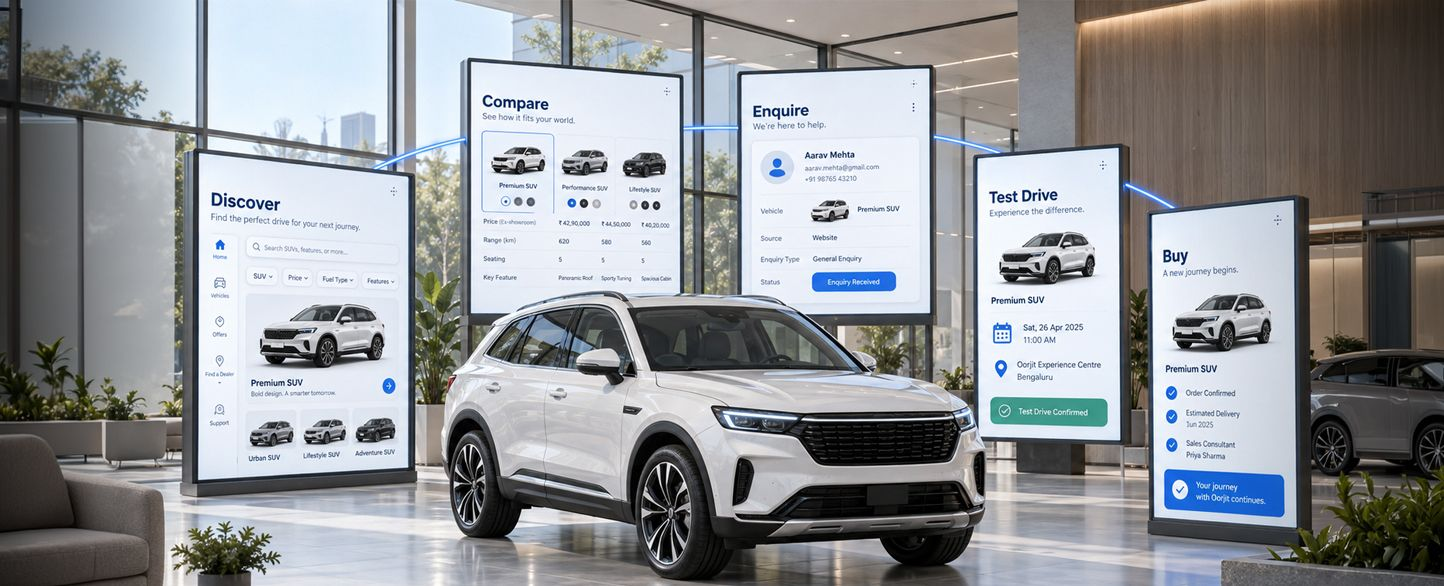
Seamless lifecycle continuity: Customer context travels from inquiry to test drive, purchase, service, and aftersales without ever breaking.
Real-time operational intelligence: Leaders gain clear visibility across sales, service, and customer behavior.
Fewer systems, deeper alignment: Teams manage fewer tools while everything updates automatically in the background.
Stronger OEM dealer network collaboration: OEMs receive real time, standardized data. Dealers retain operational flexibility without losing consistency.
Customer trust built on continuity: Every update, message and interaction stays aligned, regardless of channel.
Dealerships unlock their full potential when every system pulls in the same direction. That alignment turns everyday operations into measurable results.
Conclusion
GCC dealerships are entering a phase where customer experience is defined by continuity, not complexity. When workflows shift from isolated systems to connected intelligence, operations feel lighter, teams work with greater clarity and customers experience journeys that make sense at every touchpoint.
Dealerships that adopt this model are not just improving efficiency. They are building long term trust, higher lifetime value, and a service ecosystem that learns and strengthens with every interaction.
FAQs
Q: What are system silos in GCC automotive dealerships?
A: System silos occur when CRM, DMS, marketing tools, contact center systems, and OEM reporting platforms operate independently without sharing real time data or customer context.
Q: Why do dealerships still rely on multiple disconnected systems?
A: Most enterprise tools were adopted at different times for specific functions. Over the years, dealerships layered new tools on top of old ones, creating a fragmented digital environment.
Q: How do silos affect customer experience?
A: Customers repeat information, receive inconsistent updates, and face delays because teams cannot access the same context across systems.
Q: What operational challenges come from disconnected systems?
A: Dealerships face slower handoffs, manual data checks, inconsistent reporting, and increased administrative effort across sales and service teams.
Q: Why don’t traditional CRMs and DMS platforms fully solve continuity issues?
A: CRMs focus on lead stages, while DMS platforms specialize in workshop operations. Neither manages the full customer lifecycle or cross functional visibility.