Since more than a century, the car has been an engineering marvel of mechanical finesse. But the driving force of today's vehicle isn't hardware any longer, it's software.
This innovation has spawned the Software-Defined Vehicle (SDV), a revolution remodeling all layers of the automotive value chain, from production and servicing to customer interaction.
As mechanical constraints are replaced by digital technologies, the car is no longer a fixed product. It's a smart, dynamic platform that learns, adapts, and gets upgraded on the go.
What is a Software-Defined Vehicle?
A Software-Defined Vehicle is one where fundamental vehicle functions are managed, augmented, and updated through software in place of immutable hardware components.
In conventional cars, tens of Electronic Control Units (ECUs) work in isolation. In SDVs, they are replaced by centralized high-performance computing with modular software that interconnects all systems, from powertrain to infotainment and advanced driver assistance.
It's a total paradigm shift in the design, maintenance, and monetization of vehicles. Hardware lays the groundwork.
Software shapes the experience.
The Architecture That Enables SDVs
- Centralized Computing : Older cars rely on scores of ECUs. Each is unique, fixed, and difficult to modify. SDVs integrate this into a small number of high-performance compute units that oversee all domains and enable quicker processing and consolidated system control.
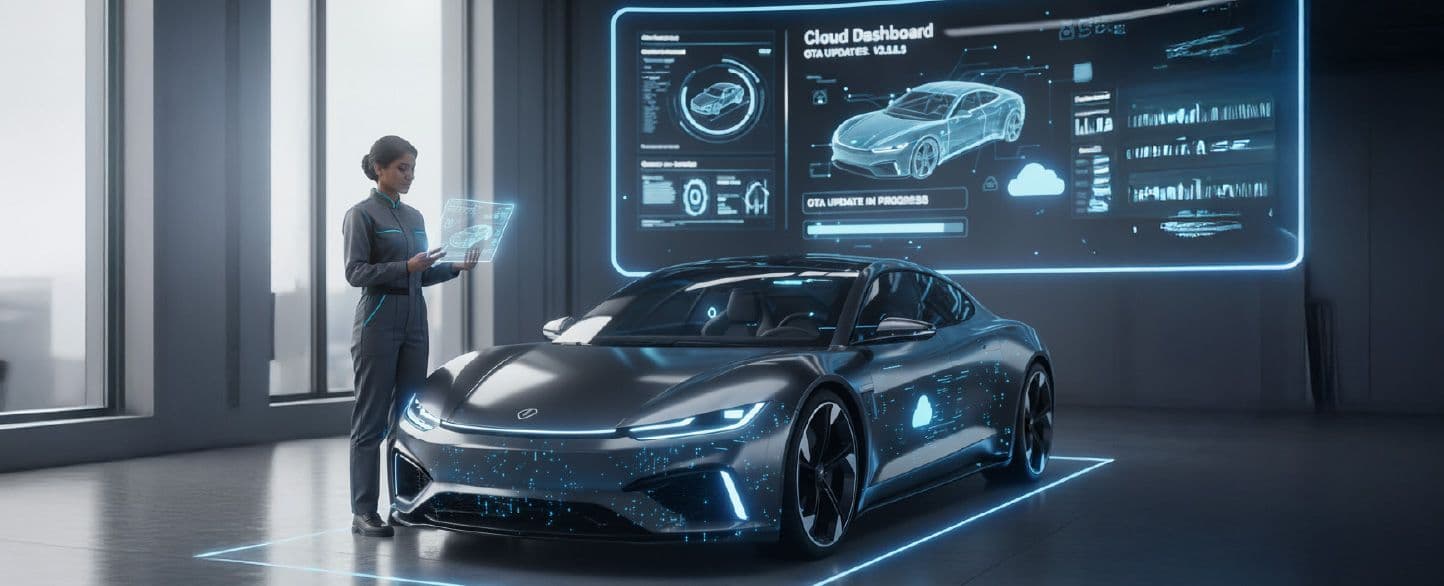
Over-the-Air (OTA) Updates : Just like smartphones receive upgrades with software updates, SDVs can update with new features, improvements in performance, and fix bugs remotely, without going to dealerships.
For car makers, this is operational effectiveness. For consumers, it is a car that continually improves with time.
- Cloud Integration and Digital Twins : Each SDV replicates itself in the cloud with a digital twin, which monitors performance, identifies anomalies, and facilitates predictive maintenance. The twin synchronizes data continuously, establishing a live feedback loop between vehicle and manufacturer.
- Decoupled Software and Hardware : Conventional automotive software was embedded directly in the physical system it operated on. In SDVs, that connection is eliminated so that software can be upgraded or reused across models without touching physical parts.
Why the Industry Is Moving to Software-Defined Vehicles
- Cars as Digital Platforms : The car is becoming a software platform. OEMs are now able to provide new apps, AI assistants, and driver experiences through over-the-air updates, similar to operating systems in consumer devices.
- Revenue Beyond the Sale : SDVs bring subscription-based capabilities; performance upgrades, driver-assistance systems, or connectivity plans, making one-time buys into recurring income streams.
- Accelerated Product Development : A common software base allows carmakers to speed up time-to-market for new vehicles, rolling out updates immediately across fleets.
- Personalization on Steroids : SDVs employ AI to learn drivers' preferences; seat setting, route habits, cabin temperature, and adjust automatically, delivering a progressively personalized experience.
The Cybersecurity Imperative
With software being at the center, security becomes the focal point of vehicle trust. SDVs navigate in an environment where vehicles constantly communicate with the cloud, infrastructure, and other vehicles.
- This creates new threats, and new obligations.
- Automakers and suppliers are embracing to counter vulnerabilities:
- ISO/SAE 21434 for cyber security engineering
- UNECE WP.29 for safe software updates
- Real-time threat monitoring and encrypted communication
- OTA rollback capabilities to go back to previous compromised updates
In today's age, a car's robustness will determine its dependability.
Obstacles in the Journey to Complete SDV Implementation
- Legacy Integration: Most current platforms and supply chains continue to rely on conventional architectures.
- Talent Gap: AI and software experts are now as essential as mechanical engineers.
- Data Governance: Vehicles produce terabytes of information every day, making privacy, consent, and ownership strategic concerns.
- Standardization: Every automaker has a distinct software stack, restricting interoperability until common standards mature.
Regardless of these challenges, SDVs are inevitable. The alignment of cloud, AI, and connectivity is driving the industry toward an integrated software-first approach
Global Examples of SDV Adoption
- Tesla was the first to introduce OTA-driven updates that transform the way cars operate.
- Volkswagen is creating its own software division, Cariad, to integrate its vehicle systems.
- Toyota has launched Arene, a central platform allowing shared software between models.
- Mercedes-Benz MB.OS drives AI-enhanced infotainment and safety across its portfolio.
- Volvo combines NVIDIA computing to provide centralized control and Level 4 autonomy.
All these efforts are pointing to the same truth, software is the driving force behind automotive advancement now.
The Dealership Role in an SDV Era
For dealerships, the move from mechanical maintenance to digital relationship management has already begun.
- Aftersales Evolution: Standard visits may go down, but dealerships become advisors, helping customers navigate upgrades, features, and connected services.
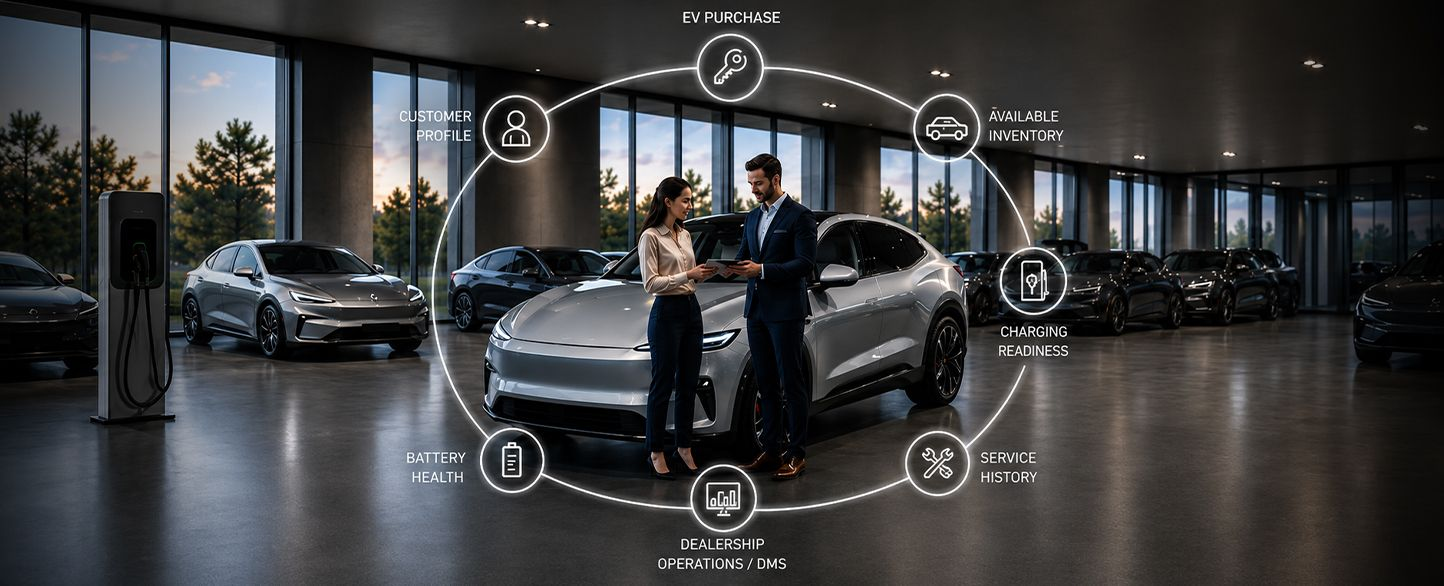
- Predictive Maintenance: With real-time vehicle health data, service teams can contact ahead of time for breakdowns.
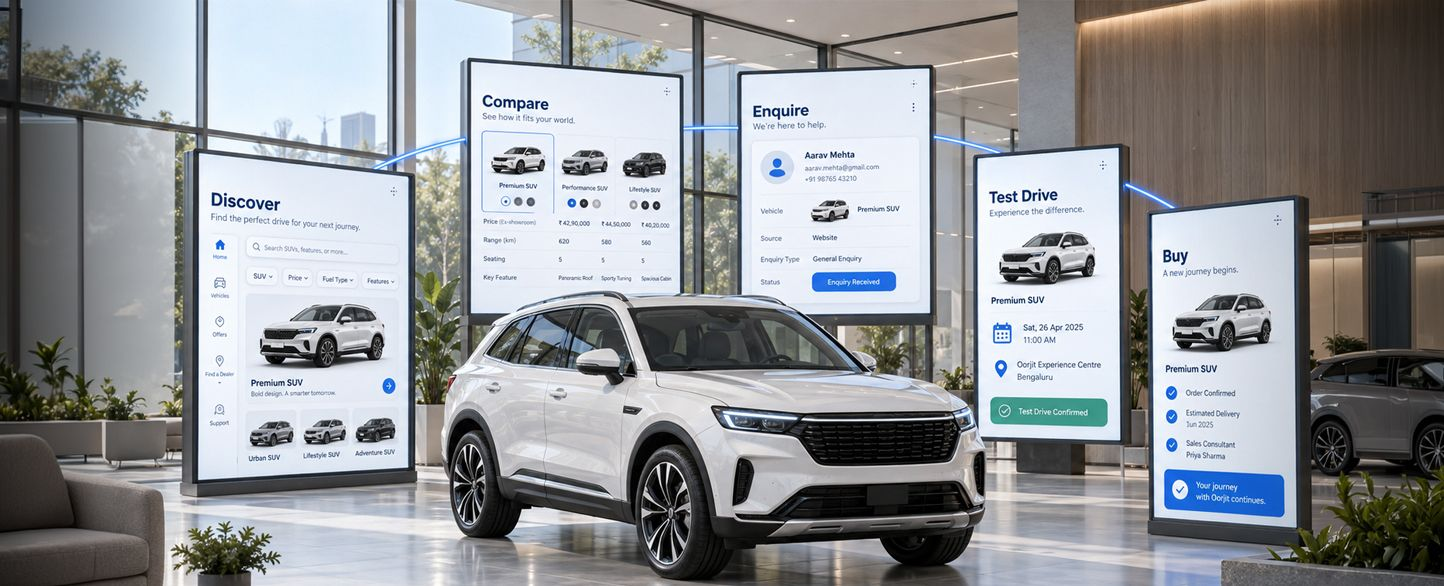
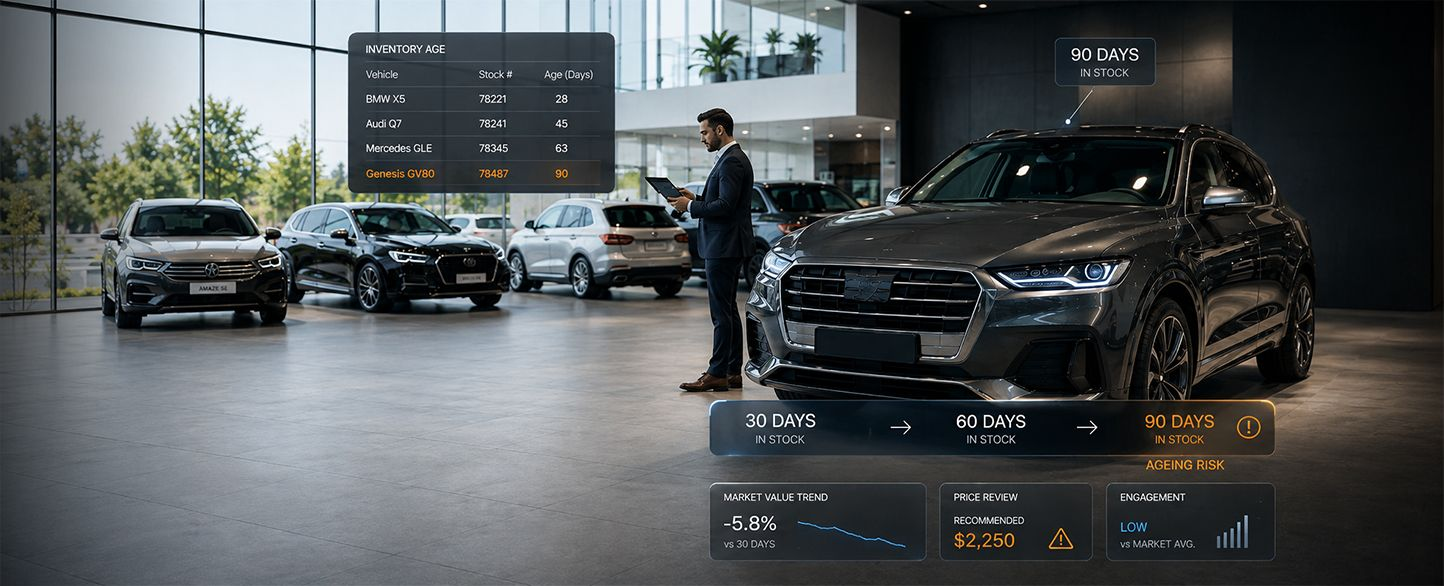
- CRM Integration: Oorjit enables dealers to view live SDV diagnostics and tailor outreach.
- Effectively, dealerships transform from transactional points to knowledge centers, handling lifetime relationships driven by data.
Conclusion: The Car Becomes a Living System
Software-Defined Vehicles are a new paradigm for the automobile industry. The automobile is no longer a finished good. It is a living, learning, and changing system.
- For manufacturers, that implies building cars with ongoing software lifecycles.
- For dealerships, it implies setting every customer interaction to real-time intelligence.
And for platforms like Oorjit, that implies facilitating this efficient flow, blending the vehicle's intelligence with the business intelligence.The future of mobility will not be based on assembly lines. It will be written, changed, and optimized on the fly by software.
FAQs
Q: What truly makes a vehicle software-defined?
A: It's when fundamental features, ranging from engine capability to infotainment, are adjustable or upgradable solely by means of software updates.
Q: How do SDVs differ from connected cars?
A: Interconnected vehicles share information outside. SDVs leverage such information to change inside, facilitating feature updates, predictive maintenance, and real-time responsiveness.
Q: What is the contribution of AI in SDVs?
A: AI facilitates real-time decision-making, forecasting component wear, experience personalization, and driving autonomous functions.
Q: How do SDVs impact dealership business?
A: Dealerships shift from reactive service providers to proactive data partners, utilizing integrated CRM and analytics systems to forecast customer requirements.
Q: Can existing vehicles be made into SDVs?
A: Partially. Real SDVs need centralized computing and modular software architecture from the beginning.