Most automotive dealerships track surface-level metrics like total sales and monthly revenue. While these numbers are important, they only reveal part of the story. The real competitive advantage lies in understanding deeper operational, customer, and inventory data that directly impacts profitability and long-term growth.
This is where a dealership management system becomes essential. Acting as the central data engine, a DMS connects sales, inventory, customer interactions, and service operations into a unified ecosystem. Within this, a dealership inventory management system plays a critical role in optimizing stock, reducing holding costs, and improving margins.
The challenge is not the lack of data. It is knowing what to track and what most dealerships consistently overlook.
What Is a DMS (Dealership Management System)?
A dealership management system is a centralized platform designed to manage all core dealership operations. It integrates:
- Sales and lead management
- Inventory tracking
- Customer relationship management
- Service and after-sales operations
Instead of operating in silos, a DMS enables a single source of truth across the entire dealership lifecycle.
How a Dealership Inventory Management System Fits Into a DMS
A dealership inventory management system is a critical component within a DMS. It connects inventory data with sales and customer demand, enabling:
- Real-time vehicle availability tracking
- Stock movement monitoring
- Demand-based inventory planning
- Pricing optimization
When inventory is disconnected from sales data, dealerships risk overstocking, understocking, or holding slow-moving vehicles that reduce profitability.
Why Modern Dealerships Need Unified Data Visibility
Many dealerships still operate with fragmented systems, where sales, marketing, inventory, and service data exist separately. This creates blind spots.
Unified data visibility allows dealerships to:
- Identify bottlenecks in the sales funnel
- Track customer behavior across channels
- Align inventory with real demand
- Improve decision-making speed
Modern platforms like Oorjit enable this unified view, transforming disconnected data into actionable insights.
Core Dealership Data Every Business Tracks (But Often Incompletely)
1.Sales and Revenue Metrics
Most dealerships already track:
- Lead-to-sale conversion rate
- Average deal size
- Revenue per vehicle
However, these metrics are often analyzed in isolation. Without context, such as lead quality or customer journey data, they provide limited insight into performance gaps.
2. Basic Inventory Tracking
Basic inventory tracking includes:
- Total vehicles in stock
- Incoming vs outgoing vehicles
- Model availability
While useful, this level of tracking does not reveal how efficiently the inventory is performing.
But this is just the surface.
Inventory Data That Drives Profitability (But Is Often Ignored)
Vehicle Stock Aging Analysis and Why It Matters
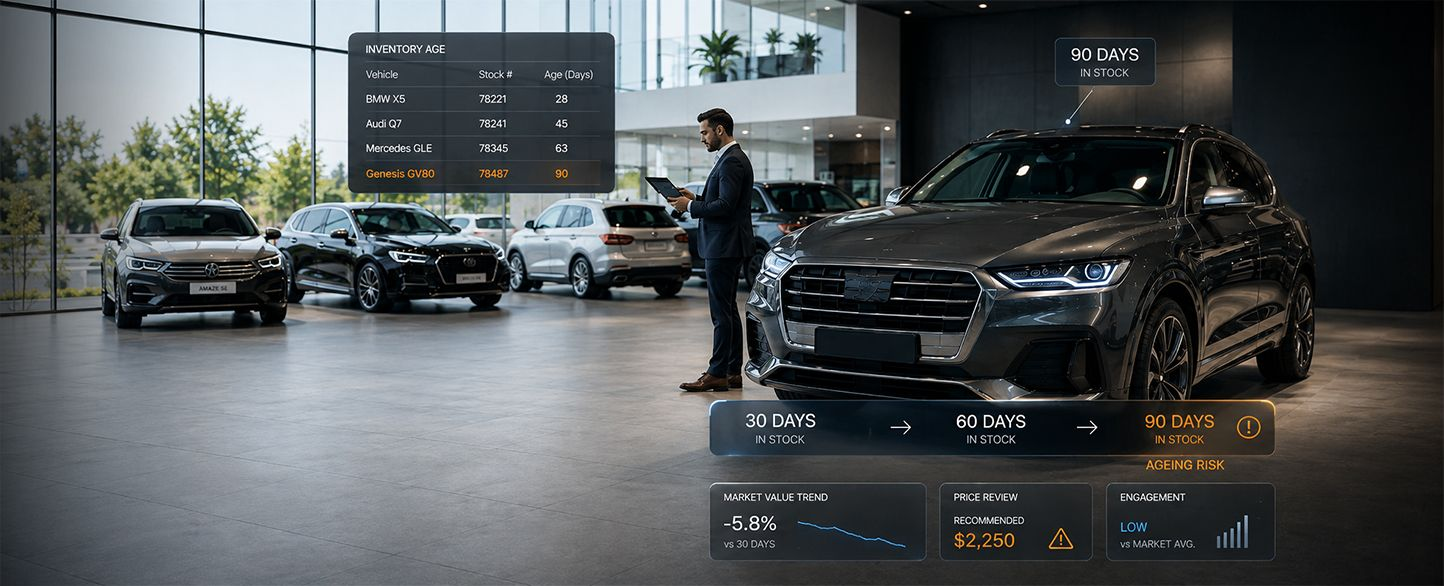
Vehicle stock aging analysis is one of the most critical yet underutilized metrics. Inventory is typically categorized into aging buckets:
- 0 to 30 days
- 30 to 60 days
- 60+ days
Vehicles in older buckets often require discounts, increasing holding costs and reducing margins. Without tracking stock aging, dealerships cannot optimize pricing or inventory rotation effectively.
Inventory Turnover and Dead Stock Identification
Inventory turnover measures how quickly vehicles are sold and replaced. Low turnover indicates:
- Poor demand forecasting
- Incorrect inventory mix
- Inefficient pricing strategies
Identifying dead stock early allows dealerships to take corrective actions, such as promotions or redistribution.
Parts Inventory Analytics for Aftermarket Revenue
Parts inventory analytics is often overlooked, despite its direct impact on after-sales revenue. Tracking parts inventory helps dealerships:
- Maintain optimal stock levels
- Reduce service delays
- Improve workshop efficiency
- Increase parts-related revenue
A well-managed parts inventory directly enhances customer satisfaction and retention.
Customer and Lead Data That Directly Impacts Conversions
Lead Source and Conversion Tracking
Understanding where leads come from is critical for optimizing marketing spend. Dealerships should track:
- Channel-wise lead performance
- Conversion rates per source
- Cost per lead
This enables better allocation of marketing budgets and improved ROI.
Online Booking and Inquiry Tracking Across Channels
Modern dealerships operate across multiple digital touchpoints. Online booking and inquiry tracking ensure visibility across:
- Website forms
- WhatsApp inquiries
- Marketplace listings
- Social media leads
Without this, dealerships risk losing high-intent prospects.
Customer Journey Visibility from First Click to Purchase
Customers no longer follow a linear buying path. They move between online and offline channels. Tracking the full customer journey helps dealerships:
- Identify drop-off points
- Personalize engagement
- Improve conversion rates
An omnichannel approach is essential for modern automotive retail.
Digital Showroom Data Most Dealerships Fail to Track
1.Digital Showroom Performance Tracking Metrics
Digital showroom performance tracking measures how users interact with online listings. Key metrics include:
- Vehicle page views
- Click-through rates
- Inquiry rates
This data reveals which vehicles attract attention and which do not.
2. Website to Showroom Conversion Insights
Not all website visitors convert into showroom visits. Tracking conversion gaps helps dealerships:
- Identify friction points
- Improve user experience
- Optimize call-to-action placement
3. Click to Lead and Engagement Analytics
Micro-conversions such as clicks, time spent, and interactions provide early signals of buyer intent.
These insights allow dealerships to:
- Prioritize high-intent leads
- Improve targeting strategies
- Enhance engagement
4. After-sales Performance Analytics and Revenue Tracking
After-sales performance analytics is a major driver of long-term profitability.
Dealerships should track:
- Service bookings
- Revenue per service visit
- Repeat service frequency
After-sales revenue often provides more stability than vehicle sales.
5. Customer Retention and Lifetime Value Metrics
Customer lifetime value (CLV) measures the total revenue generated from a customer over time. Tracking CLV helps dealerships:
- Improve retention strategies
- Increase repeat purchases
- Build long-term relationships
6. Workshop Utilization and Efficiency Data
Workshop performance directly impacts service revenue. Key metrics include:
- Technician productivity
- Service bay utilization
- Appointment scheduling efficiency
Optimizing these metrics increases operational efficiency and profitability.
The Most Ignored Dealership Data That Impacts Growth
1. Lost Leads and Abandoned Inquiry Tracking
Many dealerships fail to track lost leads. Common reasons include:
- Delayed follow-ups
- Poor communication
- Lack of lead prioritization
Tracking abandoned inquiries helps identify where deals are lost and how to recover them.
2. Salesperson Performance and Follow-Up Gaps
Individual performance tracking reveals:
- Conversion rates per salesperson
- Follow-up efficiency
- Lead handling quality
This enables better training and accountability.
3. Demand Trends and Regional Insights
Understanding demand trends allows dealerships to:
- Stock the right vehicles
- Adjust pricing strategies
- Expand into high-demand regions
Without this data, inventory decisions become reactive instead of strategic.
How a Modern Dealership Management System (DMS) Solves These Gaps
1. Unified Dashboard for Inventory, Sales, and Customer Data
A modern dealership management system (DMS) provides a centralized dashboard that integrates:
- Sales performance
- Inventory data
- Customer insights
This eliminates data silos and improves decision-making.
2. Real-Time Inventory and Stock Aging Insights
A dealership inventory management system enables:
- Real-time stock visibility
- Automated vehicle stock aging analysis
- Demand-based inventory planning
This ensures optimal stock levels and improved margins.
3. Integrated Digital, Sales, and Aftersales Analytics
Modern platforms combine:
- Digital showroom performance tracking
- After-sales performance analytics
- Online booking and inquiry tracking
This creates a complete view of the customer lifecycle.
4. Enabling Data-Driven Decision Making Across Dealerships
Advanced systems leverage:
- AI-driven insights
- Predictive analytics
- Automated reporting
This allows dealerships to move from reactive decisions to proactive strategies.
Key Takeaways
- Data is not just about sales; it is about full lifecycle visibility
- Inventory and after-sales data are the biggest missed opportunities
- Digital tracking is now critical for modern dealerships
- A unified dealership management system (DMS) and inventory system is essential for growth
Conclusion
If your dealership is relying on disconnected tools and basic metrics, you are missing critical opportunities to improve sales, optimize inventory, and enhance customer experience. A unified dealership management system gives you complete visibility across operations, helping you make faster, smarter decisions that drive real growth.
Oorjit brings everything together, from inventory and digital showroom performance to lead tracking and aftersales analytics, so you can manage your entire dealership from a single platform.
FAQs
Q: What is a dealership management system (DMS)?
A: A dealership management system (DMS) is a centralized platform that manages sales, inventory, customer data, and after-sales operations in one place. It connects all dealership functions, eliminates data silos, and enables real-time visibility, helping businesses make faster, data-driven decisions and improve overall operational efficiency.
Q: What does a dealership inventory management system do?
A: A dealership inventory management system tracks vehicle stock, monitors inventory movement, and provides insights such as vehicle stock aging analysis and turnover rates. It helps dealerships maintain optimal stock levels, avoid overstocking or understocking, and align inventory with real-time customer demand to improve profitability.
Q: Why is vehicle stock aging analysis important?
A: Vehicle stock aging analysis helps dealerships identify slow-moving or unsold inventory by categorizing stock based on how long it has been held. This allows businesses to reduce holding costs, apply timely pricing strategies, and improve inventory turnover, ultimately protecting margins and cash flow.
Q: How do dealerships track online customer inquiries?
A: Dealerships track online customer inquiries through integrated systems that capture leads from websites, marketplaces, WhatsApp, and social media channels. This enables centralized online booking and inquiry tracking, ensuring every lead is recorded, assigned, and followed up on efficiently without loss.
Q: What is digital showroom performance tracking?
A: Digital showroom performance tracking measures how users interact with online vehicle listings, including page views, clicks, time spent, and inquiries. These insights help dealerships understand buyer intent, optimize listings, and improve conversion rates from online platforms.
Q: Why is after-sales performance analytics important?
A: After-sales performance analytics tracks service bookings, repeat visits, parts usage, and revenue generated from service operations. It helps dealerships improve customer retention, increase lifetime value, and build a stable revenue stream beyond initial vehicle sales.
Q: How to improve dealership sales using data?
A: Dealerships can improve sales by analyzing lead conversion rates, customer behavior, pricing trends, and sales team performance. Using a dealership management system helps identify bottlenecks in the sales funnel, optimize follow-ups, and focus on high-intent leads to increase conversions.
Q: How to track inventory performance in car dealerships?
A: Inventory performance can be tracked using metrics such as stock aging, inventory turnover ratio, demand trends, and model-wise sales performance. A dealership inventory management system provides real-time dashboards and reports to help dealerships make better stocking and pricing decisions.
Q: How to reduce lost leads in car dealerships?
A: Dealerships can reduce lost leads by tracking abandoned inquiries, improving response time, and ensuring consistent follow-ups. Analyzing lead sources and drop-off points helps identify gaps in the sales process, allowing teams to recover missed opportunities and improve conversion rates.
Q: What are the most important KPIs for car dealerships?
A: Key KPIs include lead-to-sale conversion rate, inventory turnover, vehicle stock aging, customer acquisition cost, and customer lifetime value. Tracking these metrics helps dealerships evaluate performance, optimize operations, and drive sustainable growth