Dealer networks are the backbone of OEM growth. Yet for many organizations, visibility into dealer performance remains fragmented, delayed, and inconsistent. Reports arrive late, metrics vary across regions, and decision-making often relies on incomplete data.
This lack of visibility creates a structural problem. OEMs cannot optimize what they cannot measure. Without a unified view of dealer performance, issues remain hidden until they escalate, underperforming dealers go unnoticed, and high-performing ones are not scaled effectively.
This is where OEM digital platforms and dealer management software are redefining how performance is tracked, analyzed, and improved.
Dealer performance visibility is no longer about periodic reporting. It is about real-time intelligence, standardized metrics, and continuous monitoring across the network. As part of a broader OEM digital transformation, these platforms enable OEMs to move from reactive oversight to proactive performance management.
How Can OEMs Improve Dealer Performance Visibility Using Digital Platforms?
The primary limitation in traditional dealer management is data fragmentation. Each dealer operates with its own systems, reporting formats, and timelines. This creates silos that prevent OEMs from getting a consistent and accurate view.
OEM digital platforms solve this by centralizing dealer data. They integrate inputs from sales systems, service operations, inventory management, and customer interactions into a unified interface. This creates a single source of truth across the dealer network.
Key improvements include:
- Consolidation of dealer data into one platform
- Elimination of manual reporting delays
- Standardized data formats across all dealers
- Improved transparency at every operational level
With centralized visibility, OEMs can track performance continuously rather than retrospectively. This shift enables faster interventions and more informed decision-making.
What Role Do Digital Platforms Play in Tracking Dealer Performance?
Tracking dealer performance requires more than data collection. It requires structured, continuous, and comparable insights.
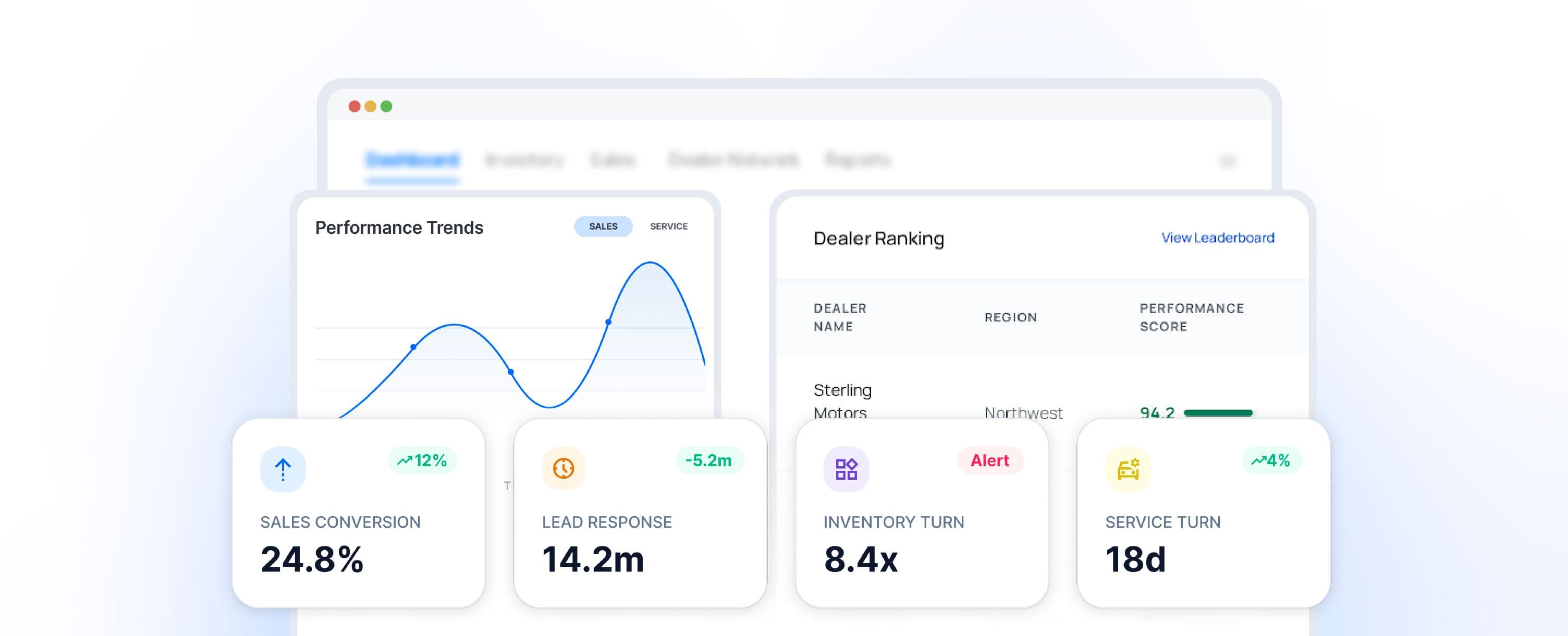
Dealer management software plays a critical role here. It enables OEMs to track key performance indicators such as:
- Sales conversion rates
- Lead response times
- Inventory turnover
- Service turnaround efficiency
- Customer satisfaction scores
Unlike traditional reporting systems, digital platforms update these metrics in near real time. This ensures that performance tracking is dynamic rather than static.
More importantly, these platforms enable cross-functional visibility. Sales, service, and operations are no longer isolated metrics. They are connected, allowing OEMs to understand how one area influences another.
This interconnected visibility is a core component of OEM digital transformation, enabling data-driven decision-making across the entire dealer ecosystem.
How Can OEMs Monitor Dealer Performance in Real Time?
Real-time monitoring is the most significant advantage of modern OEM dealer management systems.
Instead of waiting for monthly or quarterly reports, OEMs can access live dashboards that reflect current performance levels across all dealers.
These dashboards typically include:
- Live KPI tracking across all locations
- Performance alerts for deviations from benchmarks
- Drill-down capabilities to analyze individual dealer performance
- Comparative views across regions or dealer categories
Real-time monitoring changes how OEMs manage performance.
Instead of reacting to past performance issues, they can identify and address problems as they occur. For example, a sudden drop in sales conversion at a specific dealer can be flagged immediately, allowing corrective action before it impacts overall revenue.
This level of responsiveness significantly improves operational efficiency and performance consistency.
Why Is Dealer Performance Visibility Critical for OEM Growth?
Dealer performance directly impacts revenue, brand perception, and customer experience. Without visibility, OEMs face several risks:
- Inconsistent customer experiences across dealers
- Revenue leakage due to underperforming locations
- Inefficient allocation of resources and incentives
- Delayed identification of operational issues
Visibility enables OEMs to mitigate these risks by providing a clear understanding of what is happening across the network. It also enables growth in more strategic ways:
- Identifying high-performing dealers and replicating success models
- Supporting underperforming dealers with targeted interventions
- Aligning dealer operations with brand standards
- Optimizing inventory and supply chain decisions
In the context of OEM digital transformation, visibility is not just an operational advantage. It is a strategic requirement for scalable and sustainable growth.
How Can OEMs Standardize Dealer Performance Metrics Across Regions?
One of the biggest challenges in dealer networks is inconsistency in performance measurement. Different regions often use different metrics, definitions, and reporting methods. This makes it difficult to compare performance accurately.
OEM digital platforms enable standardization. They allow OEMs to define a uniform set of KPIs that all dealers must follow. These KPIs are embedded into the platform, ensuring consistency in how data is collected and reported.
Standardization enables:
- Accurate benchmarking across regions
- Fair performance evaluation
- Consistent reporting structures
- Improved decision-making based on comparable data
For example, a “sales conversion rate” should have the same definition across all dealers. Without standardization, comparisons become misleading and ineffective. By enforcing consistent metrics through dealer management software, OEMs ensure that performance data is reliable and actionable.
What Data Should OEMs Collect to Evaluate Dealer Performance Effectively?
Effective performance evaluation depends on collecting the right data. OEMs should focus on a combination of operational, financial, and customer-centric metrics:
Sales Metrics
Lead-to-sale conversion rates
Sales volume by product category
Average deal size
Operational Metrics
- Inventory turnover rates
- Order fulfillment timelines
- Service efficiency and turnaround time
Customer Metrics
- Customer satisfaction scores (CSAT)
- Net Promoter Score (NPS)
- Complaint resolution time
Compliance Metrics
- Adherence to brand standards
- Process compliance
- Reporting consistency
Collecting this data through dealer management software ensures accuracy, consistency, and real-time availability. The key is not just collecting data, but structuring it in a way that enables meaningful analysis and decision-making.
How Can OEMs Identify Underperforming Dealers Using Digital Tools?
Identifying underperformance requires more than surface-level metrics. It requires comparative analysis and contextual insights. OEM dealer management systems enable this through benchmarking. Dealers are evaluated against:
- Network averages
- Regional benchmarks
- Historical performance trends
This allows OEMs to identify:
- Dealers consistently below average
- Sudden performance drops
- Areas where specific dealers are underperforming
Digital platforms also provide diagnostic insights, helping OEMs understand why a dealer is underperforming. For example:
- Low conversion rates may indicate poor lead management
- High inventory levels may signal demand forecasting issues
- Low customer satisfaction may point to service quality problems
With these insights, OEMs can implement targeted interventions rather than generic solutions.
Key Takeaways
- OEM digital platforms enable centralized dealer performance visibility
- Real-time insights improve decision-making and operational control
- Standardized metrics ensure consistency across dealer networks
- Dealer management software enhances data accuracy and tracking
- Identifying underperforming dealers becomes faster and more precise
- OEM digital transformation depends on data-driven dealer insights
- Centralized systems improve accountability and performance alignment
- Continuous monitoring enables proactive performance optimization
Conclusion
Dealer performance visibility is no longer a reporting function. It is a strategic capability.
As dealer networks expand and customer expectations evolve, OEMs must move beyond fragmented systems and delayed reporting. Digital platforms provide the infrastructure needed to unify data, standardize metrics, and enable real-time performance monitoring.
The shift toward OEM digital transformation is redefining how dealer networks are managed. With the right systems in place, OEMs gain not just visibility, but control. They can identify issues early, optimize performance continuously, and scale successful strategies across regions.
Get expert insights into your dealer network performance. Contact our team to see how digital platforms can help you track and optimize results.
FAQs
Q: What Is Dealer Performance Visibility in OEM Networks?
A: It refers to the ability of OEMs to track, analyze, and compare dealer performance using centralized data across sales, service, and operations.
Q: How Do Digital Platforms Help Track Dealer KPIs?
A: They consolidate data from multiple sources into real-time dashboards, enabling continuous monitoring of key performance indicators.
Q: What Are the Key Dealer Performance Metrics for OEMs?
A: Metrics include sales conversion rates, inventory turnover, service efficiency, and customer satisfaction scores.
Q: How Can OEMs Improve Dealer Accountability Using Data?
A: By setting standardized KPIs, tracking performance through digital platforms, and using insights to enforce operational standards.
Q: What Challenges Do OEMs Face in Monitoring Dealer Performance?
A: Common challenges include fragmented data, inconsistent reporting, and lack of real-time visibility across dealer networks.
Q: How Can Real-Time Data Improve Dealer Decision-Making?
A: It enables immediate identification of issues and faster corrective actions, improving overall performance outcomes.
Q: How Can OEMs Benchmark Dealer Performance Across Regions?
A: By using standardized metrics within OEM dealer management systems to compare performance across different locations.
Q: What Tools Are Used for Dealer Performance Monitoring?
A: OEM digital platforms, dealer management software, and integrated analytics dashboards are commonly used.
Q: How Can OEMs Ensure Data Accuracy Across Dealer Networks?
A: By implementing centralized systems and standardized data collection processes across all dealers.
Q: Why Is Centralized Dealer Data Important for OEMs?
A: It ensures consistency, improves visibility, and supports better decision-making across the entire dealer network.